
May 2026: Reverse Vertigo, Light Pollution News
Join our mailing list. Follow us at LinkedIn, Instagram, Facebook, & Tiktok.
This Episode:
Welcome, friends, to May’s first episode of Light Pollution News! This episode, I welcome someone whose writing you’ve probably read, and are probably really familiar with! Well, she has a new book coming out – Megan Eaves joins the show! And, I have a man who built a website you’ll need to know about, that being Barrington Russell! Also, with us today is a statistician who will help keep us honest about our methodology, Mr. Paul Marchant!
This episode, how one night in Bali can change your world! How light can change the behavior of toads. And ants that can plot the movements of the moon…intuitively, they’re not sitting there drawing diagrams!
All this and much more, including some fun astrotourism talk, on this episode of Light Pollution News!
Like What You See and Hear? Consider Supporting the Show.
A hearty thank you to all of our paid supporters out there. You make this show possible.
For only the cost of one coffee each month, you can help us continue to grow. That’s $3 a month. If you like what we’re doing, if you think this adds value in any way, why not say thank you by becoming a supporter!
Why Support Light Pollution News?
- Receive quarterly invites to join as a live audience member for recordings with special Q&A sessions post recording with guests.
- Receive all of the news for that month via a special Supporter monthly mailer.
- The satisfaction that your support helps further critical discourse on this topic.
Support Light Pollution News!
Host:
Guests:
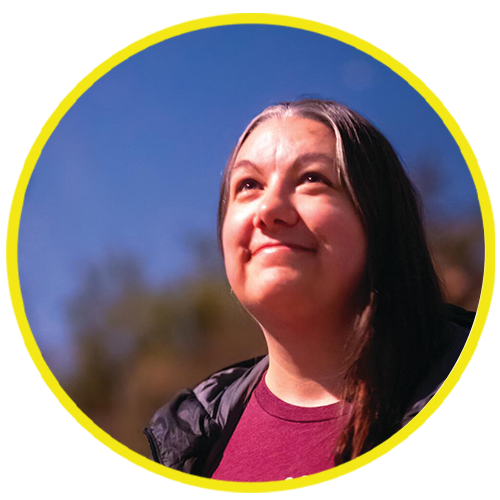

Megan Eaves-Egenes
Megan Eaves-Egenes is a Lowell Thomas Award-winning travel writer whose work explores the intersections of landscape, culture, and the natural world. A passionate advocate for dark skies, she is the editor of DarkSky International’s Nightscape magazine and founded Dark Sky London, a community group focused on light pollution awareness. For many years, Megan was the North and Central Asia Editor at legendary travel publisher Lonely Planet, and she has written about travel and place for the BBC, National Geographic, AFAR, The Times, and others. Originally from the dark-sky deserts of New Mexico, she now lives in London. Find her new book, Nightfaring – In Search of the Disappearing Darkness.
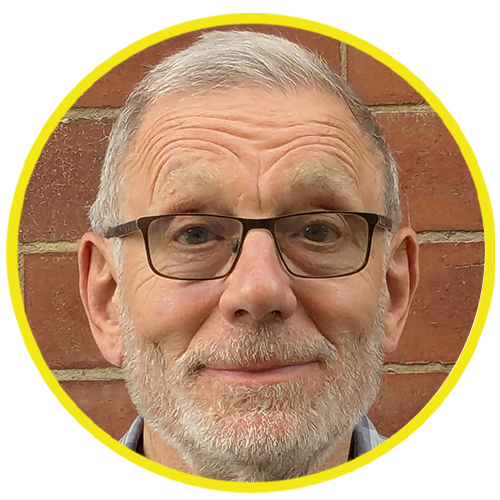
Paul Marchant
Paul Marchant is a UK-based retired academic with a PhD in astrophysics and an MSc in statistics, who became a Chartered Statistician of the Royal Statistical Society in 1994. His career included supporting research at Leeds Beckett University, teaching astronomy and astrophysics, and tutoring an Open University relativity course, with post-retirement honorary fellowships at both Leeds Beckett and the University of Leeds. Beyond academia, he contributed to expert witness work, served on an NHS research ethics committee, and held leadership roles within the Royal Statistical Society. In the 1980s, he grew concerned about rising light pollution, and around the turn of the millennium began questioning the scientific evidence behind the assumption that more outdoor lighting improves public safety, ultimately finding it to be weak and poorly substantiated. Since then, he has critiqued numerous lighting studies and conducted primary research on large-scale relighting projects, none of which demonstrated a measurable safety benefit. His work is accessible through the Artificial Light At Night Research Literature Database, and he advocates for greater involvement of qualified statisticians in rigorously evaluating claims made within the lighting research field.
Barrington Russell
Barrington Russell is an astrophotographer and software builder based in Denmark.
Frustrated by the lack of high-quality statistical data for comparing astronomy locations, and by the absence of any reliable skyline simulator for previewing urban skyglow, he created DarkSkySites as a free platform for the astronomy and Earth-observation communities.
Previously, Barrington co-founded several technology companies, was human No.20 at Trustpilot, developed the award-winning mobile game ConductTHIS!, and most recently built AI image analysis systems for retail brands. He has a background in physics and software engineering, and enjoys paragliding, flying, diving, and astronomy.
Full Article List:
- My Favorite Dark Sky Running in the U.S., Andy Cochrane, Run.
- Full moon paddle tour at Sand Hollow kicks off statewide dark sky scavenger hunt, Grace Hansen, St George News.
- Bali becomes a ghost town for new year. Here’s why, Gillian Aeria, ABC News.
- People are trying the Dutch practice of ‘dusking’ to reduce anxiety and spark creativity, Cecily Knobler, Upworthy.
- Effects of Artificial Night Lighting on Fireflies: Global Synthesis of Scientific Evidence, International Journal of Environmental Impacts.
- Illuminated landscapes: urbanization’s influence on predator and prey behavior, Urban Ecosystems.
- Is urban part-time lighting a mitigation measure for a common amphibian? A case study on Bufo spinosus, Biodiversity and Conservation.
- Insect navigation: Lunar lunacy tamed by an ant, Current Biology.
- The Beautiful Bird Feeder On Amazon That Provides Soft Light At Night, Carrie Elizabeth Bradon, House Digest.
- Satellite imagery reveals increasing volatility in human night-time activity, Nature.
- The 1992–2024 Global NPP-VIIRS-like Nighttime Light Annual Data from Deep Learning Super-Resolution Reconstruction, Remote Sensing.
Light Pollution News: May Highlights
Dark Sky Running Gains Traction Among Outdoor Enthusiasts
Outdoor journalist Andy Cochrane, writing for Outside Run, advocates for running at night with a red-spectrum headlamp or no light at all after discovering how well human eyes adapt under full moon conditions during a run in Joshua Tree National Park, California. Cochrane reports witnessing natural wildlife events, including an owl hunting a rodent, that artificial light would have prevented. He cautions that low-light running is best suited for smooth, familiar terrain rather than technical descents.
Utah Celebrates Sixth Annual Dark Sky Month
Utah marked its sixth consecutive Dark Sky Month with events including a full moon paddle tour at Sand Hollow State Park and a statewide dark sky scavenger hunt, reflecting growing public engagement with light pollution awareness across the American West.
Bali’s Nyepi Holiday Produces One of the World’s Darkest Inhabited Skies
The Balinese Hindu Day of Silence, Nyepi, enforces a strict 24-hour island-wide blackout, no lights, travel, work, or noise, rooted in the belief that darkness signals to wandering demons that the island is uninhabited. As reported by ABC Australia, the resulting absence of light pollution produces a rare opportunity to observe the Milky Way stretching unobstructed across the night sky over a densely populated island.
Dutch Practice of “Dusking” Promotes Mindful Transition from Day to Night
The Dutch ritual of “dusking” — deliberately observing the sky’s natural shift from daylight to darkness at sunset — is gaining attention as a mindfulness and creativity-enhancing practice. A natural secondary benefit is the reduction of unnecessary artificial light use during twilight hours.
Systematic Review Confirms Blue and White Light Most Harmful to Fireflies
A systematic review published in the International Journal of Environmental Impacts confirms that blue and white wavelengths of artificial light cause the greatest disruption to firefly behavior and bioluminescence, while red and yellow wavelengths produce comparatively lesser, though still measurable, harm. The authors note a significant research bias toward the common European firefly, reflecting the geographic concentration of light pollution science in North America and Europe.
Partial-Night Lighting Strategies Show Limited Benefit for Amphibians
A study from Biodiversity and Conservation tested 72 male spiny toads across three nighttime lighting conditions, near-total darkness, constant 0.5 lux, and a split-night 0.5 lux protocol over 24 days using 6000–6500 K lighting. Toads exposed to light shifted their activity to earlier in the evening and retreated to shelters, disrupting their natural peak movement around 3am and 7am. Critically, the split-night group showed circadian phase-shifting comparable to the continuously lit group, suggesting partial-night lighting compromises offer little meaningful refuge for amphibian wildlife.
Artificial Light Deters Pumas and Bobcats, Giving Mule Deer a Strategic Advantage
Research from Urban Ecosystems finds that artificial light at night is a major driver of wildlife behavior in human-adjacent landscapes, with pumas and bobcats actively avoiding lit areas. Mule deer appear to exploit this dynamic by gravitating toward artificially lit zones as a predator-avoidance strategy, though whether the behavior is driven by the light itself or proximity to human activity remains an open question.
Australian Bull Ant Found to Possess First-Known Time-Compensated Lunar Compass
A 2024 study in eLife established that the nocturnal Australian bull ant, Myrmecia midas, uses polarized moonlight as a navigational compass throughout the entire lunar month, even under crescent moon conditions, and remains oriented despite ambient campus light pollution. A landmark 2026 follow-up in Current Biology by behavioral ecologist Cody Freas and colleagues reveals these ants possess an internal time-compensated lunar compass, the first ever documented in the animal kingdom, that anticipates the moon’s variable speed and trajectory across the night sky, paralleling the sun-compensation systems seen in diurnal navigating insects.
Global Nighttime Brightness Increased 16% Between 2014 and 2022, Masking a More Complex Picture
An article published in Nature reports that while net global nighttime brightness rose 16% from 2014 to 2022, the true picture involves a 34% increase in brightening offset by 18% dimming. Dimming in regions including Venezuela, Afghanistan, and Ukraine was driven primarily by economic collapse and conflict, while dimming in parts of Europe was attributed to energy efficiency policies and LED conversions. Brightening, conversely, reflects electrification of previously unlit areas including Sub-Saharan Africa, underscoring how urbanization, energy policy, economic cycles, conflict, and technology all drive the see-saw nature of global light pollution trends.
Chile’s MOTHRA Array to Deploy 1,140 Canon Lenses in Search of Dark Matter
Under construction in Chile, the Massive Optical Telephoto Hyperspectral Robotic Array (MOTHRA) will combine 1,140 Canon EF 400mm f/2.8 lenses with Sony CMOS IMX571 or IMX455 sensors to identify ionized cosmic gas and reveal the location of dark matter in the universe. Canon’s EF full-frame lens system was selected for its precision and established reputation, and the build-out is targeted for completion by the end of 2026.
Light Pollution News: May Read Along
I routinely bike in the dark, with a rather low amount of light, typically leveraging light that bleeds over from streets, buildings, etc. I find that most of the time, the nights are so bright in a big city that you really have no need for additional light when on a relatively smooth trail. And honestly, it’s just more peaceful not to disrupt nature. Well, Andy Cochrane, writing for Run, seems to be of a similar breed.
Cochrane found the joy in running lightless at night after he realized his eyes adapted quite well under full moon conditions during a winter run in Joshua Tree National Park in California. From this, he introduced a large target audience of joggers to the idea of running at night…with either a red headlamp or no light at all. During his runs, he witnessed natural events that otherwise wouldn’t be seen, including an owl successfully hunting a rodent. Cochrane reminds the reader that preparation is key, and nighttime runs probably aren’t the place to tackle techy descents.
Elsewhere, for the sixth year now, Utah celebrated Dark Sky Month. Included in this was a full moon paddle tour at Sand Hollow State Park.
Over in Bali, the annual New Year holiday is Nyepi. Nyepi isn’t solely practiced in Bali, but the ascetic Hindu nature of it appears to be wholly Bali. Everyone must stay home with no work, no amusement, no lights, no fire, and generally be kept quiet and secluded from the world. The holiday extends for 24 hours with a festive lead up, including animal sacrifices and parades. The deserted space and lack of visible human activity is to signal to wandering demons that the world is uninhabited, therefore they should carry on elsewhere. And wouldn’t you know it, per an article from ABC (Australia), one of the best things you can do during this holiday is simply stare at the milky way stretching across the unpolluted sky.
People are into a lot of things these days. Who am I to cast judgment on them, though, to be fair, it’s really hard not to. Take, for instance, the idea of ‘dusking.’ Essentially, you go out and watch the sky naturally transition from day into night, i.e., sunset. Which, I might add, I think is one of the greatest daily experiences one can have. This has a bonus aside of simply keeping the lights off and watching night become a thing. But, I didn’t realize (a) it was a ‘ritual’ and (b) it was attributable to the Dutch.
Before we get into ecology news, I came across this interesting take on a bird feeder? How about this? The bird feeder from a company called DesGully [no sponsorship or affiliate to LPN] includes a stylish metal grating that makes it look like a lantern…and you know what, it comes with a solar panel and is a lantern! One more thing to add to your backyard’s glow up!
This month, over in ecology, a team published in the International Journal of Environmental Impacts performed a systematic review covering artificial light’s impact on fireflies. I think the key takeaway from this study is something we all know, but is always worth repeating. Blue and white wavelengths of light impact fireflies the most; Red and yellow light aren’t completely without their faults either, though to a much lesser degree. The best night light, of course, is no light for fireflies. I will note that the authors point out that this review identified research biased toward the common European firefly. It probably doesn’t come as much of a shock that this is the case, due to most of the research in this area deriving from either North American or European research teams.
Here’s a study out of Biodiversity and Conservation that asks what I consider to be a very important question, especially considering many folks, like myself, have advocated for a split light/dark nighttime compromise. It asks – does turning off the lights for part of the night actually do anything to benefit animals?
In this case, they looked at 72 male spiny toads. These toads were taken from dark areas in France and housed in areas with one of three basic nighttime environments: one with only the tiniest trace amounts of light; one that included exposure to .5 lux from 7pm to 9am; and one that split the difference, with .5 lux up till 11pm, then again starting with .5 lux at 5am onward. The team used 6000 – 6500 K colored lighting in this experiment and ran the test for 24 days. Researchers analyzed toad movements over the course of the experiment.
What about the results? Well, it appears that the toads really didn’t appreciate their newfound security lighting. Overall, toads exposed to light found solace by running into the toad shelters that the researchers created. This early night activity spike contrasted with the control group, which primarily experienced physical movement at later times in the night, usually around 3 AM and 7 AM.
This shift in activity from the standard late night movement in the control group to early evening in the lit groups falls in line with circadian phase shifting that the research team predicted as an impact from light pollution. It should also be noted that overall, there was no increase in total movement between toad groups, so in effect, the affected toads did all of their activity earlier in the night than those in a natural setting.
From Urban Ecosystems, a study looked at the interplay between pumas, bobcats, and mule deer and found that artificial light at night is a major driver of wildlife behavior. Specifically, artificial light at night appears to deter pumas and bobcats. But wouldn’t you know it, those mule deer are keen to this, so what do they do? They move toward areas with artificial light at night. The study, which I was not able to access, appears not to identify if this activity was solely attributable to the artificial light itself or rather in interest in staying close to human activity for protection.
Let’s close out our ecology news with a reminder that the natural world is truly an amazing place! We have such an overinflated view of our own species that we forget the genius of others. Researchers in Australia wanted to see if nocturnal animals utilized the moon as a compass in a similar manner to how diurnal animals navigate by day, utilizing the sun.
In a 2024 article published in eLife, a team studied the bull ant, Myrmecia midas, a native critter to Australia. The researchers placed rotating polarizing filters over ants and observed them following the path of the filter rotation. These ants are able to detect this polarized moonlight cue throughout the entire lunar month, even when polarized light levels are at their lowest—indicating that nocturnal bull ants can make use of even the faintest polarized moonlight. And apparently, not even your run of the mill campus light pollution can send a hardy nocturnal ant astray!
Fast forward to now, a follow-up study published in Current Biology shows these ants possessing a skill even more impressive, that is, an internal lunar compass! These ants developed a predictive system that allows them to anticipate where the moon will be in the sky throughout the lunar month. Since everything about how the moon looks in the sky changes rather significantly each night, the ants evolved a biological calculator that accounts for these variations in much the same manner as how diurnal animals compensate for the sun’s movement. I’m showing my human bias here when I say, what an impressive navigational system for a creature that many of us regard with so little reverence!
Global nighttime brightness increased by 16% between 2014 and 2022. But wait, it’s more complicated than that! According to an article published in Nature, the actual increase in brightening increased by 34% but was offset by 18% dimming. Not all of that dimming is good news. In many parts, including Venezuela, Afghanistan, Ukraine, and more, dimming resulted from economic collapse and disruption. However, in other parts of Europe, the authors attributed it to energy policies and LED conversions. Brightness, conversely, lit up new areas of the world via electrification, including places like Sub-Saharan Africa. But all that is not really what was interesting about this paper. I think most of you listening recognize this trend already. Rather, it’s the see-saw nature of some of the lighting itself, be it driven by urbanization, energy policy, economic cycles, conflicts, or technological changes.
Down in Chile, I guess someone had an affinity for Godzilla when they came up with the name for this one – the Massive Optical Telephoto Hyperspectral Robotic Array, MOTHRA for short, is being constructed to include 1,140 Canon EF 400mm f/2.8 lenses attached to Sony CMOS IMX571 or IMX455 sensors.
The team selected the use of EF lenses due to both their precision and historical reputation. EF lenses, for you at home, are the full frame lenses that Canon developed for their DSLR series over a decade ago. The project aims to identify ionized cosmic gas to reveal the location of dark matter in the universe. The build out is aiming to be completed by the end of 2026.
