

April 2026: Conquering Nature, Light Pollution News
Join our mailing list. Follow us at LinkedIn, Instagram, Facebook, & Tiktok.
This Episode:
I’m very excited about today’s guest lineup. I have with us someone who has been an inspiration to many of you listening at home, that being Mr. Johan Eklöf. Also with us today is Chetna Misra from the great organization, Lightbahn! And we welcome Leo Smith back.
This episode, you’ll hear about what happened between Leo and his recent suit against the Connecticut Court System! We also cover a lot of policy news – including some events down in Big Bend and New Zealand. You won’t want to miss that. And rounding out our health news, does night mode actually do anything for your health?
All this and much more on today’s episode of Light Pollution News!
Like What You See and Hear? Consider Supporting the Show.
A hearty thank you to all of our paid supporters out there. You make this show possible.
For only the cost of one coffee each month, you can help us continue to grow. That’s $3 a month. If you like what we’re doing, if you think this adds value in any way, why not say thank you by becoming a supporter!
Why Support Light Pollution News?
- Receive quarterly invites to join as a live audience member for recordings with special Q&A sessions post recording with guests.
- Receive all of the news for that month via a special Supporter monthly mailer.
- The satisfaction that your support helps further critical discourse on this topic.
Support Light Pollution News!
Host:
Guests:
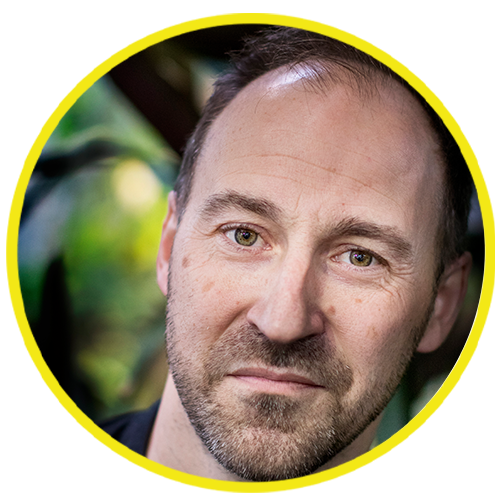
Johan Eklöf
Johan Eklöf is a Swedish bat scientist and writer renowned in the scientific community for his research on microbat vision and, more recently, light pollution. Born in 1973 near Gothenburg on Sweden’s west coast, Eklöf has built nearly two decades of expertise in bat ecology and night science.
Originally drawn to biology through interests in paleontology and nature’s mysteries, Eklöf earned a Master’s degree in biology and earth science before completing his PhD in zoology focused on bats in 2003. After several years of teaching and research at Göteborg University, he transitioned to independent work as a freelance writer and ecologist.
Today, Eklöf works as a consultant advising authorities, wind companies, municipalities, city planners, and environmental organizations on bat ecology, night ecology, and wildlife-friendly lighting. His work follows a seasonal pattern: conducting bat field surveys during the warmer months and writing prolifically during winter. His publications span children’s books, popular science, folklore, and poetry. His 2020 book The Darkness Manifesto garnered significant media attention across major newspapers, television, podcasts, and radio. Eklöf is currently completing a new book with the working title Moonlight.
Chetna Misra
Chetna Misra is the founder of Lightbahn, an interdisciplinary lighting design practice based in Ottawa, Canada, that focuses on protecting and restoring the natural night. Trained as an architect, she spent over a decade working as an architectural lighting designer in Dubai and Amsterdam, contributing to major projects across architecture, landscape, and urban design. Her practice addresses a central tension in contemporary lighting: the same technologies that shape nighttime environments are also responsible for rapidly erasing natural darkness.
After moving to Canada in 2022, Chetna began exploring this challenge through design thinking and systems approaches to environmental problems. Lightbahn grew from that inquiry, bringing together lighting expertise, human-centred design, and environmental stewardship to address light pollution as what it ultimately is: a design problem with design solutions.
Alongside her research and design work, Chetna hosts dark-sky experiences in the Canadian Capital Region, where she explores how encountering a truly unpolluted sky can fundamentally change a person’s relationship with artificial light. For many participants, a dark sky is something they have never seen, and that, she believes, is part of the problem.
Leo Smith
Smith has twenty years of experience working to mitigate light pollution, including as a Dark Sky International board member between 2004 and 2016. Smith partook in the Model Lighting Ordinance Task Force, a joint document between Dark Sky International and the Illuminating Engineering Society. Smith also participated in the Roadway Lighting Committee for the Illuminating Engineering Society between 2006 and 2019. Currently, Smith is hard at work growing the Coalition to Reduce Light Pollution in his home state of Connecticut. You can find him at ReduceLP.org.
Full Article List:
- SMITH, LEO F v. MULLINS, RAHEEM L Et Al, State of Connecticut Judicial Branch.
- The border wall is closing in on Big Bend, sparking opposition by locals, Martha Psowski, Inside Climate News.
- New planning rules threaten Kaikōura’s dark sky status – council, 1 News.
- Why there’s no quick fix in sight for the problem of dazzling headlights, BBC News.
- Modern car dashboards are ruining our night vision, Matt Saunders, Autocar.
- ‘The normal should be darkness’: why one Belgian national park is turning off ‘pointless’ streetlights, Phoebe Weston, The Guardian.
- Astronomers declare rare dark-sky victory over scrapped energy project in Chile, Jenna Ahart, Scientific American.
- Shining a Light on Learning: The Impact of Light Pollution on Primary School Performance in London, LSE Journal of Geography & Environment.
- Dim light at night impacts circadian rhythms and Alzheimer’s disease-like neuroinflammation and neuropathology in humanized APP SAA knock-in mice, Sleep.
- Light pollution and risk of diabetes: a systematic review and meta-analysis of observational studies, Frontiers in Public Health.
- Blue light filters don’t work, Patrick Mineault, Neuroai.science.
Light Pollution News: April Highlights
Connecticut Court System Sued Over Failure to Comply with Environmental Lighting Law
Leo Smith filed suit against the Connecticut Court System in Smith v. Mullins, alleging courts failed to comply with statutes requiring responsible outdoor lighting and mandatory shutoffs of nonessential lights between 11pm and 6am. The suit challenged Chief Court Administrator Elizabeth Bozzuto’s reclassification of decorative lighting as essential. The Connecticut Superior Court dismissed the case, claiming darkness is not a protected natural resource and that arbitrarily reclassifying lights as essential circumvents the law.
Trump Administration’s Border Wall Project Threatens Big Bend National Park Dark Sky Status
The U.S. Department of Homeland Security waived 28 environmental laws to construct the “Smart Wall” at Big Bend, Texas, but data contradicts claims of high illegal crossing rates. Border crossing data shows a 74 percent reduction between 2023 and 2025, dropping from 11,823 to 3,096 apprehensions. The park generates $64 million annually and holds an International Dark Sky designation, but construction threatens the dark sky status and wildlife migration corridors. While Big Bend National Park received temporary relief, Big Bend Ranch State Park remains targeted for full wall construction.
New Zealand Planning Bill Threatens Kaikoura’s International Dark Sky Sanctuary Status
New Zealand’s proposed Planning Bill would replace the 1991 Resource Management Act and accelerate development by reducing permit requirements by 46 percent. The reform directly threatens Kaikoura’s 2024 International Dark Sky Sanctuary status, established after implementing comprehensive responsible lighting policies including 3000K color temperature fixtures and motion sensors. The Planning Bill would allow Wellington to unilaterally revoke existing nighttime protections, with projected passage by midyear.
Headlight Glare Complaints Persist Despite Data Showing Downward Accident Trends
The Insurance Institute of Highway Safety found no increase in glare-related accidents and identified accident prevention benefits from brighter headlights. UK Department of Transportation analysis from 2014-2023 confirms a downward trend in glare-related accidents. Despite scientific evidence, public perception remains that glare is a safety hazard, with inadequate research on indirect impacts like older drivers abandoning nighttime driving.
Vehicle Interior Lighting Design Flaws Impact Driver Night Vision and Safety
Manufacturers including Mercedes-Benz and BMW are implementing accent lighting that compromises driver night vision and circadian rhythm stability. Legacy manufacturers like Saab offered “night panel” modes that dimmed all lighting except essential instruments. Porsche demonstrates superior design by directing accent light to cast ambient glow against surfaces rather than toward the driver, effectively eliminating glare while maintaining aesthetics.
US Senate Committee Advances Satellite Approval Acceleration with Constellation Thresholds
The U.S. Senate Commerce Committee advanced legislation to streamline FCC approval timelines for satellite megaconstellations. The original “deemed granted” provision would automatically approve applications after one year, but Senator Maria Cantwell’s objection led to modifications requiring FCC qualification standards and undefined “constellation threshold” limits to prevent unlimited satellite deployment.
Belgium Removes 75 Streetlights from National Park Based on Utility and Ecology Analysis
The Entre-Sambre-et-Meuse National Park in southern Belgium removed 75 streetlights identified through utility analysis, where administrators found 6 percent of 8,000 lights served no viable purpose. Removal decisions were based on proximity to buildings and foot traffic patterns, plus environmental impact assessment.
Chilean Astronomers Successfully Block Renewable Energy Project Threatening Atacama Observatory Complex
Astronomers in Chile’s Atacama Desert successfully persuaded AES Andes to cancel a renewable power facility that would have compromised observatories through vibration, unstable air, and light pollution. The campaign framed the issue as requesting infrastructure relocation rather than anti-development opposition. President Gabriel Kast publicly opposed the project, and astronomer Maria Teresa Ruiz is developing protective frameworks around observatories to prevent future conflicts.
Light Pollution Correlates with Reduced Student Academic Performance, LSE Study Finds
Research in the LSE Journal of Geography & Environment examined 1,379 schools and found that for every doubling of light pollution levels, students performed 2.8 percent worse academically, even after controlling for socioeconomic factors. The study was limited to one year of data (2016) and did not account for school funding or median family incomes, factors that would likely strengthen findings. The research represents an important first attempt at quantifying light pollution’s educational impacts.
Blue Light Filter Software Ineffective for Sleep Improvement, Research Confirms
Visual neuroscientist Patrick Minneault tested blue light filter software and found night shift mode reduces blue signal by 50 percent—insufficient for human vision operating on a logarithmic scale. Studies from 2024 in Sleep Health and Electromagnetic Biology and Medicine found blue light filtering apps provide no sleep benefits, though Chronobiology International identified positive effects from blue-blocking glasses. Minneault recommends focusing on overall screen brightness reduction and dark mode instead of color filtering.
Artificial Light at Night Accelerates Alzheimer’s-Like Disease Progression in Mice
Research in the journal Sleep found that artificial light at night disrupts circadian clocks and accelerates Alzheimer’s-like plaque accumulation in genetically predisposed mice. Dim lighting alone disrupted internal clocks, while artificial light exposure increased plaque and protein buildup. The findings suggest a mechanistic link between light pollution and neurodegenerative disease progression.
Meta-Analysis Links Nighttime Artificial Light to 31 Percent Elevated Diabetes Risk
A meta-analysis in Frontiers in Public Health synthesized six studies examining over 645,000 individuals across the US, Japan, UK, and China, finding nighttime light exposure associated with 31% elevated diabetes risk. Interior light exposure posed substantially greater risk (66% increase) compared to outdoor street lighting (10% increase). Locations with brightest light had 19% elevated risk versus 10% for low-to-moderate exposure, though findings demonstrate correlation rather than proven causation.
Light Pollution News: April Read Along
Leo, let’s get into it. Since we last spoke, you sued the Commonwealth of Connecticut. The vehicle that you used was the Connecticut Environmental Protection Act of 1971. And the facts of the case are as follows.
There were two general statutes: 4b-16, which required the state to replace outdoor lights on state buildings with responsible fixtures and use only the minimum amount of light for its intended purpose; and 4b-16a, which required state owned buildings to turn off their nonessential lights between 11 pm and 6 am, with the sole exemption being the Capitol building.
Leo, you filed suit in Smith v Mullins alleging that the Connecticut Court System failed to abide by those two statutes, and in fact, that Chief Court Administrator Elizabeth Bozzuto went a step further and reclassified decorative lighting to be essential. Your hope was to simply have the court obey the law by requiring them to turn off or otherwise fall in line with 4b-16a. To which, it’s my understanding, that Bozzuto pretty much said, and this is certainly not a quote – over my dead body we’re turning off those decorative lights! Those decorative lights are for security! Security, I tell you!
Well, the Superior Court of Connecticut has returned its decision, and the court, perhaps unsurprisingly, dismissed the case, claiming (1) Darkness isn’t a protected natural resource under the Connecticut Environmental Protection Act and (2) that you can circumvent the law simply by arbitrarily deciding something is an ‘essential’ light. Are those facts correct?
The other big news, perhaps the biggest news this month, came out of Texas. The former US Department of Homeland Security Secretary Kristi Noem unilaterally waived 28 laws, including environmental and historical preservations to construct what they term a ‘Smart Wall.’ Noem declared the Big Bend Sector to be “an area of high illegal entry where illegal aliens regularly attempt to enter the United States and smuggle illicit drugs.”
Now, perhaps also unsurprisingly, this contradicts most of the facts on the ground. For one, getting to Big Bend and then getting away from Big Bend is no small feat. Former Big Bend National Park Superintendent Bob Krumenaker went on the National Parks Traveler podcast and mentioned that there were no paved roads that would take you remotely close to Big Bend on the Mexican side. Now, of course, that isn’t the end all, but once you cross over, you’re still a very long way away from any major urban area, much less the end of the park itself! And along that route out of the park, actually right outside the park, is a checkpoint, which not a lot of people talk about for some reason, but the pre-wall southern border already has a series of checkpoints on border roads.
In addition, something that most folks probably weren’t aware of, either, is that Big Bend already employs a network of cameras to track activity on the border in the park. Border crossings as recent as 2025 showed sizable reductions, by the order of 74% between 2023 and 2025. Those raw numbers for you at home, per the US Customs and Border Protection, were a drop from 11,823 apprehended crossings to just 3,096. To that point, Superintendent Krumenaker adds that many folks simply give themselves up, because they must navigate through this gigantic, rugged park before they can even get to a major road.
Should the border wall be constructed, desecration of the Dark Sky status is probably the least of the concerns. It will also, as has been the case for much of the rest of this wall, jeopardize the wildlife directly living there and those that migrate. The park itself generated an estimated $64M to the surrounding economy in 2024 and thrives, in part, by its Dark Sky designation.
Per the latest updates, it appears that Big Bend National Park may be receiving a stay of execution, as the Department of Homeland Security has very recently removed the ‘Smart Wall’ designation for the park. But, unfortunately, the same is not true for Big Bend Ranch Park, the state park that sits just northwest of its much larger cousin, and not much of a stay for the Dark Sky status either. Big Bend Ranch State Park is slated to have the full ‘smart wall’ constructed, at least partially, through it.
If anyone is interested in signing a petition, you can head over to the website NoBigBendWall.org. The link will be on this episode’s Read Along on our website. They have a petition goal of 150k and are currently sitting at 86k.
In the same vein, from one of the lands down under, a minister named Chris Bishop is looking to significantly alter environmental protections. Currently, environmental regulation in New Zealand derives from the 1991 Resource Management Act. The new proposal will split that act into two, providing a Planning Bill to cover infrastructure and development, and a Natural Environment Act for more of what is considered traditional environmental protections. I should note that the Planning Bill also wishes to put a cap on community input to speed growth.
And it’s the Planning Bill that is pertinent to our conversation today. If you’ll recall, a couple of years back, we discussed some responsible lighting policies in the community of Kaikoura, which became an International Dark Sky sanctuary in 2024. Kaikoura implemented lighting rules that included retrofitting lighting to be 3000K color lighting and utilizing motion sensor replacements where possible. The community also worked with the New Zealand Transport Agency to reduce roadway lighting on Highway 1 to warm temperatures below 3000K with the direct intent to protect the Hutton’s shearwater.
So this new legislation, should it pass, may allow Wellington to wipe clean any nighttime protections currently existing in Kaikoura, and therefore lead to a potential loss of its Dark Sky status. It’s being claimed that the impact of the legislation will reduce the need for permit applications by just under half (46%). The Planning Bill is currently being worked through Parliament with a target date of mid-year.
Headlights are in the news again. You’ll recall that the Insurance Institute of Highway Safety put out a recent report that said, ‘yeah bright headlights are annoying, but from a data standpoint they’re not causing additional accidents – in fact they’re preventing them.’ And this sentiment is echoed over in the UK, whereby the Department of Transportation, when looking at headlight glare specifically, found that there was a downward trend in accidents between 2014 – 2023. But regardless of the facts, there appear to be folks who feel impacted by glare. However, quantifying that experience, and any subsequent experiences, such as an 80 year old who decides to give up on driving due to the glare, has not yet been assessed.
And since we’re here, there’s no shortage of lights emitted from inside the car either. There’s an opinion piece by Matt Saunders of Autocar who chastised a number of car manufacturers for implementing in-cabin glare. The in-cabin glare Saunders talks about are things like these new light ribbons that ring the inside of the car from manufacturers like Mercedes and BMW. Saunders quips that it’s ‘as if some car design departments have forgotten how the human eye works,’ and goes on to mention that back in the day, Saabs used to have a switch that would put the car in a ‘night panel’ option, extinguishing everything but the speedometer.
Now, I’m personally not a fan of accent lighting in a car. To me, it feels childish, kinda like something you’d do when you trick out a car in high school. But Saunders did mention how Porsche actually made the in-cabin accent lighting not put off glare, namely by having the light fixtures themselves cast a glow against the interior – rather than outward toward the driver.
We need some upbeat stories…How about in the world of Satellites? I’m not sure what to make of this legislation, although it will likely impact all of us here on the show today. The US Senate Commerce Committee forwarded legislation that will increase the speed of approvals for new satellites. Originally, the legislation included a ‘deemed granted’ provision, which essentially said – hey, if that bill hasn’t been acted on by the FCC after one year, it’s approved! Thankfully, wiser minds prevailed, led by an objection from Washington Senator Maria Cantwell.
Now, the legislation will ask the FCC to provide qualifications that satellites must meet for fast tracking approvals. Included is a vague terminology of ‘constellation threshold.’ I’m not exactly sure what that means, but the original intent appears to be to limit Starlink from setting up a 1M satellite data center.
Out in southern Belgium, the residents will be seeing 75 fewer streetlights. These lights were analyzed for both their overall utility (or lack thereof) and their proximity to natural habitat. The plan was derived in 2021 when administrators surveyed the 8,000 streetlights and identified that 6% of them served no viable purpose.
So, I know you at home are wondering, what exactly does it mean for a streetlight to ‘serve no purpose’? Well, I’m glad you asked! The street light removals took place in the ‘Entre-Sambre-et-Meuse National Park, which borders France. The administrators audited the streetlighting and calculated the overall distance from buildings and the average foot traffic underneath of them. Once the team determined that there was no utility for these, i.e., no foot traffic nor near buildings or residential zones, they assessed whether the lights might impact ecology, then marked lights for removal.
Now, of course, there were folks who acted quite reflexively to the idea of removing light, citing fear for their lives despite no one actually using these lights. Nicolas Goethals, who steers what’s called the ‘Trame Noire’ initiative (that’s Dark Network), believes that darkness should be the default nighttime mode.
Speaking of potential wins for protecting nighttime, this one came in just out of range of my monthly pull last month. But I wanted to speak to it. The Atacama Desert Observatory area looks to have staved off near disaster as the AES Andes group announced it decided to put a halt to its plans to build a new renewable power plant in the area.
Once announced, the plan received significant blowback from astronomers, who feared vibration, unstable air, and light pollution would ruin the precision of some of these high priced observatories. According to Dark Sky, the win comes from the organization of astronomers and allies, who avoided presenting themselves as anti-development, but rather requested that the development occur away from observatories in the desert.
The issue rose all the way up to the presidential level, where Chile’s conservative president (Kast) spoke out against the energy project. Astronomers, such as Maria Teresa Ruiz, are working with the Chilean legislature to develop protections around the sites to prevent similar situations from occurring.
Let’s round out today with some health news. This was forwarded over to me from a friend of the show, Dani Robertson. In the LSE Journal of Geography & Environment, Jolie Chan asked if something as seemingly benign to most folks, light pollution, could cause impacts in education. Chan gathered data from 1,379 schools, including student performance, satellite light pollution measurements, and socioeconomic factors (such as the parents’ education levels and the pupil-to-teacher ratio) to see if light pollution had any correlational effect on education.
The results showed that for every doubling of light pollution levels, students could expect to do 2.8% worse! And this effect persisted despite controlling for those socioeconomic factors!
I want to stress that before reading too deeply into these results, there were some limitations. The data is of a one year term (2016), not continuous. School funding levels were not considered, nor were median family incomes. These latter two items that would surely bolster this study. Regardless, an interesting first attempt. I’m looking forward to seeing if future studies will recreate this result.
Well, a guy named Patrick Minneault wrote an interesting piece on his blog, NeuroAI. He looked at all blue light filters and did some testing on his own. Minneault claims to be a “visual neuroscientist” and believes that these blue light filters are not as effective as advertised to reduce circadian rhythm issues. Rather, he asserts, we should be reducing total luminance.
One of the things that Minneault did was to measure the output of his MacBook in night shift mode. The mode was measured to reduce the blue signal by about half. However, he points out, that’s not significant for human eyes as human vision works on a logarithmic scale. He even goes further to assert that melatonin suppression from 50% less blue light might only reduce from 50% to 25%, which he claims to be modest. As such, it wouldn’t imply that you’d have better sleep.
So what does the science say here?
In 2024, a study from Sleep Health found that night shift does not provide added sleep benefits over just using your phone in normal mode. Also, in 2024, from Electromagnetic Biology and Medicine, blue light filtering apps again were found to have no “sustained positive effects” on sleep. However, a review paper from Chronobiology International identified sizable evidence for positive sleep effects when using blue blocking glasses.
So Minneault’s article seems to be confirming a failure in the software we put our faith into for providing a healthy wind down at night. Minneault goes on to suggest that you should focus on the overall screen brightness versus color, as reductions in overall luminance appear to go much farther. So keep it dim. Use dark mode where possible.
Elsewhere in health news, from the journal Sleep, researchers took another look at the artificial light at night – Alzheimer’s disease connection. They studied genetically modified mice that developed Alzheimer’s like plaques. Dim lighting had the ability to throw off the mouse’s internal clock. Additionally, mice predisposed to Alzheimer’s showed an increase in plaques and proteins when the brain was exposed to artificial light at night.
There was also a meta-analysis in Frontiers in Public Health examining whether nighttime artificial light increases diabetes risk. The team synthesized six observational studies that tallied over 645,000 folks across the United States, Japan, the United Kingdom, and China. The researchers found that exposure to light at night was associated with a 31% higher risk of developing diabetes overall. However, perhaps for obvious reasons, indoor light exposure posed far greater risk than outdoor sources. Folks exposed to interior nighttime illumination faced a 66% increased risk, while outdoor street lighting accounted for only a 10% increase. I should note that ‘interior’ illumination could have resulted from exterior lighting; that part wasn’t clearly defined, but we have seen that be the case in other studies utilizing IOT devices.
When researchers broke down severity, places that were the brightest had a 19% elevated risk compared to 10% for low-to-moderate exposure settings. They looked at studies that quantified light at night by way of wrist mounted devices, surveys, and satellite data. This data did not prove causation, only correlation.
