
August 2026: Sustainable Regeneration? Or is it Regenerative Sustainability?, Light Pollution News
This Episode:
This episode of Light Pollution News, you have dark skies, now what? The role of bats in agave pollination. And, what on earth is being built in Saudi Arabia? The answer may look like something right out of Dune!
Joining me are three incredible guests, CEO of Dark Sky International, Ruskin Hartley; Ecologist, Dr. Kaori Yokochi; and cohost of one of my favorite podcasts, Shane Ludtke.
Stay with us as all this and more will be coming up next, including news articles not captured in the duration of the show – so be sure to stay with us after the close out!
Like What You See and Hear? Consider Supporting the Show.
A hearty thank you to all of our paid supporters out there. You make this show possible.
For only the cost of one coffee each month, you can help us continue to grow. That’s $3 a month. If you like what we’re doing, if you think this adds value in any way, why not say thank you by becoming a supporter!
Why Support Light Pollution News?
- Receive quarterly invites to join as a live audience member for recordings with special Q&A sessions post recording with guests.
- Receive all of the news for that month via a special Supporter monthly mailer.
- The satisfaction that your support helps further critical discourse on this topic.
Support Light Pollution News!
Host:
Guests:

Ruskin Hartley
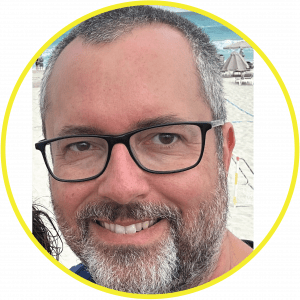
Ruskin Hartley, CEO of DarkSky International, champions a global movement to protect natural night skies by advocating for responsible outdoor lighting. With over 20 years in environmental conservation, he has engaged with leaders and communities worldwide to promote sustainable lighting practices that mitigate light pollution’s adverse effects on health, wildlife, and climate. Previously, he held leadership roles at Fair Trade USA, Heal the Bay, and Save the Redwoods League. A graduate of the University of Cambridge and the University of East Anglia, Hartley’s commitment to conservation is deeply rooted in his childhood experiences with nature in the UK.
Kaori Yokochi
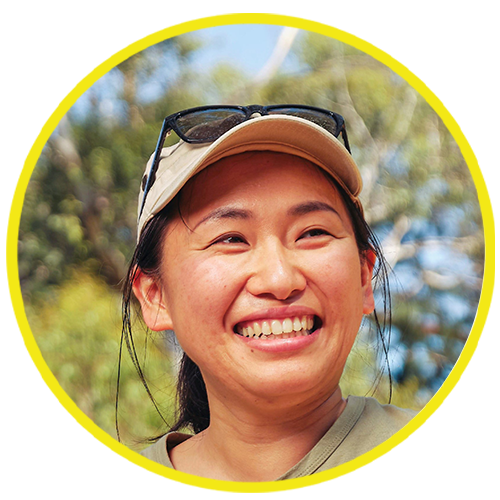
Dr Kaori Yokochi is a Wildlife Ecologist at Deakin University in Melbourne, Australia. Her research focuses on conservation of Australian mammals, with a particular interest in Urban Ecology and impacts of human infrastructure on wildlife, including artificial light at night. She aspires to find better ways for both humans and wildlife to thrive in our cities. Kaori joined NERAL (Network for Ecological Research on Artificial Light) in 2020 when she started research on the impacts of temporary lighting on microbat communities. She is also a member of ADSA (Australasian Dark Sky Alliance) and passionate about raising awareness of the impacts of light pollution on wildlife, especially on microbats.
Shane Ludtke
Shane Ludtke has had a lifelong interest in astronomy. His first view of Saturn through a telescope at age 9 established his love of the night sky. Shane became an active astronomer in 2003 after purchasing an 8” Dobsonian telescope. Shane loves to observe all objects in the sky and uses telescopes ranging from 25mm to 300mm aperture. Shane is an active member of the local astronomy club and has held numerous positions, including President. Shane and his long-time observing friend, Chris Beckett, began the Actual Astronomy podcast in 2020 and continue to release 2 episodes weekly that focus on visual observing.
Full Article List:
- L&A Dark Sky Viewing Area becomes home to 25” telescope, Attilla Danko Deep, Tori Stafford, Kingstonist.
- Design approved for AlUla Manara observatory and research center, Arab News.
- Farmers in a national park are turning down lights at night to help wildlife – it could be good for crops too, Jenny Hall, The Conversation.
- Mona Khalil, who left safety in Europe to protect sea turtles in Lebanon, was killed by an Israeli airstrike, Rhett Ayers Butler, Mongabay.
- Brighter nights, greater health risks: intensity-dependent disruptions by nighttime light exposure on sleep and metabolism in diurnal zebra finches, Photochemical & Photobiological Sciences.
- Changing vertical substrate color and pattern to reduce seabird collisions associated with artificial light, Ornithological Applications.
- Artificial light pollution disrupts sleep and neuronal genomic stability in wild reef fish, Current Biology.
- How Bats Keep Agave Alive: The Nighttime Pollinators Behind Tequila, Reynard Loki, LAProgressive.
Light Pollution News: August Highlights
Clear Sky Chart Creator Remembered With Telescope Named in His Honor
Attilla Danko, the Nortel Networks programmer who partnered with Allan Rahill of the Canadian Meteorological Centre to create the astronomy forecasting tool now known as the Clear Sky Chart (originally the Clear Sky Clock until a 2008 rebrand) died in 2024. His widow, Ingrid, donated his 25″ Obsession Dobsonian telescope to Ontario’s Lennox and Addington County Dark Sky Viewing Area, where it has been named the Attilla Danko Telescope and will be housed in the newly built Attilla Danko Deep Space Port.
Saudi Arabia Unveils Manara, a Dune-Like Astrotourism Observatory Designed by Heatherwick Studio
Saudi Arabia is developing Manara, a new astrotourism facility roughly 70 kilometers north of AlUla, designed by Heatherwick Studio and named after the Arabic word for “lighthouse.” The striking design features telescope tubes of varying sizes jutting out in multiple directions, and the site will house three telescopes for public use, including one 4-meter and two 2-meter instruments, aimed at everyday visitors rather than professional astronomers.
North York Moors Farmers Reduce Light Pollution While Gaining New Business Opportunities
In the UK’s North York Moors National Park, more than 20 farms have worked with the park since 2021 to replace security floodlighting — originally installed to deter equipment and livestock theft — with downward-facing, shielded fixtures. The improved lighting has also opened new income opportunities for farmers, including entry into the bed and breakfast market, and the park now maintains a public map showcasing participating dark-sky-friendly facilities.
Bat-Pollinated Agave Produces Nearly 3,000 Times More Viable Seeds, But Light Pollution Impact Remains Unstudied
The Mexican long-nosed bat and lesser long-nosed bat pollinate wild agave plants, the source of tequila and mezcal, with bat-pollinated agave producing nearly 3,000 viable seeds compared to non-bat pollination methods. Most commercial agave is propagated through cuttings rather than bat pollination, reducing genetic diversity, and despite bats being frequently cited by conservation groups including Dark Sky International, no study has yet examined how light pollution affects these ecologically and economically important bat species.
Zebra Finch Study Finds Even Dim Nighttime Light Disrupts Metabolism Through Altered Eating Timing
A study in the Journal of Experimental Zoology exposed 28 zebra finches to varying nighttime light levels (2, 5, and 8 lux, versus darkness) over three weeks and found that any nighttime light shifted birds’ eating and activity into dark hours, disrupted sleep patterns, and increased body mass, fat accumulation, and blood glucose. Notably, birds under light didn’t eat more food overall — the timing of eating, not the amount, drove the metabolic changes, though the study’s sample size of seven birds per condition was small.
Storm-Petrels Nine Times More Likely to Collide With Lit Surfaces
Researchers publishing in Ornithological Applications tested how surface color and pattern affect collision risk for nocturnal Leach’s Storm-Petrels, cycling a white LED floodlight on and off across 40 nights in Nova Scotia in 2024 and 2025 while rotating white, beige, black, and patterned cloth sheets. Birds were nine times more likely to collide with lit sheets than unlit ones, black surfaces reduced collisions by 66% compared to white, and patterned surfaces cut collisions by 58-65% versus plain sheets, suggesting artificial light disorients rather than attracts the birds.
Artificial Light Disrupts Sleep and Triggers DNA Damage Markers in Reef Fish
A Current Biology study used infrared video and machine-learning tracking to examine how artificial light at night affects blue-green damselfish in the Gulf of Aqaba, Israel, both in lab and reef settings. Under artificial light, fish expanded their territory, became more aggressive, fed at unusual hours, and slept significantly less, with sleep disruption correlating with elevated DNA damage markers in brain regions responsible for overnight cellular repair, with effects persisting across five months of chronic exposure.
Lebanese Sea Turtle Conservationist Mona Khalil Dies From Injuries Sustained in Israeli Strike
Mona Khalil, founder of the Orange House marine conservation project in southern Lebanon, died from injuries sustained in an Israeli military strike on her home. Khalil, a Lebanese Civil War refugee who returned to Lebanon and dedicated her life to protecting loggerhead and green sea turtles after witnessing one nesting on the shore, recruited volunteer beach patrols, organized turtle viewing events, and fought coastal pollution and destructive fishing practices. She was 76.
Light Pollution News: August Read Along
Let’s start this episode out with some news about someone many of you listening may be familiar with.
Attilla Danko is best known for creating what I believe is either the first or one of the first attempts at gauging astronomical related weather on the internet. Danko, while working at Nortel Networks writing code, joined forces with Allan Rahill of the Canadian Meteorological Centre. Leveraging Rahill’s forecasting algorithms, the two men created a chart with colored boxes that informed the user of specific sky conditions for each hour of the day. For those of you who have been into astronomy for some time, you may recall its original name, the Clear Sky Clock, now you can find the website under the name ‘Clear Sky Chart.’ That name changed sometime back in 2008, when the internet was still largely a fun and joyful place to be.
His contributions to amateur astronomy go beyond just making this highly valuable tool. He no doubt inspired countless folks to go out and observe. He built a community through Clear Sky Chart that allowed anyone in North America and the Caribbean with an observatory, be it at home or professional, to create a forecast for their location.
Unfortunately, he passed after a battle with lung cancer on November 28th of 2024, despite never being a smoker. However, his legacy still lives on, and not just through the Clear Sky Chart, but also in Southern Ontario at the Lennox and Addington County Dark Sky Viewing Area. When he passed, his wife, Ingrid, succeeded him and has generously donated his 25” Obsession dobsonian telescope to the facility for use (technically it was donated by his estate).
The telescope, which has been named the ‘Attilla Danko Telescope’ is a nod not only to his revolutionary weather app, but also to the multitude of hours of outreach he participated in. In addition, it will be stored in the newly constructed and not yet completed storage facility, also conveniently named in his honor, as the ‘Attilla Danko Deep Space Port.’
The Lennox and Addington County Dark Sky Viewing Area sits in what’s roughly a Bortle 2-3 zone and was created roughly 15 years ago for folks to simply observe the sky. They run programs through there, and I believe you can just show up on any given night with a telescope to observe on your own.
And since we’re talking about some things you can do in the night, did anyone see this? Saudi Arabia is planning to bring to life a new astrotourism facility in its northwestern region about 70km north of AlUla, called the Manara, an Arabic word meaning ‘lighthouse.’ The design was created by an outfit called Heatherwick Studio.
This thing looks like something straight out of Dune. Some of you at home will get this when I say it, unfortunately, I have no other way of comparing this design to a known object beyond the iPad video game series Samorost. One of the key design elements of that game is a giant refractor sticking up out of a hut. However, in this case, instead of one giant tube sticking out of a main body, there are tubes of all sorts of sizes pointed in all directions!
Per Heatherwick Studio, the goal is to build an observatory for laypeople, not for scientists. Somewhere on the site, nearby the site, in the same area as the site, will be housed three telescopes, one four meter telescope and two, 2 meter telescopes; for my fellow Americans, that’s one 157” telescope and two 78” telescopes.
Before we depart from astrotourism, how about this? Over in the UK, the North York Moors National Park has been working with farmers to reduce the impact they incidentally have on light pollution. The problem farmers in this area face derives from equipment and livestock theft. So, in the belief that people won’t commit blatant crimes under light, many folks install floodlights to cast visibility over the area.
Since 2021, the park has successfully worked with over 20 farms, helping them to improve their lighting situation through downward fixtures, shielding, etc; but also enabled these same farms to recognize additional opportunities through their improved lighting, such as venturing out to enter the bed and breakfast market.
One thing I found really interesting, and maybe our pal Stephan Picard might be wise to follow this pattern, North York Moors has a dark sky friendly map showcasing all of the participating facilities in and around the park. In this day and age of AI and easy data integrations, I think such a map has the possibility to really be leveraged for the betterment of the region.
Now, Kaori, I love the fact that you are passionate about ecology and light pollution, we’re going to get to some of that news in just a second. But I saw this story and wondered, has this ever crossed your mind? I’m not sure how popular Tequila and Mezcal are down in Australia – I love a mezcal! There’s something impeccably tasty about the smokiness and spiciness of mezcal and tequilas.
So I never knew that bats were both involved and got the short end of the stick. Specifically, two bat species are involved in pollinating the agave plant, which is the plant from which tequila and mezcal’s sugary components are sourced. Those species are the Mexican long-nose bat and the lesser long-nosed bat. Now, to be clear, what you buy in the store isn’t pollinated by a bat. Instead, farmers use cuttings to produce genetic replicates of their plants, helping to preserve sugar consistency between batches. What that also does, though, is reduce the genetic diversity of agave. It takes quite a number of years to produce flowers. During that time, the plant produces sugar dense cores. Those sugar cores are harvested prior to flowering for liquor.
However, out in the wild, where agave grows in colonies, the LA Progressive mentions that bat pollination produces nearly 3,000 viable seeds for every one seed produced through non-bat pollination means. The bats benefit from this relationship since the agave plant, high in sugar, fuels the bat’s energy needs.
However, where the story may end for the LA Progressive, it got me questioning a light pollution angle, after all, bats are practically the marquee species of example by many organizations, including our very own Dark Sky International. But I could not find one single study on how light pollution affects these comparatively economically important species of bats.
There is a movement here, there is the Tequila Interchange Project that slaps on a Bat Friendly label, citing that the maker allowed a whopping 5% of their production agave to fully flower.
Well, I do have a duo of bird studies. First, a study out of the Journal of Experimental Zoology assessed whether dimmer artificial light at night causes less metabolic and behavioral harm than brighter light. Over the course of 3 weeks, it looked at 28 zebra finches and split them up into four nighttime conditions: one being complete darkness, one being night conditions with 2 lux light, one being night conditions with 5 lux light, and one being night conditions with 8 lux light. To put in some context, you’d expect 2 lux to be a full moon; 5 lux to be a night light, and 8 lux to be a moderately lit hallway.
Birds under any lighted night conditions shifted their eating and activity into the dark hours. They also tended to sleep in shorter spurts. These birds gained body mass, accumulated more fat, and showed elevated blood glucose along with changes in genes governing how the body processes glucose and fats. This is notable as these birds actually didn’t eat more food over 24 hours versus the control group. Rather, the timing of the eating, not the quantity, drove the metabolic disruption.
One note about this study for you at home is the small sample size of 7 for each condition.
Then, out of Ornithological Applications, a team looked at how changing the color or surface pattern of an illuminated wall could reduce collision risk by Leach’s Storm-Petrels. These birds are sparrow sized sea birds that tend to remain nocturnal when on land. They suspended large cloth sheets over 40 nights in 2024 and 2025 in Nova Scotia, cycling a white LED floodlight on and off in 5 minute intervals while rotating white, beige, and black sheets, then plain, striped, and gridded patterned sheets.
They found that birds were 9x more likely to collide with lit sheets than unlit ones. Black surfaces reduced collisions by 66% compared to white. Surfaces with patterns also reduced collisions by 58-65% compared to plain sheets.
The interesting thing about this finding, perhaps intuitive given their nocturnal nature, when the lights came on, birds scattered, and when the lights went off, birds returned. However, when the lights were off, there were far fewer collisions. Researchers take this to mean that artificial light disorients these birds, rather than attracts them.
From Current Biology, researchers assessed how artificial light at night affects the sleep, behavior, and neurological health of the common reef fish, the blue-green damselfish. These fish feed above coral during the day and seek shelter at night. Researchers used infrared video and machine-learning tracking across both lab and on site reef studies in the Gulf of Aqaba, Israel.
They first confirmed the fish exhibit sleep like states, then rudely exposed them to light. Under artificial light, fish expanded their territory, became more aggressive, fed at unusual hours, and slept significantly less, effectively behaving as if night had become day. Most critically, sleep disruption correlated with elevated DNA damage markers in brain neuron samples in the area responsible for sleep dependent DNA repair, with effects persisting across a five month chronic exposure period.
The study did not show artificial light directly damages DNA, but rather disrupted sleep from behavior changes associated with the artificial light interfered with the brain’s normal overnight cellular repair processes, allowing damage to accumulate.
As we close out this episode, I have a very sad piece of news. There’s a lady named Mona Khalil, whom you probably never heard of. According to the CBC, Khalil’s path toward conservation occurred after the death of her 8 year old son in a speedboat accident. Khalil fled the Lebanese Civil War only to return to and witness a sea turtle walk on shore to lay eggs. From that point on, Khalil’s path became clear, she worked tirelessly to protect marine life, including loggerhead and green sea turtles off of Lebanon’s coast.
Khalil founded the Orange House, a marine life conservation focused bed and breakfast. She recruited volunteer beach patrols to help protect and relocate turtles from human activity. She organized sea turtle viewing events for visitors. Khalil worked hard to curtail coastal pollution, property development, and destructive fishing practices.
On June 19th, Khalil was 76 years old when she passed, due to injuries sustained from a bombing of her home from an Israeli military strike. And I think the Mongabay article puts it nicely,
