
January 2026: Knowledge Availability, Light Pollution News
Can light pollution influence levels of CO2? A new study looks at how light affects plants’ ability to process gases. And what proof do we have that birds are affected by light at night? Well, quite a bit, and we have two new studies which appear to show that. Oh, and did you hear that Palo Alto has a new ordinance, but is it too much?
Guest Lineup
Host
-

Bill McGeeney

Guests
-
Randy Nelson, PhD
Neurologist and Researcher
Nelson studies sleep and circadian rhythms in health and illness. For the past 15 years, his lab has focused on the role of disrupted circadian rhythms on physiology and behavior. He studies the effects of these disrupted circadian rhythms on several parameters, including immune function, neuroinflammation, metabolism, sleep, and mood. He has published nearly 500 papers and more than 12 books during his career, describing studies in biological rhythms, behavioral neuroendocrinology, stress, immune function, and aggressive behavior. He has been elected to Fellow status in several scientific associations, including the American Association for the Advancement of Science, American Psychological Association, Association for Psychological Science, and the Animal Behavior Society. Nelson has served on many federal grant panels and currently serves on the editorial boards of five scientific journals, as well as the Editor-in-Chief of the Journal of Experimental Zoology.
Dr. Nelson earned his AB and MA degrees in Psychology at the University of California, Berkeley. He earned a PhD in Psychology, as well as a second PhD in Endocrinology, both from UC Berkeley; he was the first in the US to simultaneously earn two PhDs. Dr. Nelson then completed a postdoctoral fellowship at the University of Texas, Austin, after which he joined the faculty at The Johns Hopkins University, where he was promoted to professor of Psychology, Neuroscience, Biochemistry, and Molecular Biology. He then served on the faculty at The Ohio State University from 2000 to 2018, during which time he served as Distinguished University Professor and Chair of Neuroscience, as well as the co-director of the Neurological Institute. Dr. Nelson was recruited to WVU in 2018 to serve as professor and inaugural chair in the new Department of Neuroscience. In addition to his NIH funding, he is Co-I of the $20M NSF Track 1 award, ‘West Virginia Network for Functional Neuroscience and Transcriptomics’. He has directly mentored 28 PhD and 16 postdoctoral colleagues.
See his new book, Dark Matters.
-
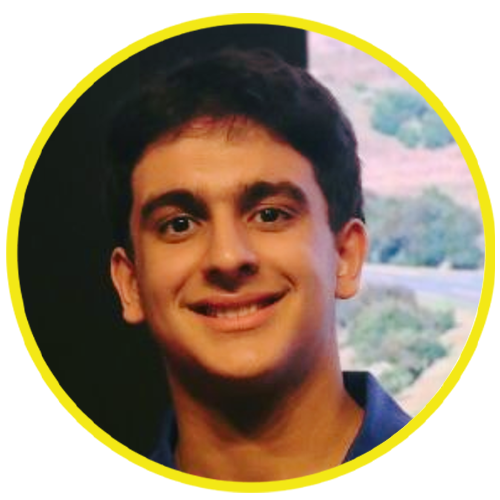
Rushil Kukreja
Founder of Princia
Rushil Kukreja is a senior at Thomas Jefferson High School for Science and Technology and serves as the Founder & President of Princia, the world’s largest student-run 501(c)(3) nonprofit tackling light pollution. He leads 260+ volunteers across 6 continents and has reached 13,000+ people through education and advocacy. His work has also been recognized by the $15,000 Christine Stevens Wildlife Award from the Animal Welfare Institute.
-
Scott Lind
Engineer
Scott Lind is a consulting electrical engineer with Mead & Hunt in Middleton, Wisconsin,
where he focuses on designing sustainable and reliable electrical systems for
commercial, industrial, and public facilities. With more than 35 years of experience,
Scott is passionate about designing outdoor lighting that respects all the other species we
share the planet with. He has a Bachelor of Science in Electrical Engineering (BSEE)
from Iowa State University and is a licensed professional engineer in Alaska and Wisconsin. Additionally, Scott is a LEED AP and holds master electrician and commercial
electrical inspector licenses in Wisconsin. He is the owner of Redshift Electric, a pro-bono electrical contractor focused entirely on improving outdoor lighting practices to reduce light pollution.

Summary
Light Pollution News: January Highlights
Mirror Moon Exhibition Opens at Royal Observatory Greenwich
Artist Luke Jerram’s ‘Mirror Moon’ installation transforms Royal Observatory Greenwich into an immersive lunar experience. The downsized Earth satellite replica leverages NASA-sourced topographic mapping data, bringing detailed moon surface geography within public reach. This interactive astronomy exhibit offers hands-on engagement with celestial body visualization.
Reflect Orbital Satellite Project Faces Environmental Scrutiny
Dark Sky International targets venture capital backers behind Reflect Orbital’s controversial satellite constellation plan. The company’s proposal involves launching thousands of mirrors to beam sunlight earthward, ostensibly boosting solar power infrastructure. Online technical analysis questions whether the technology can deliver promised energy generation benefits.
Environmental advocacy groups demand immediate action: halt development pending thorough impact studies, establish dialogue channels with the International Astronomical Union, and address ecological concerns before deployment. The intervention highlights growing tensions between commercial space ventures and astronomical preservation efforts.
FCC Proposes Space Modernization Rules for Orbital Infrastructure
Federal regulators unveil ‘Space Modernization for the 21st Century’—a transformative framework reshaping orbital governance. The proposal fast-tracks approvals for qualifying projects through streamlined ‘bright-line’ criteria while compressing public input windows to seven-to-fourteen-day periods. This regulatory pivot emphasizes commercial acceleration over deliberative review, positioning United States interests for space economy dominance amid intensifying international competition.
Palo Alto Implements Comprehensive Dark Sky Ordinance
California’s Silicon Valley heart adopts aggressive lighting controls, joining regional allies Brisbane, Cupertino, Portola Valley, and Woodside in environmental coordination. December 8th Council approval followed intensive deliberations centered on bird welfare and ecosystem protection, marking escalating municipal action against light pollution.
Key Provisions of Palo Alto’s Lighting Standards
Curfew Implementation: Fixed illumination ceases at 11 PM nightly, exempting motion-activated systems capped at five-to-ten-minute activation cycles per trigger event.
Business Accommodations: Commercial properties maintain fixed lighting up to two hours post-closure for staff security. Motion-sensor deployments face no temporal constraints.
Engineering Requirements: Full-cutoff fixtures mandatory. Color temperature restricted to 2700 Kelvin warmth. Property-line light trespass limited to 0.1 foot-candle maximum.
Additional Municipal Dark Sky Initiatives
Rehoboth Beach, Delaware: Coastal community weighs ordinance adoption following four-year-old 2021 resolution, with decision timeline set for current month.
Skagway, Alaska: Assembly enacts Responsible Outdoor Lighting Policy for government properties.
Deschutes County, Oregon: Rural unincorporated zones now enforce light trespass prohibitions effective December 23rd, expanding dark sky protections beyond city limits.
Artificial Nighttime Lighting Disrupts Carbon Dioxide Absorption
Groundbreaking Nature research exposes artificial light’s role in undermining Earth’s carbon sequestration capacity. Urban and suburban illumination stress vegetation ecosystems, triggering accelerated nocturnal respiration that releases CO2 precisely when natural systems should absorb atmospheric carbon. This discovery links light pollution directly to climate change mechanisms through disrupted plant physiology.
Circadian Disruption in Plants and Microorganisms
Biological clocks malfunction across plant and microbial kingdoms under constant illumination. Vegetation maintains daytime-level metabolic activity throughout night hours rather than entering restorative dormancy. Leaf stomata fail to close properly, causing excessive water loss while respiratory CO2 output continues. Simultaneously, soil microbe populations hyperactivate, accelerating organic matter decomposition and further atmospheric carbon release.
Scientists leveraged FLUXNET2015—a planetary network of eddy covariance monitoring towers tracking CO2 flux, wind patterns, temperature gradients, humidity levels, and solar radiation. Data synthesis covered 34 North American installations and 52 European stations, cross-referenced against satellite nighttime brightness measurements revealing stark correlations between illumination intensity and carbon cycle disruption.
European Dung Beetle Navigation Research
BMC Environmental Science investigators tested whether European dung beetles mirror African counterparts’ celestial navigation abilities. Four experimental environments provided controlled comparisons: total darkness, simulated 2500-star field, complete night sky featuring Milky Way visibility, and single artificial bulb illumination.
Results defied expectations—movement direction showed no light correlation. However, velocity patterns diverged significantly: beetles achieved peak navigational efficiency under either artificial lighting or Milky Way conditions compared to complete darkness, suggesting light provides orientation cues without determining directional choices.
Streetlight Timing Modifications Benefit Indian House Crows
Delhi researchers publishing in Scientific Reports identify practical light pollution countermeasures for urban bird populations. Midnight-to-2AM streetlight deactivation produces measurable health improvements, though melatonin injections achieve complete protection—an impractical intervention requiring nightly treatment administration across entire populations.
Health Impacts of Continuous Artificial Illumination
Round-the-clock lighting devastates crow physiology and behavior. Sleep duration plummets while psychological stress manifests through reduced feeding, diminished grooming, and pathological feather-picking behaviors. Cognitive performance deteriorates alongside melatonin suppression, confirmed via post-mortem neurological examination of all study subjects.
Partial darkness restoration improved outcomes yet fell short of complete remediation. Even minimal 6-lux exposure—equivalent to common nightlight brightness—triggered adverse biological responses. Context: full lunar illumination measures merely 0.3 lux, underscoring how dramatically urban lighting exceeds natural nocturnal conditions.
Zebra Finch Metabolism Affected by Dim Nighttime Lighting
Proceedings of the Indian National Science Academy research confirms cross-species light sensitivity patterns. Co-authored by previous study contributor Sanjay Kumar Bhardwaj, this investigation documents how 5-lux exposure disrupts zebra finch metabolic function, feeding rhythms, and sleep architecture. Critically, returning birds to naturally dark environments reversed all observed impairments, demonstrating light pollution’s immediate reversibility when eliminated.
Artificial Light Amplifies Salt Marsh Crab Settlement
BMC Environmental Science findings reveal artificial illumination’s unexpected role amplifying juvenile crab colonization in coastal ecosystems. Study subjects—pre-metamorphosis larval crabs—demonstrated dramatic settlement pattern shifts under 11-lux exposure.
Artificially lit zones attracted sixfold higher crab densities during full moon periods versus control areas. Anecdotal observations, though statistically inconclusive, suggested early-stage larvae appeared exclusively in illuminated zones during new and waning moon phases, indicating potential lunar-artificial light interaction effects on marine invertebrate behavior.
Bat Navigation Patterns Show Street Light Avoidance
Science of the Total Environment publication validates established light avoidance hypotheses through comprehensive tracking data. German researchers documenting greater mouse-eared bat movements confirm systematic circumvention of illuminated streets and hardscape surfaces. Tagged subjects selected street-lit flight paths merely 10% of observation periods, overwhelmingly preferring darker alternative routes despite increased distance.
Factors Influencing Bat Flight Paths
Light intensity gradients and fixture density concentrations critically shape navigational decision-making. Bats exhibit strong preference hierarchies favoring naturally shadowed corridors, particularly waterway margins offering both darkness and insect prey abundance. Paved surface avoidance parallels lighting aversion—territories containing 50% impervious coverage experienced catastrophic 90% probability reduction for bat transit activity.
Research team monitored 70 radio-tagged greater mouse-eared bats across German municipalities Ettenheim, Kahla, and Kunitz, generating robust movement pattern datasets throughout nocturnal foraging periods.
Full Article List:
- A huge shiny model of the Moon is going on display in London, Frankie Lister-Fell, TimeOut.
- DarkSky International opposes Reflect Orbital’s proposed orbital illumination system, Drew Reagan, Dark Sky International.
- Space Modernization for the 21st Century NPRM, FCC.
- Palo Alto approves dark sky ordinance, sets earlier curfew, Riley Cooke, Palo Alto Online.
- Guest Opinion: Are we being fooled by light pollution fears?, Diana Diamond, Palo Alto Online.
- City Council – December 8th, 2025, Palo Alto City Council.
- Rehoboth Beach weighs dark sky ordinance, Eleisa Weber, WDEL.com.
- Skagway passes light policy to protect night sky viewing, Melinda Munson, KHNS.
- Deschutes County’s revised outdoor lighting rules take effect late next month; here’s what’s changing, KTVZ21.
- Do dung beetles use the Milky Way to optimise their movement?, BMC Environmental Science.
- Midnight darkness and evening melatonin pre-treatment reverse night-light-induced neurobehavioural disruptions in a diurnal corvid, Scientific Reports.
- Intervening periods of normal dark nights mitigate the negative effects of night-light pollution on feeding and nocturnal sleep in diurnal zebra finch, Taeniopygia guttata, Proceedings of the Indian National Science Academy.
- The effect of artificial light at night on settlement patterns of a salt marshes crab, BMC Environmental Science.
- Urban sprawl and light pollution disrupt commuting corridors of urban-roosting bats, Science of the Total Environment.
- Widespread influence of artificial light at night on ecosystem metabolism, Nature.
- The night feels different when you’re out there’, Dr. Jon Sutton, The British Psychological Society.

Have thoughts about today’s episode?
Why not Submit a Voicemail!
Or join our Mailing List or Substack?
Like What You See and Hear? Consider Supporting the Show.
For only the cost of one coffee each month, you can help us continue to grow. That’s $3 a month. If you like what we’re doing, if you think this adds value in any way, why not say thank you by becoming a supporter! Light Pollution News takes no outside advertising money and is 100% supported by its listeners.
Light Pollution News: January Read Along
Let’s kick off tonight with a good warm up. Have any of you ever wanted to go to the moon? Well, if you head over to London right now, you can do just that!
On display at the Royal Observatory Greenwich is an exhibit called ‘Mirror Moon,’ which is an artistic replica of our largest satellite shrunk down to a size that is a bit more within reach. The exhibit, created by Luke Jerram, is a lunar replica utilizing topographic details from NASA mapping.
One thing to note in space news (and this may change by the time you, the listener, hears it), Dark Sky International released an open letter to the venture capital partners of the Satellite company, Reflect Orbital. You’ll recall that Reflect Orbital plans to launch an array of thousands of small satellites to reflect sunlight back to Earth for a variety of reasons, primarily cited at the moment as a way to aid solar power plants. There has been much consternation and discussion about this online, whereby the current consensus doubts the effectiveness of the plan to meet its stated goals (which you can learn all about in our December Episode, Dark Turns).
Dark Sky’s letter urged Reflect Orbital to enter into a discussion to identify and mitigate environmental impacts from its plan. It asked Reflect Orbital to pause in the development of the mirrors until an environmental assessment is completed. And it asked the company and its venture backers to enter into discussions with the International Astronomical Union and Dark Sky International, itself.
One thing that will definitely be determined by the time this show airs is the reception of the FCC plan to overhaul its rules for orbiting objects. The new rule ‘Space Modernization for the 21st Century’ could have dramatic impacts on the future of the burgeoning space economy. The main changes include creating a new, faster approval process for space projects meeting the, ironically named, ‘bright-line’ criteria and limiting open comment periods to one to two weeks. This policy appears in line with a business first positioning to ensure US dominance in the space sector.
Here’s a story that folks who are advocating for responsible ordinances should really be paying attention to.
Over in the heart of Silicon Valley – Palo Alto, California, the City Council has been weighing passage of a beefier lighting ordinance. At the heart of it, the community is aligning itself with neighboring communities, including Brisbane, Cupertino, Portola Valley, and Woodside.
Here’s the rundown of the ordinance, which apparently was passed on December 8th. I will note that in the December 8th meeting, the environment, specifically birds, was center stage.
- There is a lighting curfew in place that begins at 11pm. However, that simply means a lighting curfew for fixed lighting – say, you can’t keep your light on all night aimed at your neighbor’s house. Motion sensors are perfectly fine. However, motion sensors will end up having a 5-10 minute max. That said, given the impossible enforceability of that time span, provided it’s not abused, I’m sure there’s much wiggle room.
- Businesses have some exceptions, including being able to keep their fixed lights on for an extended time past closing time for the staff’s comfort. There was a debate over how long that should be, currently it’s 2 hours past door closing. I believe businesses are free to use motion lights at will.
- The lighting color temperature requirement is 2700K and fixtures should be fully shielded.
- Light trespass would be .1 foot-candles.
There are additional details, but that’s the gist. I will say that one of the major culprits from the hearing appears to be the city’s own streetlights, which are white and appear to be quite intrusive. Of which, the city, in typical municipal fashion, punted on. Various questions about the legitimacy of the basis of the ordinance were also raised. Here are some of those concerns.
- What studies say that people sleep better in the dark?
- What proof do you have that animals operate “better” in the dark?
- What proof do you have that birds get confused by light and run into things?
- A misunderstanding or a profound lack of comprehension around the concept of ‘motion sensing’ lighting.
- My personal favorite, the dreaded scare tactic of the unfounded claims of higher crime rates at night versus daytime, and, of course, treating light as a mystical power that irradiates criminals into big puffs of smoke.
- And, as one commentator put it, if lights are so bad, how do people in the higher latitudes survive?
Elsewhere on the policy front…
- Rehoboth Beach, Delaware is looking to consider if it should implement a dark sky ordinance this month. A resolution was adopted four years ago, in 2021.
- In Skagway, Alaska, the assembly passed a Responsible Outdoor Lighting Policy for city owned properties, which included this gem of a quote from Assembly member Jonathan Hillis, who proposed the rule, “The idea is to limit our unnecessary light trespass – that’s what the fancy people call light that shines beyond where it’s needed.”
- Another community is tackling light trespass, and that is Deschutes County, Oregon, for unincorporated communities, which implemented a “prohibition” on light trespass on Dec 23rd.
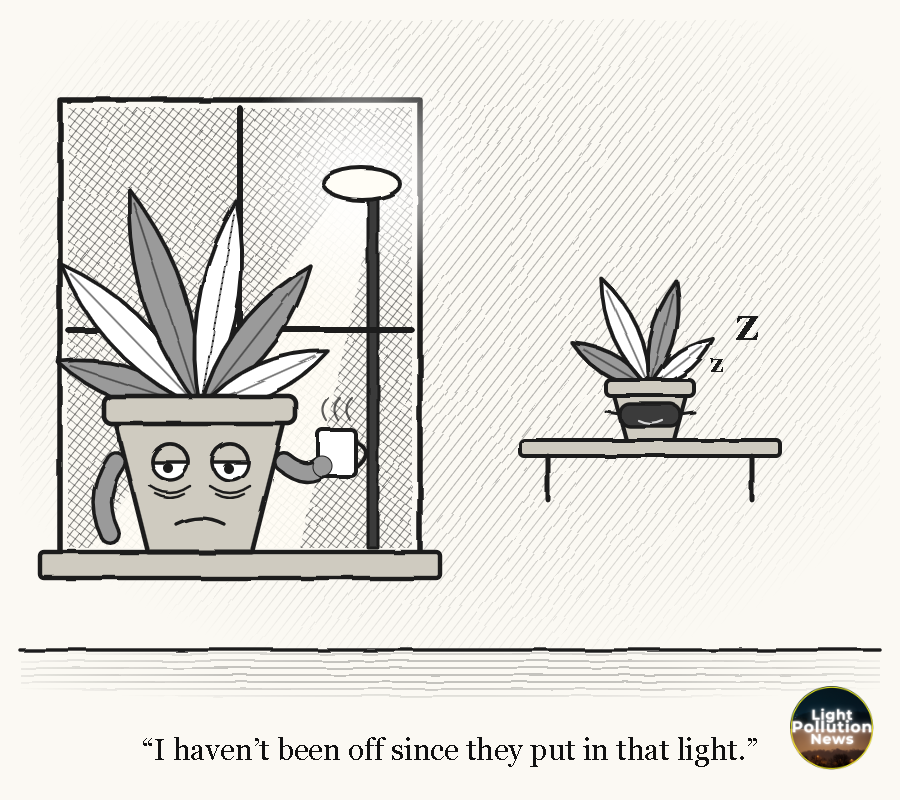
The big news this month came from Nature, whereby researchers showed that artificial light at night is actually disrupting the natural systems used for absorbing CO2. In fact, the constant drone of our glowing urban and suburban areas is overwhelming plant life, stressing them to increase their rate of nighttime respiration, effectively releasing CO2 into the night. What researchers found was that a circadian disruption occurs for both plant and microbial life. Rather than seeing a decrease in metabolic activity, plants are staying active at night. Leaf pores tend to stay open longer, promoting water loss and respiration. In addition, the light is causing increased microbial decomposition, which is driven by increased soil microbe activity.
Researchers utilized FLUXNET2015, which is a global network of eddy covariance towers measuring CO2 concentrations, wind speed, temperature, humidity, and solar radiation. They looked at data from 34 sites in North America and 52 sites in Europe, referencing that against satellite nighttime light intensity measurements.
Elsewhere, in the world of ecology, a team from BMC Environmental Science looked at the European dung beetle. They set up an experimental design utilizing four treatments: one of complete darkness, one with 2500 stars projected to the ceiling, one whereby the Milky Way and full night sky are present, and one with a single light bulb. They asked if these beetles utilized celestial navigation methods as seen in the African dung beetle. To that end, the researchers found no association between movement and light; rather, the association they uncovered ended up in movement velocities between darkness and light, with the beetles navigating the most succinctly when artificial light or the Milky Way were present.
Researchers from Delhi put forth a paper in Scientific Reports that assessed how to mitigate some of the effects of light pollution on Indian house crows. And it appears that a simple fix may be turn off the streetlights between midnight and 2 am. Although an alternative that utilized melatonin injections worked to fully protect the birds. However, I’m not sure who will take up the chore of performing this injection on a nightly basis. Apparently, when taken, the melatonin offset some of the negative effects of the 24×7 lit environment.
Each bird is different, of course, but artificial light tends to affect most birds. In the case of these crows, light reduced their overall sleep duration. It affected their mood, believe it or not, by causing them to eat less, preen less, and feather picking increased. The 24×7 lit environment, thus, unsurprisingly affected the crows’ cognition and decreased the melatonin levels of the birds. The study assessed brain function by performing autopsies on all of the birds analyzed.
I should note that while the 2 hours of unlit time did improve the bird’s overall body and brain health, it wasn’t a complete success. Light emitted as low as 6 lux impacted the birds. This level of brightness is equivalent to that of a nightlight. The full moon, for example, is .3 lux.
A similar study was undertaken in the Proceedings of the Indian National Science Academy, whereby one of the authors from the previous study, Sanjay Kumar Bhardwaj, joined a separate team to look at how dim nighttime lighting affected zebra finches. They found similar results for zebra finches, indicating that, yes, dim artificial light at night, that of 5 lux, had an impact on the birds’ metabolism and feeding habits, in addition to their sleep habits. However, this impact could be reduced simply by returning the bird to a habitat absent from artificial light at night.
Here’s an interesting one, from BMC Environmental Science, researchers assessed the impact of artificial light at night on salt marsh crabs. Overall, artificial lights appeared to work as an amplifier for baby crab settlements. For you at home who may not be aware, the ‘baby’ crabs in this study had yet to metamorphose into small crabs. The artificial light intensity in this study was 11 lux. Researchers found that there were 6x as many crabs in the artificially lit area under a full moon than in the control. In addition, though this was not statistically significant, anecdotally, these early settler crabs were found only under artificial light during new and waning moons.
And lastly, let’s have a little discussion about bats. From the Science of the Total Environment, researchers found that bats go out of their way to avoid street lights and paved areas, which appears to confirm current research.
A team of German researchers tracked bat movements, finding that bats consistently went out of their way to fly farther to avoid street lights, citing bats’ movements toward the street light ridden route only 10% of the time. Street light intensity and/or density also played a factor in bat navigational patterns. Rather, bats opted for areas that traditionally receive less light, including waterways. It should be noted that bats also largely avoided flying over paved areas. Areas that held 50% impervious surfaces had a 90% reduction in usage probability.
The study tracked 70 tagged greater mouse-eared bats as they navigated the nights of Ettenheim, Kahla, and Kunitz.
Let’s finish up today with this from the British Psychological Society, an interview with Chris Barnes of the University of Derby. Barnes, amongst other things, talks about how nighttime makes him feel. I think anyone who’s spent time in the back country might have an understanding of this.
Barnes speaks to the sensory experience, which often involves cool breezes and dew. He also mentions that there’s a sense of solitude at night, whereby you hear nature, including, in his case, foxes, owls, and badgers.
