
October 2026: Luminance Lace, Light Pollution News
This Episode:
Hi there, it’s Light Pollution News! This month, I’m welcomed by New Jersey’s own, Steve Mariconda; from the city of Pittsburgh, I welcome back to the show, Diane Turnshek; and board member for Dark Sky Land , among many other past and current responsibilities, Gina Pearson!
This episode, New Hampshire mourned the September 11th 25th anniversary in a monumental manner! What to make of some of these insect studies? And are you looking for a Dark Sky site in Thailand? We can help clarify what it all means!
We have a packed episode this month that you won’t want to miss! Let’s go!
Like What You See and Hear? Consider Supporting the Show.
A hearty thank you to all of our paid supporters out there. You make this show possible.
For only the cost of one coffee each month, you can help us continue to grow. That’s $3 a month. If you like what we’re doing, if you think this adds value in any way, why not say thank you by becoming a supporter!
Why Support Light Pollution News?
- Receive quarterly invites to join as a live audience member for recordings with special Q&A sessions post recording with guests.
- Receive all of the news for that month via a special Supporter monthly mailer.
- The satisfaction that your support helps further critical discourse on this topic.
Support Light Pollution News!
Host:
Guests:
Diane Turnshek
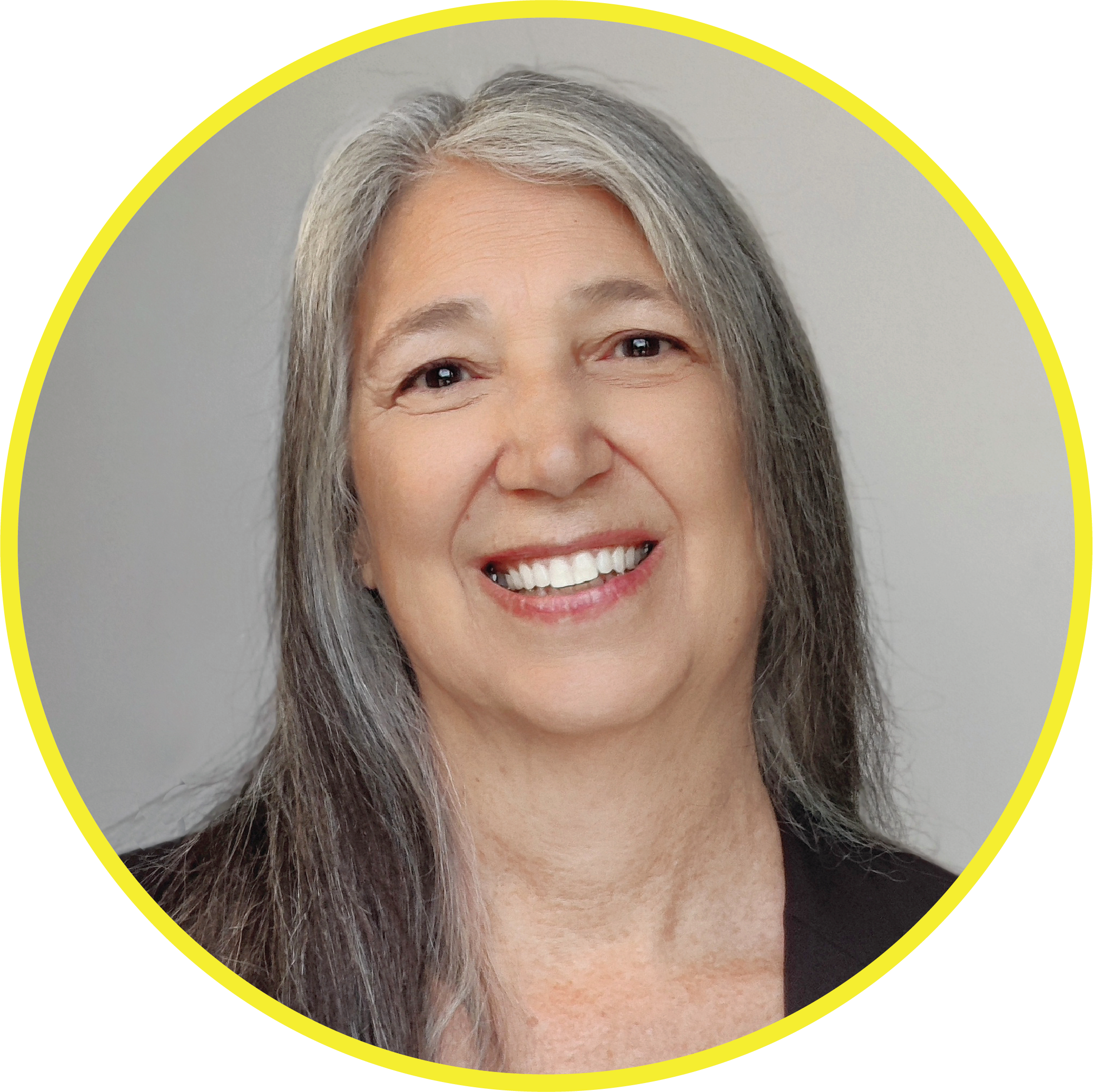
Diane Turnshek is a researcher at Carnegie Mellon University in Pittsburgh, PA. She has been on the board of directors for both the Science Fiction and Fantasy Writers of America and Parsec, Pittsburgh’s premier science fiction organization. She is published in Analog Magazine of Science Fiction and Fact and edited Parsec’s Triangulation anthology multiple times.
Steve Mariconda
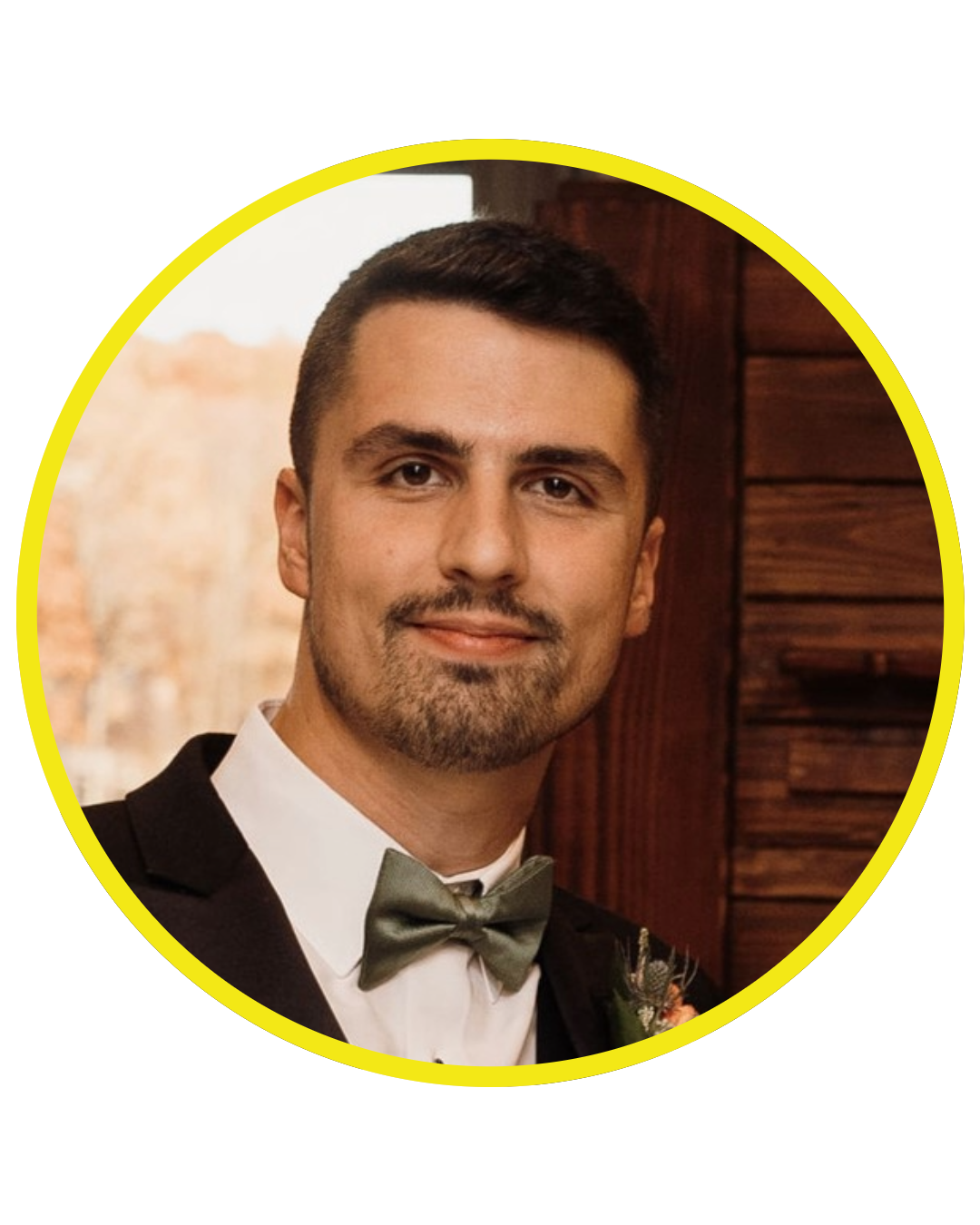
Steve Mariconda, MPH, is a DarkSky Delegate and member of the New Jersey chapter. He educates the public about light pollution and responsible lighting practices. He recently received a Master of Public Health (MPH) degree from Rutgers School of Public Health and is the chair of the Saddle Brook Green Team. He is an outdoors enthusiast and musician.
Gina Pearson
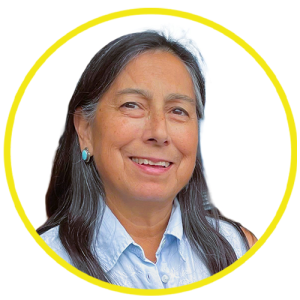
Gina is a retired federal public servant of 40 years, primarily working for the National Park Service as a park ranger, natural resource specialist, planner, and environmental protection specialist. She has years of experience protecting naturally dark night skies with a particular interest in indigenous cultural perspectives. Some of her dark sky work includes developing dark sky park applications for Bryce Canyon National Park and the Rio Grande del Norte National Monument, collaborating with National Parks across the nation to mitigate light pollution impacts, translating into Spanish the NPS Jr. Ranger Night Explorer booklet, updating the public facing NPS Night Skies website, coordinating the events for the August 21, 2017 total solar eclipse at the BLM Challis Field Office, ID, and serving as the NPS point of contact for the Colorado Plateau Dark Sky Cooperative. In retirement, she continues to advocate for dark sky protection and restoration efforts, conduct outdoor education and outreach, and improve her photography skills of the earth, sky, and people. Gina is on the advisory committee for STEMarts Lab, on the board for Dark Sky Land, Inc., and a council member for Dark Sky New Mexico Chapter. She is based out of Taos, New Mexico.
Full Article List:
- Conservationists monitor migrating birds as Mt. Washington 9/11 tribute lights up night sky, Kate Dario, New Hampshire Public Radio.
- Rachel Carson State Office Building is joining Lights Out Harrisburg from August 15 to November 15! We’re dimming or turning off lights between 12-6 AM to help protect birds flying south for the fall, Pennsylvania DEP, Facebook.
- Nebraska community college works with the U.S. Fish and Wildlife Service to reduce bird collisions, US Fish and Wildlife.
- Centennial Bridge lights to be turned off for remainder of autumn bird migration, Haley Marzorati, WQAD8.
- Optimised light sources reduce nocturnal insect attraction at railway stations, Biological Conservation.
- Dual forces at play: how artificial light and canopy cover affect firefly populations in an urban park, One Ecosystem.
- Fifteen new dark sky sites named for astrotourism in Thailand, The Nation.
- When photo competitions get it wrong, there are no “bad guys” – just the rule-abiding photographers that get stabbed in the back, Alan Palazon, Digital Camera World.
- Brightening the Metro: Hundreds of Lights Installed, City of Albuquerque.
Light Pollution News: October Highlights
Mount Washington 9/11 Light Tribute Balances Remembrance With Protection for Migrating Birds
Twin light beams on New Hampshire’s Mount Washington marked the 25th anniversary of the September 11 attacks. The project came from Granite Springs Foundation founder Renee Plummer and was permitted by New Hampshire State Parks. After Cornell ecologist Andrew Farnsworth warned about the risk to nocturnal migrants, New Hampshire Audubon’s Carol Foss led a coalition of conservation groups and state agencies that added bird safeguards. The lights shut off at midnight instead of 3am, observers watched for birds with visual and thermal scopes, and the beams could be cut immediately if birds appeared. No harm to migrating birds has been reported.
Harrisburg’s Rachel Carson State Office Building Goes Dark for Fall Bird Migration
As part of Lights Out Harrisburg, Pennsylvania’s Rachel Carson State Office Building dims or shuts off its lights from midnight to 6am, August 15 through November 15, and the wider capitol complex is doing the same. The building honors the Springdale, Pennsylvania native whose 1962 book Silent Spring exposed DDT’s toll on birds. Carson belongs to a Pennsylvania naturalist tradition that includes John Bartram, Alexander Wilson, John James Audubon, and Gifford Pinchot.
Student Advocacy Leads Omaha’s Metropolitan Community College to Make Its Glass Bird-Safe
Metropolitan Community College student Dorian Dunham documented at least 51 bird-window collisions in May 2025 along a glass wall at the South Omaha campus. He then brought the problem to the U.S. Fish and Wildlife Service’s Nebraska Ecological Services Field Office. With technical guidance from the field office, the college fully funded Feather Friendly window decals on the north-facing glass in October 2025 and began seasonal light reductions.
Davenport’s Centennial Bridge Turns Off Decorative Lights for Bird Migration
The Centennial Bridge over the Mississippi River in Davenport, Iowa switched off its decorative lighting on September 15 to protect migrating birds. It will stay dark through November 1.
Amber 1800K LEDs Sharply Reduce Insect Attraction at German Railway Stations
A Biological Conservation study led by the Leibniz Institute for the Analysis of Biodiversity Change tested three light types at six railway stations in Germany’s Westhavelland Nature Park International Dark Sky Reserve: high pressure sodium, cool white 4000K LED, and amber 1800K LED. More than 71,000 insects were collected. Every light drew more insects than unlit controls, but the amber LEDs consistently attracted roughly 40% to 50% fewer insects than the other two, including fewer threatened and protected species. High pressure sodium and 4000K LEDs performed about the same, and the stations have since switched to 1800K lighting.
Tree Canopy Helps Urban Fireflies Survive Streetlights in Kuala Lumpur
Monash University Malaysia researchers, publishing in One Ecosystem, studied fireflies in Bukit Kiara, a 466 hectare urban park in Kuala Lumpur. Each additional streetlight was linked to about 37% fewer fireflies, while denser tree canopy was associated with about 75% more. The findings suggest that retaining connected tree cover in city parks can create dark refuges that let fireflies persist in light-polluted areas.
Thailand Expands Its Government-Run Dark Sky Program to 110 Certified Locations
Thailand certified 15 new dark sky sites in the fifth round of its national program, bringing the total to 110. Dark Sky International’s system is built from the ground up by local applicants, while Thailand’s is run top-down by the government. It uses four categories (Dark Sky Park, Community, Property, and Suburb) and requires at least Bortle 5 skies. Dark Sky Parks earn Bronze, Silver, or Gold status, with Gold requiring Bortle 3 or darker, and all designations are renewed every three years.
Dark Sky International’s Capture the Dark Photo Contest Faces Rules Controversy
Dark Sky International’s 2026 Capture the Dark astrophotography contest named winners in 11 categories, many of them highly technical composite images. Photographer Raaber Way publicly challenged two winners, Tom Rae’s “The Chasm” and “A dialogue between space and human light.” He argued both blended images from different lenses, which breaks the contest’s ban on mixing focal lengths. The organization closed comments on the posts, cited harassment of its staff, invited feedback without a formal apology, and promised an improved contest next year.
Albuquerque’s LED Streetlight Upgrade Revives Debate Over Whether Lighting Reduces Crime
Albuquerque has installed or upgraded more than 500 streetlights to LED, including at least 187 solar-powered units. City officials, led by Mayor Tim Keller, cite a 15 percent crime reduction from the University of Pennsylvania’s Chalfin and MacDonald study of Philadelphia streetlight upgrades. Albuquerque’s own violent crime data complicates that claim: crime climbed from about 2014, peaked in 2021, and has fallen since, mirroring national pandemic-era trends. That pattern raises the question of whether lighting, rather than broader factors, is driving the decline.
Light Pollution News: October Read Along
Here’s one we can kick things off with! Did any of you guys see this? I don’t know if any of you happened to be up in the Northeast this past September 11th, but up high on Mount Washington, two light beams shone for what was intended to be upwards of 135 miles away – which would put its visibility as far south as Lowell, Massachusetts. For those not familiar with Massachusetts geography, Lowell sits about 30 miles north of Boston.
The memorial took place for the 25th anniversary of the Trade Center attacks in Lower Manhattan. The idea came about a year prior from Renee Plummer, who, among other things, is the founder of the Granite Springs Foundation, a philanthropic organization that largely aids first responders and veterans. As the project gained traction, organizers applied for a special user permit through New Hampshire State Parks. The State Parks apparently had no concerns about its impact on migratory birds or the environment as a whole…that was until this past July, when a Cornell University ecologist named Andrew Farnsworth raised the alarm.
As this story first began to be rolled out, it didn’t seem like much was said about the light’s impacts on birds. And I’ll admit, it looks like we here at Light Pollution News were thrown off course on this story, as well. In fact, there turned out to be a sizable amount of mitigation built into this event, all of which came from a collection of folks involved with Cornell, the New York City Bird Alliance, New Hampshire Fish and Game, and New Hampshire State Parks.
This collection of folks was led by Carol Foss of the New Hampshire Audubon Society, who worked directly with the organizers to create fail safes in the event a major migratory event took place. The runtime originally was slated to go until 3am, but instead the lights turned off at midnight. Additionally, the surrounding area was monitored using both visual and thermal scopes to identify any bird activity in the vicinity of the lighting. The lights themselves could be switched off immediately pending bird activity. To date, I have not seen anything saying that the lights affected bird migratory activity.
Since we’re here on this topic of public displays. How about this, Diane? Did you see that the Rachel Carson State Office Building in Harrisburg is dimming or turning off lights between 12 – 6 AM every night during fall migration (that’s officially from August 15 through to November 15)? And, yes, I’m a little late to this one. I didn’t realize this had already started!
As far as Harrisburg goes, there’s a facebook video showing the lights of the whole facility complex, including the Capitol, abruptly at 12 am!
Carson, of course, most known for her 1962 book, Silent Spring, which made the link between the pesticide DDT and bird deaths, grew up in Springdale, Pennsylvania, which, obviously, is out on your side of the state, Diane. A side note on Carson, as I like to talk up my state when I have a chance.
Carson followed in the footsteps of other naturalists who either were Pennsylvania-born or individuals who called Pennsylvania their home, including John Bartram, Alexander Wilson (yes, that Wilson – to whom seemingly every third bird is named after), John James Audubon, and the nearly immortal Gifford Pinchot. The Harrisburg building was dedicated to Carson back in the 90s.
Continuing on the bird front, a couple more good news stories. Over in Nebraska, a community college student named Dorian Dunham became concerned when he found out that a 2 ½ story glass building on the north side of campus induced 51 documented cases of bird collisions in May of 2025 alone! Dunham connected with the US Fish and Wildlife Service for help. The college began working with a Fish and Wildlife field office, fully funding the bill to apply both bird dots on the glass and implement seasonal light reductions.
And, over in Davenport, Iowa, the large, spanning Centennial Bridge, which looks like a series of arcs that spans the Mississippi River, has turned off its decorative lights for bird migration. The lights officially turned off on September 15th and will remain out until November 1st.
Since we’re here in the ecology world, there was a pretty intriguing study out of Biological Conservation. The study performed a real world test of how light attracts insects. The team set up three types of lights at each platform of the International Dark Sky Reserve at Westhavelland Nature Park in Brandenburg, Germany. Those lights were 2000K HPS lamps, 4000K LED lamps, and 1800 amber LED lamps. In addition, there were two control sites set up separately, away from light sources at each station. It ran twice from July to October 2023 and from April to June the following year.
The results came back pretty clear. First, the team snagged over 71k insects, with 1480 different species represented. Every lit condition attracted more insects than the control; however, the 1800K LED attracted the least amount of insects of the lit population. To put that in perspective for you at home, in 2023, the amber LED had 38.8% fewer insects compared to the high pressure sodium lights and 44.9% fewer insects compared to the 4000K LED lights. Then in 2024, the 1800K LED again had 44.2% fewer insects compared to the high pressure sodium lights and 51.4% fewer insects compared to the 4000K LEDs. This brought up an interesting realization, that the high pressure sodium and 4000K LEDs showed similar levels of impact!
In other insect news, we all know this, right? There’s research showing light’s impact on fireflies. However, a new study in One Ecosystem turned a different question. The team asked how fireflies are able to continue on in brightly lit cities. I can speak from experience, here in Philadelphia, we have a couple of firefly shows that are second to none – granted, they are in areas shielded from artificial light, but nonetheless, for areas where the skies don’t even get dark, these little fellas persist. So what’s going on?
The team set up their study in the Kuala Lumpur park of Bukit Kiara, a 466 hectare urban park. There is a paved road through the park (of which I’m not sure if it’s the only paved road through the park, but that’s neither here nor there). The team divided the road into 100 meter sections and surveyed each section over 31 nights. They counted the number of working streetlights and measured the distance between the streetlight and the fireflies. The team also assessed tree canopy on six park trails, taking images to calculate the percentage of sky obstructed by trees every 25 meters. These locations were surveyed for fireflies over 39 nights.
Well, what did they find?
Overall, yes, streetlights negatively impacted firefly visibility. For each additional streetlight within a 100 meter section, fireflies appeared less abundant by the tune of 37%. And where fireflies were seen near the road area, the lux level read just .58. For context, the individual streetlights measure 80 lux at their source, so that gives you a perspective of the difference in illumination we’re talking about.
The team found that fireflies preferred the canopy area. For every one standard deviation increase in tree cover, the number of fireflies increased by 75%.
Let’s switch gears! I bet you didn’t know that Thailand had its own Dark Sky places! And this year, Thailand welcomed 15 new sites into the fold. This is the fifth year of selections that the government run program has done, or as they call it, their fifth season…which makes it read more like an episode of Survivor rather than an annual bid for recognition! For the record, it appears that Thailand now has 110 dark sky certified locations!
These are Thai government designated locations. And, I know you at home may be wondering, well, what’s the difference between a Dark Sky International designation and a Thai designation? Well, while there are some deviations, it’s generally in the same overall mindset as Dark Sky International.
The terminology is definitely different, though I’m sure you’ll see some parallels here, too. Many of you are probably familiar with these styled designations: Sanctuary, Reserve, Park, Community, and Urban Night Sky Places. Conversely, Thailand only has four designations: Dark Sky Park, Dark Sky Community, Dark Sky Property, and Dark Sky Suburb.
Where things go a little bit away from the Dark Sky model comes down to the requirements. Of all of the designations, the darkest minimum sky brightness qualification is a Bortle 5, at which you can just begin to see a faint Milky Way. And to put it in terms of the most relatable areas people think of for dark sky places, the closest Thailand gets to a Dark Sky Reserve is their Dark Sky Park, which contains three tiers: Bronze, Silver, and Gold, with gold requiring skies to be a very impressive Bortle 3 or less.
There’s also something else that I kinda like honestly. The Thai approach grants the designation for three year terms.
It should be noted that the Thai approach is a top down government program versus Dark Sky International, which operates with a decentralized, ground up designation system.
Since we mentioned Dark Sky International, did you guys happen to check out the winning photos for this year’s ‘Capture the Dark’ competition?
For you at home, the Capture the Dark competition is DSI’s annual photo contest. It has 11 categories, if you include the People’s Choice and their special Star Trek 60 categories. Many of these photos are spectacular, if not fantastic, in the fantasy definition of that word. A lot of them are composite photos, there’s a lot of Photoshop and other software involved. These are very technical shots.
I see someone even utilized my star trails technique! In this case, it’s not your standard star trails, instead, it looks like there’s a star driving the trail – I wish I had patented that! As a sidebar, if you are interested in how to take that shot, look up the ‘Delaware Valley Amateur Astronomers’ Astrophotography YouTube channel. I did a talk a few months back on that. The link is in this episode’s walk along.
However, it appears not all is copacetic. Shortly after the winners were announced, one disgruntled entrant, named Raaber Way, took to social media to voice what he saw as cheating by, at least, two of the winning entries! These entries were the first place finisher for the ‘Creatures of the Night’ category, called ‘the Chasm’, taken by Tom Rae. (Although I have some questions about the second place finisher, as well, but that’s neither here nor there.) And the other image was second place finisher for ‘the Impact of Light Pollution’ category, called ‘A dialogue between space and human light,’ which is an absolutely stunning compilation.
The issue appears to derive from Dark Sky’s rules prohibiting, among things like AI, mixing of focal lengths. To put that in simple terms, the focal length is typically, though not always, a unique length associated with the lens attached to the camera. In this case, both photographers used two different lenses, thereby violating the prohibition against ‘mixing focal lengths.’
Well, in an effort to quell the social media backlash, Dark Sky apparently closed comments on the posts featuring these images, and in a press release mentioned that their own staff faced harassment, for which there’s no excuse. Though Dark Sky didn’t really apologize formally for the mishap, rather they simply said – ‘hey everyone, if you have any ideas how we can do better, feel free to email us!’
To Dark Sky’s defense, in their press release, they admitted to being a small team who do their best, and they have a commitment to getting back to “their roots” next year with an “improved contest.” I think we can all appreciate the challenges a small group like the folks at Dark Sky have.
Ah…streetlights. Man’s most interesting invention. Gina, down in your great state, Albuquerque has installed or replaced over 500 streetlights with new LED lighting. Of that lot, at least 187 solar powered lights are involved in this conversion, which makes sense given the amount of sun you guys get.
Per Mayor Tim Keller, “We are doing everything we can to make this great city even better and brighter. Investing in even just a few lights pays off in countless ways.”
According to Jennifer Turner at the Department of Municipal Development, “Brightening streets creates safer spaces for everyone!”
Well, I bet you didn’t know that street lighting can make a dent in crime, by the order of 15%! And do you know how I know this? Because the press release from the City of Albuquerque said so! And do you know who they cited? Yes, of course, you at home probably certainly have guessed It’s that study from right here in Philadelphia by the very same university that granted our illustrious President his Bachelor of Science in Economics. It is that very study by Chalfin and MacDonald, the latter of whom I’ve reached out to and never heard back from.
To bring everyone up to speed here, the study showed, and I’m quoting, “a 15% decline in outdoor nighttime street crimes and 21% reduction in outdoor nighttime gun violence following the streetlight upgrades.” This took place over 10 months, from August of 2023 to May of 2024. We’ve spoken extensively on the crime around that time in cities like Philadelphia and DC. But let’s look specifically at Albuquerque, because, as I’ve said before, the Chalfin/MacDonald study doesn’t do two things: (1) disentangle non-lighting variables to prove that lighting was a primary driver given other common trends occurring across the nation at the same time and (2) it doesn’t speak to why crime was so low in the 2010s, then rose during COVID – all of which had streetlights!
So let’s take a look to see what happened in Albuquerque, which, mind you, has been undertaking this big streetlighting project that will universally prevent 15% of the crimes the exact moment they’re put in place! Albuquerque’s reported violent crime data shows an unfortunate sizable increase from 2010, when it was at the lowest in the span between 2008 to now. In fact, there was a sharp increase starting around 2014, to an astounding peak in 2021 followed by a very welcomed and sizable year over year decrease. This is a trend that is a virtually mirrored pattern with other cities around the US during the COVID to post-COVID timeframes.
I’ll leave this one with you at home to decide if the UPenn study has any merit. For me here on this podcast, I have yet to see proof of the magical powers of street lights. That’s not me saying I’m anti-street light, but rather it’s as if we hold them up like some magical elixir to all of our problems.
