
March 2026: Create Your Own Meaning, Light Pollution News
Join our mailing list. Follow us at LinkedIn, Instagram, Facebook, & Tiktok.
This Episode:
Today, I welcome back Mont-Megantic’s Remi Boucher, photographer Jeremy Evans, and the Sierra Club’s Dashiell Leeds!
We have a lot to cover today, including some satellite news, another big slate of ecology, and, how about we talk color…specifically, what color streetlights would you prefer to live under?
Be sure to stay with us until the end today, as we had such a great conversation that I had to bump out our ecology section to post show…don’t worry, Remi and Dashiell stayed on to walk you through it!
All this and a lot more on today’s Light Pollution News!
Like What You See and Hear? Consider Supporting the Show.
A hearty thank you to all of our paid supporters out there. You make this show possible.
For only the cost of one coffee each month, you can help us continue to grow. That’s $3 a month. If you like what we’re doing, if you think this adds value in any way, why not say thank you by becoming a supporter!
Why Support Light Pollution News?
- Receive quarterly invites to join as a live audience member for recordings with special Q&A sessions post recording with guests.
- Receive all of the news for that month via a special Supporter monthly mailer.
- The satisfaction that your support helps further critical discourse on this topic.
Support Light Pollution News!
Host:
Guests:
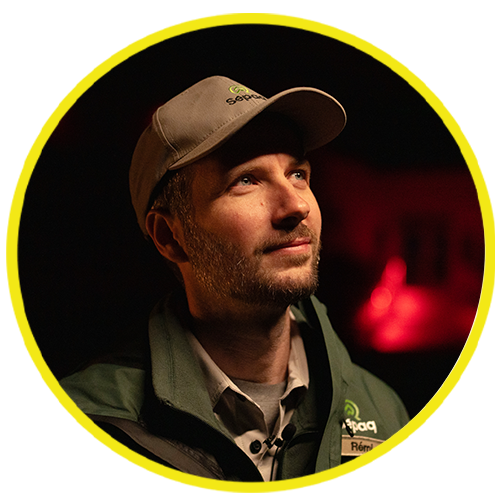
Remi Boucher
Rémi Boucher serves as Scientific Coordinator at the Mont-Mégantic
International Dark Sky Reserve in Québec, Canada—the world’s first certified International Dark Sky Reserve. With more than 20 years of experience in astronomy and nocturnal conservation, he has become an internationally recognized advocate for protecting the night.
In this role, Rémi combines scientific expertise with public education and outreach. A recipient of the 2015 Dark Sky Defender Award, he has collaborated on a wide range of projects, committees, and working groups addressing light pollution at both local and international levels.
Throughout Québec, he has helped advance numerous initiatives to preserve dark skies, contributing to the design of the province’s national standard against light pollution and leading monitoring efforts across its provincial parks network. An accomplished night photographer, his passion for sharing the wonder of the starry sky and protecting nocturnal environments has made him a prominent voice in the global dark-sky community.
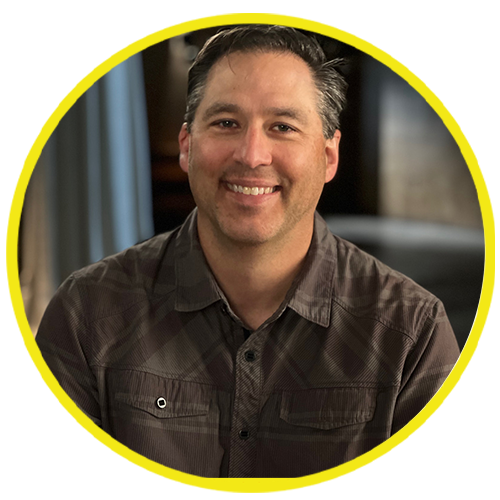
Jeremy Evans
Jeremy Evans is a professional photographer, filmmaker, amateur astronomer and delegate for Dark Sky International. He lives full time in the Eastern Sierra enjoying endless photographic and dark sky opportunities. During the summer and fall months he spends his time backpacking in the High Sierra, preferably in Sequoia and Kings Canyon. when he’s not in the high country he’s either enjoying dark skies in Death Valley or the White Mountains with his telescopes.
Dashiell Leeds
Dashiell Leeds is the Conservation Coordinator for the Sierra Club Loma Prieta Chapter where he works as an environmental advocate. Dash has advocated for Dark Sky ordinances which have been adopted in Cupertino, Los Altos, Palo Alto, and Sunnyvale’s Moffett Park Specific Plan.
Full Article List:
- Astrophotographer Captures the Milky Way at Every Level of Light Pollution Across the United States, Lori Dorn, Laughing Squid.
- “The Most Challenging Argument to Make”: Feelings of Safety in Dark Sky Advocacy, Environmental Communication.
- Alertness, arousal and anxiety in the spotlight: Urban outdoor lighting for pedestrians’ attentiveness and sense of safety, Doctoral Thesis.
- Denmark Is Switching to Red Streetlights, and It Could Revolutionize Urban Lighting Around the World, Arezki Amiri, Daily Galaxy.
- Copper thieves shut off lights along Los Angeles’ Miracle Mile, Nicole Comstock, CBS News.
- Artificial Light at Night Affects Microbiota and Growth in the Oyster Crassostrea gigas: Correlations with the Daily Rhythm Robustness, Journal of Marine Science and Engineering.
- A Methodological Proposal for Implementing Dark Infrastructure Within the Ecological Network of an Urban Forest, Land.
- High-resolution in situ imaging reveals size-specific moonlight responses in zooplankton diel vertical migration, Nature Publishing Group.
- Light pollution: Should twilight be the focus of mitigations for biodiversity?, Current Biology.
- Increased artificial illumination delays urban autumnal foliar senescence, Nature Communications.
- Severe and widespread reductions in night-time activity of nocturnal moths under modern artificial lighting spectra, Proceedings of the Royal Society B: Biological Sciences.
- SpaceX’s Starlink dodged 300,000 satellite collisions in 2025, Jonathan O’Callaghan, New Scientist.
- Chinese satellite forces 4,400 of its Starlink rivals into lower altitude: study, Ling Xin, SCMP.
- FCC approves SpaceX plan to deploy an additional 7,500 Starlink satellites, CNBC.
- China has applied to launch 200,000 satellites, but what are they for?, Jonathan O’Callaghan, New Scientist.
- Jeff Bezos’ Blue Origin plans to build 5,400-satellite megaconstellation, Mike Wall, Space.com.
- Like a starry sky under the roof – Sanctuary of St. John Bosco, Szymon Biedronka, Mad White.
Light Pollution News: March Highlights
Astrophotographer Tests Milky Way Visibility Across Bortle Scale Locations
YouTube creator Ian Lauro Astro documented attempts to photograph the Milky Way across a range of locations from Bortle 9 down to Bortle 1, finding the galaxy only begins to appear at Bortle 7 sky conditions. The experiment, highlighted by Laughing Squid, provides a practical real-world demonstration of how light pollution measured by the Bortle scale affects naked-eye and camera visibility of the Milky Way and night sky features.
Researcher Examines Emotional Safety Barriers in Light Pollution Advocacy
Jenell Johnson of the University of Wisconsin-Madison published an essay in Environmental Communication titled “The Most Challenging Argument to Make: Feelings of Safety in Dark Sky Advocacy,” drawing on interviews with 20 participants aged 22–68. Johnson separates safety concerns into rational visibility issues and emotional fears such as anxiety about crime and the unknown, and proposes advocacy strategies including never invalidating feelings, focusing on glare reduction, emphasizing better lighting rather than less lighting, and creating powerful experiential moments to communicate the value of dark skies.
Dissertation Finds Non-Uniform Street Lighting Can Improve Pedestrian Safety Perception
A dissertation from Eindhoven University of Technology examined how outdoor lighting design affects pedestrian alertness, arousal, and anxiety using field and laboratory experiments conducted between 2021 and 2024. Researchers found that non-uniform lighting with modest dark patches did not degrade safety perceptions and actually increased energetic arousal and feelings of safety, because observers interpreted intentional light patterns as reassuring. Conversely, uniform bright lighting was perceived as sterile and boring, reducing positive emotional responses. The study argues that simply maximizing brightness and uniformity is not an optimal street lighting strategy.
Danish Community Swaps White Streetlights for Red to Protect Native Bat Species
A community near Copenhagen, Denmark converted select roadway streetlights from white to red spectrum lighting in 2022 to protect native bat populations, drawing on a 2017 Royal Society B study on bat responses to different light spectra. Similar red lighting conversions had previously been implemented in the Netherlands in 2018 and along a section of the A4440 motorway in the UK in 2019, with no documented safety compromises reported in either case. The Danish installation is not the first but adds to a growing body of real-world examples of bat-friendly lighting implementation across Europe.
Copper Wire Thieves Extinguish Streetlights Along Los Angeles Miracle Mile
Thieves stealing copper wire caused streetlights to go dark along the Miracle Mile district of Los Angeles, according to local CBS News reporting. The incident drew attention to the vulnerability of aging street lighting infrastructure to metal theft and underscored the ongoing debate around whether streetlights reliably deter crime.
LED Street Lighting Reduces Moth Nighttime Activity by Up to 85 Percent
Researchers at the University of Exeter, publishing in the Proceedings of the Royal Society B, tested 843 wild-caught moths from 23 species across multiple nights in 2023 and 2024, filming individuals in outdoor chambers under different LED lighting types. Standard white LEDs at 10 lux reduced moth activity by 85% compared to natural darkness, while amber LEDs — often promoted as more wildlife-friendly — still suppressed activity by 57–73%. Even at 1 lux, white LEDs significantly reduced moth activity, and some species were affected at just 0.1 lux, a level comparable to urban skyglow from distant cities.
Twilight Period Identified as Most Critical Window for Artificial Light Impacts on Wildlife
Research published in Current Biology argues that the period immediately after sunset represents the most harmful window for artificial light’s effects on nocturnal wildlife. Scientists tested a migratory moth species, Helicoverpa armigera, and a ground-foraging spider under 10–15 lux lighting simulating high-pressure sodium and LED street lights. Both species normally peak in activity in the first hour after sunset, but street lighting eliminated the moth’s activity peak entirely and caused definitive declines in spider activity. The study also found that artificial light reduced sky polarization, a navigational cue used by nocturnal arthropods, with moths losing this orientation information earlier than spiders under LED conditions.
Artificial Light at Night at One Lux Disrupts Pacific Oyster Growth and Microbiome
A study published in the Journal of Marine Science and Engineering monitored 64 Pacific oysters over 29 days, comparing a dark-night control group against oysters exposed to just 1 lux of artificial light at night. Results showed light-exposed oysters had 23% weaker daily rhythms, opened their valves 157% more at night, and experienced 32% reduced shell growth. The normal day-night variation in gill bacterial diversity disappeared entirely under artificial light, with 13 specific bacterial types showing significantly altered abundances, suggesting artificial light disrupts oyster internal clocks governing both growth and microbiota regulation.
Road Lighting Fragments Wildlife Corridors Across Urban Forest Near Liège, Belgium
Researchers publishing in the journal Land analyzed light pollution’s impact across a 14-square-kilometer urban forest abutting a university campus, hospital, and nature reserve near Liège, Belgium. Satellite nighttime imagery cross-referenced against streetlight maps revealed road lighting accounts for 68% of the illuminated surface area, creating continuous light barriers that fragment wildlife corridors. Grassland habitats were most severely affected, while forest corridor sections were also fragmented. The team noted that approximately 30% of vertebrates and over 60% of invertebrates are nocturnal, with slow-flying bat species actively avoiding lit areas and even fast-flying bat species finding fewer suitable breeding sites despite foraging near lights.
Artificial Light at Night Delays Autumn Leaf Drop Across 452 Cities
Researchers publishing in Nature Communications tracked autumn leaf drop using satellite observations and over 62,000 ground-level records from Europe and China across 452 cities in the Northern Hemisphere between 2001 and 2022. The study found that artificial light at night delays urban tree leaf senescence, with the effect most pronounced at low light intensities above moonlight but below typical streetlight brightness. Two potential mechanisms were identified: extended photosynthesis periods under nighttime illumination, and altered tree responses to temperature and precipitation cues.
SpaceX Starlink Conducted 300,000 Collision-Avoidance Maneuvers in One Year
SpaceX’s Starlink constellation performed approximately 300,000 satellite collision-avoidance maneuvers in the past year, according to reporting by New Scientist. A previously reported claim that Starlink had lowered its orbital altitude due to reduced solar activity was corrected — the altitude reduction was actually in response to near-miss encounters with Chinese satellites. SpaceX has since received FCC approval to deploy 7,500 additional satellites, bringing its active constellation toward 15,000 low Earth orbit satellites, with a long-term goal of 30,000.
China Applies to Launch 200,000-Satellite Megaconstellation
China has filed regulatory applications to launch two new satellite constellations, CTC-1 and CTC-2, which would together constitute the largest satellite constellation ever deployed if approved, according to New Scientist. China currently operates two active constellations totaling approximately 13,000 satellites. The application marks a significant escalation in the global competition for low Earth orbit access and raises growing concerns about orbital congestion, light pollution from satellite trails, and interference with astronomical observations.
Amazon and Blue Origin Announce Competing Satellite Megaconstellations
Amazon’s Project Kuiper is moving forward with a planned constellation of 3,236 low Earth orbit satellites delivering consumer internet at speeds up to 400 Mbps. Separately, Jeff Bezos’s space company Blue Origin announced TeraWave, a new enterprise and data center-focused megaconstellation targeting 5,280 satellites in low Earth orbit and 128 in medium Earth orbit, with speeds up to 144 Gbps — more than 300 times faster than typical Starlink speeds.
Dark Sky International Opens Public Comment Window on Two Satellite Proposals
Dark Sky International published a link and comment template for individuals wishing to submit public comments on two satellite proposals: Reflect Orbital’s approval request and SpaceX’s plan to launch one million satellites into low Earth orbit for xAI. The organization is encouraging public engagement during the regulatory comment period as a means of advocating for night sky protection.
Brasilia Church Features 140,000-Opening Stained Glass Ceiling Designed to Simulate Starry Sky
The Sanctuary of St. John Bosco in Brasilia, a 1970 modernist structure designed by Carlos Alberto Naves, features over 2,200 square meters of stained glass arranged across 140,000 openings. Designed by Belgian artist Hubert van Doorne, the glass casts 12 distinct shades of blue into the building’s interior with the deliberate intent of mimicking a starry night sky — illustrating how deeply the human imagination is shaped by access to natural darkness.
Light Pollution News: March Read Along
I have an interesting piece from Laughing Squid, which essentially is some other guy’s YouTube video, but since I have you, Jeremy, on the show, I saw this and thought, wow, this is pretty interesting. The YouTube channel, Ian Lauro Astro, attempted to find the milky way across many locations, ranging from a Bortle 9 down to a Bortle 1. For the record, I have tried the same there in my pristine Bortle 8-9 sky with no success. And nor did Lauro have any success at those Bortle levels. But at Bortle 7, he began to tease out the milky way.
Here’s something that we all have experienced. I’m glad that someone is finally tackling this head on. Jenell Johnson, over at the University of Wisconsin-Madison, wrote an essay ‘The Most Challenging Argument to Make: Feelings of Safety in Dark Sky Advocacy.’ And in it, Jenell interviewed 20 individuals, split into 12 men and 8 women, between 22 and 68 years old, for a little over an hour.
Johnson broke down the idea of safety into two parts. First, there was the rational issue of visibility, the pragmatism, I guess you’d say. You want to know where to walk, for example.
Second, there was the emotional issue of risk, say the fear of the unknown, or the fear of crime.
Johnson proposed the following strategies she gathered. I’m curious if you guys agree.
- Never invalidate feelings
- Work with emotions, not against them.
- Focus on glare issues.
- Remind the listener that you are trying to create better lighting, not take away their lighting.
- Start in areas with low crime or that will have a low impact first.
- Create powerful experiences that help convey the ‘why.’
This parleys over nicely to a dissertation thesis that came through this month from Eindhoven University of Technology. The dissertation looked at how lighting affects pedestrians’ sense of safety and awareness via psychological measures of alertness, arousal, and anxiety. The study used field and lab settings for a series of experiments over a three year span between 2021 and 2024. What’s interesting about this study is that it demonstrated how our perception of safety results from environmental factors, like lighting, and from internal psychological states, including arousal and anxiety. One of the main themes identified was that simply making the environment brighter and more uniformly lit isn’t an optimal answer.
Apparently, non-uniform lighting scored better for alertness, and non-uniform lighting actually didn’t degrade safety perceptions. This alertness actually created energetic arousal that increased feelings of safety. Conversely, tense arousal, that associated with anxiety, exhibited a lower tolerance for darkness.
The author laid out the argument against uniformity as follows:
- Light patterns with modest sized dark patches didn’t trigger the same fears of safety as, say, large dark patches. The author asserts that this is because the individual identifies the intentionality of a pattern, which leads to mental reassurance.
- Spotted lighting patterns provided increased contrast and path clarity, despite not being uniformly lit. As a photographer, Jeremy, you probably understand this. When I frame my landscape shots, I want to lead the viewer’s eye – I believe this is a similar idea of what the spotted pattern is doing.
- And lastly, participants felt that uniform lighting was actually boring, and therefore reduced positive emotions and felt sterile.
Let’s kick off some ecology news with an interesting story that came out of Denmark. Per the Daily Galaxy, a Danish community near Copenhagen swapped out white street lights with red lights on select roadways to protect the native ecology. Now, it’s important for me to point out, because I know some of you at home have seen this article already. The conversion took place four years ago, in 2022…and it’s not the first place to have done this.
In 2018, a town in the Netherlands implemented red lighting. The manufacturer of the lights, Phillips, claims that there were no safety compromises. That included 53 street lights and 69 pathway lights. Then in 2019, a 60M wide section of the A4440 motorway in the UK received red lighting. In both cases, there doesn’t appear to be any documented safety issues.
The red light came about in all three scenarios from the lack of protection for bat species. In Denmark’s case, a 2017 study out of the Royal Society B: Biological Sciences helped spur the decision.
Elsewhere in streetlights, I’m shocked!! Shocked to report that Los Angeles’ Miracle Mile lost its streetlights! No, it’s not because they were removed, it’s because thieves stole the copper wire from them. How can this be! According to local news, street lights prevent all crimes! Say it ain’t so!
I have a couple of articles on moths. These are quite interesting.
A study out of the Proceedings of the Royal Society B, assessed how modern LED street lighting affects moth nighttime activity. Researchers at the University of Exeter tested 843 wild-caught moths from 23 species over multiple nights in 2023 and 2024. They filmed each moth individually in outdoor chambers exposed to different LED types. The results were rather interesting: standard white LEDs at 10 lux, used to simulate street lighting, reduced moth activity by 85% compared to natural darkness. Amber lighting, often promoted as more wildlife-friendly, didn’t seem to fare much better.
The team found no meaningful difference between broad-spectrum LEDs and RGB combinations that look identical to humans. Lower light levels still caused problems: white LEDs at just 1 lux significantly reduced activity, and some species were affected even at 0.1 lux, comparable to skyglow from distant cities.
Out of Current Biology, researchers argue that the most impactful time of light pollution’s effects on wildlife is around twilight! They tested a migratory moth and a ground-foraging spider under 10 to 15 lux lighting intended to simulate street lights. Specifically, they mimicked environments under high-pressure sodium lights and LED lights.
In natural darkness, both species showed peak activity in the first hour after sunset, when they normally forage, search for mates, and begin their migration (the moth being studied, the Helicoverpa armigera, is a migratory moth). However, exposure to street lighting substantially reduced this early-night activity. Moths lost their activity peak entirely, and spiders showed definitive declines. The team also found that artificial light reduced the degree of polarization in the sky. Such polarization acts as navigational cues for nocturnal arthropods. Under the study, moths lost this orientation information earlier than spiders, particularly under LED lights.
A study, out of Journal of Marine Science and Engineering, assessed how artificial light at night, specifically levels as low as 1 lux, affected Pacific oysters over 29 days. The researchers monitored 64 oysters. They split the group into a control group with dark nights and one group with artificial lighting at night. The team tracked their valve opening behavior, shell growth, and gill bacteria communities. The results showed that oysters exposed to artificial light had 23% weaker daily rhythms, opened their valves 157% more at night, and experienced 32% reduced shell growth compared to control oysters.
The bacterial communities in their gills also changed dramatically. The normal day-night difference in bacterial diversity disappeared entirely under artificial light, and 13 specific bacterial types showed significantly altered abundances.
The researchers found direct correlations between disrupted daily rhythms, stunted growth, and altered microbiota, suggesting that the oysters’ internal clocks may regulate both growth and bacterial communities. The key takeaway from this study appears to be that even eyeless organisms are affected by light pollution at very low intensities.
From the journal, Land, a team assessed light pollution’s impact on wildlife habitats in a 14-square-kilometer urban forest near Liège, Belgium. This area, I believe, is abutted by a university campus, hospital, and nature reserve. Researchers utilized satellite imagery capturing nighttime brightness and cross-referenced that against maps of streetlights and the existing ecological network. Their results found that road lighting accounts for 68% of the illuminated surface area. This created continuous light barriers that fragment wildlife corridors. Grassland habitats were most severely impacted, while forest corridors across a section of the study range were also fragmented by the lights. The team noted that about 30% of vertebrates and over 60% of invertebrates are nocturnal, making this nighttime fragmentation particularly concerning for species like bats, which actively avoid lit areas. while even fast-flying species suffer from reduced dark habitat. And here’s one thing that I did not know until I read this. The faster flying species of bats appeared to forage near the lights, and it was the slow flying species that tended to avoid lighting altogether. I will also note that despite utilizing the lights for foraging, these bats still found less suitable breeding sites within the lights in place.
In Scientific Reports, researchers assessed how zooplankton respond to moonlight in a German lake. Researchers at Lake Stechlin used a specialized underwater camera system to capture high-resolution images of two zooplankton groups: cladocerans and copepods. They looked at four nights across new and full moon phases in late summer 2022. They tracked over 35,000 depth measurements, categorizing individuals by size.
The findings revealed something unexpected: while large zooplankton dove deeper during full moons to avoid predation risk from moonlight, small zooplankton actually moved upward into warmer, brighter surface layers. This appears to fit in line with prior research, which noted how smaller individuals, who were less detectable to predators, exploited these favorable conditions. The two groups also showed different strategies: cladocerans avoided moonlit layers even when warm, while copepods consistently tracked food-rich zones regardless of light levels.
Researchers publishing in Nature Communications believe there’s something here, but have yet to show causation. The study tracked autumn leaf drop across 452 cities in the Northern Hemisphere from 2001 to 2022, combining satellite observations with over 62,000 ground records from Europe and China. They assessed urban light pollution by way of satellite data. The team found that artificial light at night delays when urban trees lose their leaves in autumn. The delay was most pronounced at lower light intensities, specifically a level above moonlight but below the brightness of a streetlight. And the delay also weakened or plateaued at brighter levels.
Two mechanisms may be at play. First, nighttime illumination appears to extend photosynthesis periods. And second, artificial light at night may affect how trees respond to temperature and precipitation.
I will also note that I came across an X post of a study that I wasn’t aware of. From Satchin Panda, 20 years ago this past January, his team identified how plants that accurately match the circadian clock period of their external setting are able to outperform other plants. It’s worth checking out if you’re interested in reading that article. You can find the link over in today’s show walk through.
Up in the orbit of satellites, it’s not all quaint and peaceful, as Starlink makes it out to be. In what bodes great for the future of LEO space operations, Starlink reportedly had 300,000 collision-avoidance maneuvers last year! And an apparent correction to what was reported last month, whereby Starlink claimed to have lowered its orbits due to a reduction in solar activity. Nope, that was actually because of some near misses with some Chinese satellites!
But you know what, none of that stuff matters for SpaceX, as they have received approval to deploy 7,500 new satellites, expanding their orbital total to close to 15,000 low earth orbiting satellites. The goal at the moment for SpaceX is 30,000 Starlinks. You also may have heard that SpaceX is seeking approval for 1M data center satellites. It’s a bit early to go down that rabbit hole, but I believe the consensus from market watchers is that this is merely a ploy to draw investment in the newly merged SpaceX and xAI, of which both were already Musk owned companies.
But, Elon fans, don’t worry, we can spread the soul crushing news around to other groups, as well! China recently applied for a bid to launch close to 200,000 satellites into space. These constellations, CTC-1 and CTC-2 would be the largest constellation to date should it proceed. The Chinese already have two constellations in production, totaling 13,000 satellites.
And then there’s Jeff Bezos, who’s apparently not satisfied with just one satellite constellation. Amazon is deploying its Leo constellation, formerly called Project Kuiper, with plans for 3,236 satellites providing consumer internet at speeds up to 400 Mbps. And separately, Bezos’ space company Blue Origin just announced TeraWave, targeting the enterprise and data center market with a much larger constellation of 5,280 satellites in low Earth orbit plus another 128 in medium Earth orbit. TeraWave is aiming for speeds up to 144 Gbps, which is over 300 times faster than Starlink’s typical speeds. I did not find any details regarding satellite sizing.
Before we leave satellite news, Dark Sky International has a link and comment template for anyone interested in preparing a public comment on two proposals: reflect orbital’s approval and SpaceX’s plan to launch 1M satellites into LEO for xAI.
Let’s close out today’s show with a unique piece of architecture. Specifically, the Sanctuary of St. John Bosco in Brasilia. The facility looks like a flat square from above, but at ground level, it has over 80 arching columns that run its length. It was a modernist design from Carlos Aberto Naves, built back in 1970. However, what really drew my attention to this church was the stained glass. The glass itself is made up of over 2,200 sq meters of colored glass arranged in 140,000 openings. This glass casts down 12 different shades of blue into the interior with the intent to mimic a starry night sky. The glass, by the way, was designed by a Belgian named Hubert van Doorne. You can find the link in today’s show notes. Just another example of how our creativity may be impaired when we lose the second half of the day.

