

March 2026: Look at Me Lighting!, Light Pollution News
Join our mailing list. Follow us at LinkedIn, Instagram, Facebook, & Tiktok.
This Episode:
This episode, I am very excited to have some first time guests…Oh you’re really going to not want to miss this one! I welcome Mont-Megantic’s Remi Boucher, photographer Jeremy Evans, and, the Sierra Club’s, Dashiell Leeds!
Well, you heard last month that Maine has a new ordinance, but it didn’t take long for that message to become convoluted! Wait until you see what our panel has to say on this! We have some health news…and, oh, there’s a new Sphere coming…maybe to a neighborhood near you? Be sure to stay with us for this episode of Light Pollution News!
Like What You See and Hear? Consider Supporting the Show.
A hearty thank you to all of our paid supporters out there. You make this show possible.
For only the cost of one coffee each month, you can help us continue to grow. That’s $3 a month. If you like what we’re doing, if you think this adds value in any way, why not say thank you by becoming a supporter!
Why Support Light Pollution News?
- Receive quarterly invites to join as a live audience member for recordings with special Q&A sessions post recording with guests.
- Receive all of the news for that month via a special Supporter monthly mailer.
- The satisfaction that your support helps further critical discourse on this topic.
Support Light Pollution News!
Host:
Guests:
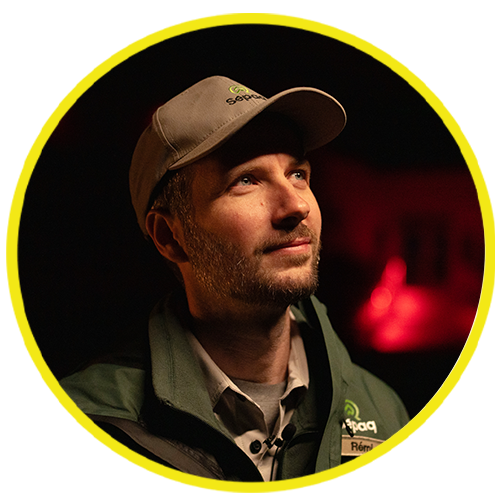
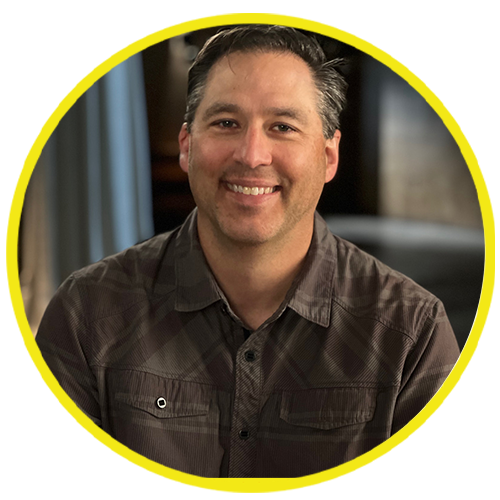
Remi Boucher
Rémi Boucher serves as Scientific Coordinator at the Mont-Mégantic
International Dark Sky Reserve in Québec, Canada—the world’s first certified International Dark Sky Reserve. With more than 20 years of experience in astronomy and nocturnal conservation, he has become an internationally recognized advocate for protecting the night.
In this role, Rémi combines scientific expertise with public education and outreach. A recipient of the 2015 Dark Sky Defender Award, he has collaborated on a wide range of projects, committees, and working groups addressing light pollution at both local and international levels.
Throughout Québec, he has helped advance numerous initiatives to preserve dark skies, contributing to the design of the province’s national standard against light pollution and leading monitoring efforts across its provincial parks network. An accomplished night photographer, his passion for sharing the wonder of the starry sky and protecting nocturnal environments has made him a prominent voice in the global dark-sky community.
Jeremy Evans
Jeremy Evans is a professional photographer, filmmaker, amateur astronomer and delegate for Dark Sky International. He lives full time in the Eastern Sierra enjoying endless photographic and dark sky opportunities. During the summer and fall months he spends his time backpacking in the High Sierra, preferably in Sequoia and Kings Canyon. when he’s not in the high country he’s either enjoying dark skies in Death Valley or the White Mountains with his telescopes.
Dashiell Leeds
Dashiell Leeds is the Conservation Coordinator for the Sierra Club Loma Prieta Chapter where he works as an environmental advocate. Dash has advocated for Dark Sky ordinances which have been adopted in Cupertino, Los Altos, Palo Alto, and Sunnyvale’s Moffett Park Specific Plan.
Full Article List:
- Let there be light — but not in Maine, GREG WALCHER, The Daily Sentinel.
- Our state is the best place in the country to bring dreams to life: A second Sphere venue is coming to the US, Fraser Lewry, Louder.
- Temporal transcriptional rhythms govern coral-symbiont function and microbiome dynamics, Cell Host & Microbe.
- LED lighting undermines visual performance unless supplemented by wider spectra, Nature.
- Outdoor night light exposure and sleep structure, a panel study using consumer-grade wearables, BMC Public Health.
- Association between artificial light at night and the incidence of anxiety: a global ecological study, Environmental Sciences Europe.
- Exposure to outdoor artificial light at night is associated with a higher risk of ulcerative colitis: a prospective cohort study from the UK Biobank, Frontiers in Public Health.
- Stanford Scientists Reveal Oldest Map of the Night Sky, Previously Lost to Time, Ayah Ali-Ahmad, KQED.
- Are You Afraid of the Dark? This Oregon Retreat Locks You in Total Darkness. For Days. On Purpose, Danielle Denham, That Oregon Life.
Light Pollution News: March Highlights
Dani Robertson Nominated for Environment Champion Award for Dark Sky Conservation at Eryri National Park
Past Light Pollution News guest Dani Robertson of Wales has been nominated for an Environment Champion Award in recognition of her conservation work protecting the nighttime environment at Eryri National Park. The nomination highlights Robertson’s role in establishing Wales as a leading example of dark sky conservation, with her work cited for demonstrating resilience, ingenuity, and environmental stewardship.
Opinion Columnist Misunderstands Maine’s Responsible Outdoor Lighting Law H.P. 1295
A Colorado-based opinion columnist published a piece in the Grand Junction Daily Sentinel criticizing Maine’s H.P. 1295, “An Act to Promote Responsible Outdoor Lighting,” characterizing it as the nation’s strictest anti-lighting regulation. The column contains multiple factual inaccuracies: it incorrectly states the law’s effective date as January 1 (the actual date is September 30), incorrectly implies private homeowners will be penalized for Christmas light displays, and incorrectly recounts restrictions on security lighting — the law requires dimming, not extinguishing, of non-essential public lighting after 10 p.m., with explicit security exemptions. The columnist also cites a U.S. telescope sales figure of $370 million annually that appears unsupported by available market data, with comparable sources placing the global telescope market closer to $284.9 million.
Sphere Entertainment Venue Expanding to National Harbor, Maryland with 6,000-Seat Location
The Sphere entertainment venue, currently operating in Las Vegas with a 17,600-seat capacity, is expanding to National Harbor, Maryland, just outside Washington, D.C. on the Potomac River. The new location will seat 6,000 and will add a large-scale light-emitting exterior structure to the D.C. metro area. The Las Vegas Sphere’s latest annual report shows an operating loss of $230 million, though when depreciation of approximately $327 million is excluded, the venue posts a gain of just under $100 million from operations.
Caribbean Reef-Building Coral Coordinates Circadian Rhythms Without Eyes Using Cryptochrome Light Sensors
A study published in Cell Host & Microbe tracked gene expression in a Caribbean reef-building coral and its microscopic symbiotic partners over three consecutive day-night cycles, revealing how these organisms coordinate circadian rhythms without visual systems. Tissue sampled every six hours showed that dawn triggered dramatic activity changes, with over 4,000 genes ramping up processes related to protein production and cellular repair. Prior research has identified cryptochrome proteins embedded in coral cells that detect blue light and initiate circadian responses, providing a light-sensing mechanism independent of eyes.
Incandescent Desk Lamps Improve Human Color Contrast Sensitivity by 25 Percent Compared to LED Office Lighting
A study published in Scientific Reports examined whether standard LED lighting, which operates across a narrow light spectrum, undermines human color vision compared to broader-spectrum incandescent lighting. Twenty-two participants aged 23 to 65 were studied under typical LED office lighting, with eleven receiving a 60-watt incandescent desk lamp for two weeks while eleven continued under LEDs alone. All eleven participants in the incandescent group improved color contrast sensitivity by roughly 25% in both red and blue spectral ranges, and these improvements persisted for at least six weeks after the lamps were removed.
Outdoor Artificial Light at Night Associated with Slightly Longer Light Sleep Phases in Chinese Population Study
A study published in BMC Public Health analyzed data from 4,690 participants in China tracked between 2017 and 2019, pairing sleep data collected via smart bracelets with satellite-based measurements of nighttime light brightness. Overall, the results did not establish a link between light-polluted areas and significant sleep disruption, but did find that higher outdoor light exposure was associated with approximately 1.22 additional minutes of light sleep per standard unit increase in brightness. Effects were more pronounced in elderly individuals and those with lower body weight.
Global Study of 174 Countries Links Nighttime Light Intensity to Increased Anxiety Disorder Rates
Research published in Environmental Sciences Europe analyzed satellite nighttime brightness data alongside global health records from 174 countries spanning 2000 to 2019, finding a correlation between higher light intensity and increased anxiety disorder rates. Each one-unit increase in light intensity was associated with 2.29 additional anxiety cases per 100,000 people, with the association strongest in women and most pronounced in individuals aged 5 to 19. The study’s authors note this is an association, not a causal finding, and acknowledge that reduced access to mental health services in rural areas may be a confounding factor.
Outdoor Artificial Light at Night Linked to 31 Percent Greater Risk of Ulcerative Colitis in UK Biobank Study
A study published in Frontiers in Public Health followed 346,163 participants from the UK Biobank for nearly 14 years, using satellite-derived nighttime brightness data to assess associations between outdoor artificial light at night and inflammatory bowel disease. Higher light exposure was associated with an 8% increased risk of ulcerative colitis per standard deviation increase in light, with those in the highest exposure group facing a 31% greater risk compared to the lowest group; the association was stronger in women than men. No association was found between outdoor light exposure and Crohn’s disease. Researchers propose that artificial light may elevate ulcerative colitis risk by suppressing melatonin production and disrupting circadian rhythms, triggering inflammation.
Stanford SLAC Researchers Uncover One of the Earliest Known Star Maps Hidden in Medieval Parchment Using X-Ray Fluorescence
Researchers at the SLAC National Accelerator Laboratory used X-ray fluorescence imaging to separate layered text in the Codex Climaci Rescriptus, a medieval parchment dating to the 9th or 10th century that had been overwritten by monks recycling scarce parchment. Beneath the later text, the team identified a star chart from a 6th or 7th century manuscript, including descriptions of the constellation Aquarius with its original classical phrasing, making it one of the earliest known star maps yet discovered.
Sky Cave Dark Retreats in Oregon Offers Fully Light- and Sound-Isolated Accommodation for Darkness Immersion
Sky Cave Dark Retreats in southern Oregon offers rentable rooms with complete light and sound isolation, providing guests with a total darkness experience including a bed, bathroom, and temperature control with no sensory connection to the outside world. The offering represents an emerging category of darkness tourism aimed at individuals seeking intentional immersion in natural nighttime conditions, a practice with potential applications for circadian rhythm reset and mental restoration.
Light Pollution News: March Read Along
Before we get started today, I’d like to give a shout out to past guest, Dani Robertson, on a recent nomination she received from her home country of Wales. Dani has been nominated for an Environment Champion Award in recognition of her conservation work protecting the nighttime environment at Eryri National Park.
In the press release, it reads, “Dani has made Wales a leading example in dark sky conservation, showcasing resilience, ingenuity, and stewardship.” Good Luck, Dani!
Did you guys notice some of the responsible lighting at the Olympics over in Italy this year? I don’t think this was for every course, but I did notice it when watching the half pipe events.
Dashiell, similar to you folks out in Palo Alto, the state of Maine enacted a new responsible lighting law at the state level. We reviewed what the law entails last month. However, at the highest level, the law only applies to public infrastructure. That being said, it didn’t take much time for some confusing information to surface. If you look closely enough, you can see the early formation of counter messaging. I’m bringing this up for you at home to recognize and understand what to expect when these policies come to the big show.
The source of this counter messaging comes from the author of an opinion column in the Daily Sentinel. For your knowledge, I’m taking this bio directly from Amazon, where he sells a book. This individual claims to be one of the most recognized and respected national leaders in natural resources policy. He claims to be the founder and president of a nationwide “ad-hoc” coalition of consultants with expertise in utilizing natural resources. He spent some time in Denver and Washington politically, and he was a past republican nominee for Colorado’s 3rd District House seat way back in 2004.
In the opinion column from the Daily Sentinel, all the way out in Colorado, this man criticizes Maine’s new outdoor lighting law (H.P. 1295, “An Act to Promote Responsible Outdoor Lighting”) as the nation’s strictest anti-lighting regulation. The opinion piece argues that while advocates claim the law will help recapture Maine’s dark skies, the night sky remains spectacular in most places, and stargazing is actually growing more popular than ever, with telescope sales reaching $370 million annually in the U.S.
According to the author, the new Maine law, which the opinion piece incorrectly lists as going into effect on January 1st, bans “light pollution” and “light trespass” on public spaces and requires non-essential lighting, including streetlights, schools, and courthouses, to be turned off at 10 p.m., despite security concerns. While initially applying to public places, the author warns the law strongly incentivizes private homeowners to comply as well. He suggests that Mainers might be demonized for putting up Christmas lights. He concludes by arguing that the concept of freedom is being lost, contrasting JFK’s metaphor about America lighting the world with Maine’s new restrictions on Christmas lighting.
It’s funny how, if this were pertaining to noise, I surmise that he might sing a different tune about “freedoms being lost”…but why not use a JFK analogy! So let’s deconstruct this.
First off, the claims made regarding Christmas lighting are straightforward appeals to emotion. It’s something that you see a lot in this country, especially, unfortunately, coming out of places which used to exhibit a certain level of professional responsibility, like our cherished executive branch. I like to say that rage and hate are a surefire way to short circuit the brain’s reasoning. I’ll leave you at home to decide if that was the goal or not here.
The Maine law does not at all affect private citizens and their Christmas lighting displays. The mention of Christmas lighting comes twofold in the Maine law. First, with regards to public seasonal displays, the lighting cannot extend light trespass to natural areas and must be turned off OR dimmed after 10pm. Second, Maine Representative Osher suggested that the law may provide guidance to private homeowners INTERESTED in limiting their own light, indicating that any participation is wholly voluntary.
Next, the effective date is September 30th, not January 1. We covered that last month.
There is nothing in the bill that forces public buildings to turn off essential lighting traditionally considered ‘security’ lighting. In fact, non-essential lighting must be dimmed, but not necessarily extinguished after 10pm. As we covered last month, there are many exceptions to what would fall outside of the ‘dimming’ rule. Security concerns are explicitly discussed in the actual bill.
And lastly, we have this one, which, quite frankly, is a blatantly astounding claim that you can see a spectacular night sky in most of the world. I guess, if you’re including oceans and Antarctica in that calculation, you may be technically right, but surely that doesn’t apply to us, temperate land based mammals.
Then there’s his number regarding telescope sales. I couldn’t find this anywhere. What I did find, though, were lower tier market reports that seem to contradict the claim that telescope sales are at $370M annually in the US. With some estimating the Global telescope market is $284.9M, $100M below the figure quoted.
He also states that there were 1.8M telescopes sold in 2023. Similar sources indicates that Celestron alone globally sold 280,000 telescopes in 2023, and the US itself, only recently imported 68,000 telescopes. Again, I wouldn’t lean heavily on any of those numbers, but together they may give a ballpark idea of the marketplace.
In the entertainment world, it looks like the Sphere is expanding! This time to a place called ‘National Harbor,’ which sits a hair outside of DC on the Maryland side of the Potomac. The new exterior ball of light blight will be a mini version of the 17,600 capacity venue in Vegas. This one will only have 6,000 seats.
The success of the Sphere is really based on how you define success. From a cultural standpoint, it’s been a smash hit in Vegas, featuring many of the stalwart acts you’d expect to draw consistent and dedicated audiences, like say Phish. From a financial perspective, Sphere is getting closer to the black. It’s still not operationally profitable. In February, Sphere released their annual report, showing that it sits at an operating loss of $230M. Though if we remove the $327M or so in depreciation from the picture, the Sphere posts just under $100M gain in operations. So, it’s probably fair to say that the Sphere is righting the financial ship.
Eyes! You don’t need eyes to have a circadian rhythm. How about this! In a study found in Cell Host & Microbe, researchers tracked gene expressions in a Caribbean reef-building coral and its microscopic partners over three consecutive day-night cycles. The study revealed how these organisms coordinate their circadian rhythm without eyes to see the sunrise. The team sampled tissue from the same coral colony every six hours and found that dawn triggered dramatic changes, that being to the tune of over 4,000 genes ramping up activity related to protein production and cellular repair. Prior research in other coral species has identified light-sensing proteins called cryptochromes embedded in coral cells that detect blue light and trigger circadian responses.
I know some of you at home have some strong feelings on this one. From Scientific Reports, a study assessed whether standard LED lighting, which operates at the narrow range of light, undermines human vision compared to the broader spectrum lighting, such as that from incandescents.
The study sampled a modest 22 individuals between 23 and 65 under typical LED office lighting. Eleven of them had 60-watt incandescent desk lamps added to their workspace for two weeks, while the remaining 11 individuals in the control group continued under LEDs alone. The researchers tested color contrast sensitivity before, during, and after the incandescent lamp exposure. The results showed that all eleven folks in the experimental group improved their color vision by roughly 25% in both red and blue ranges after just two weeks with the incandescent lights, and these improvements persisted for at least six weeks after the lamps were removed.
Further on the health front, there was a study out of BMC Public Health
that sought to understand whether outdoor artificial light at night affects sleep patterns. The researchers used data from 4,690 folks in China tracked between 2017 and 2019. The researchers paired sleep data from smart bracelets with a generalized assessment of nighttime brightness via satellite measurements. Overall, their results didn’t appear to link highly light polluted areas to affecting sleep, though their results found that higher outdoor light exposure was associated with about 1.22 minutes longer light sleep per standard increase in brightness. The effects were more pronounced in elderly folks and those with lower body weight.
And how about this, research from Environmental Sciences Europe asked if there’s an association between anxiety disorders and bright nighttime environments.
Well, they looked at data from 174 countries between 2000 to 2019 and utilized a generalized assessment of nighttime brightness via satellite data alongside global health records.
The researchers found that each one-unit increase in light intensity was linked to 2.29 additional anxiety cases per 100,000 people, with the association being greatest in women than in men. The effect was most pronounced in younger individuals, particularly those aged 5 to 19 years, which seems in line with other research that we’ve talked about on this show.
I want to stress that this study, which used country-level averages, is merely indicating an association and not causality. It could be the case that these rural areas have less access to mental health services, thereby overstating the association.
And lastly on the health front tonight. I have this one, out of Frontiers in Public Health. Researchers assessed whether outdoor artificial light at night is linked to inflammatory bowel disease. The research team followed 346,163 folks from the UK Biobank for nearly 14 years, tracking who developed ulcerative colitis or Crohn’s disease. To assess light pollution levels, they utilized a generalized assessment of nighttime brightness via satellite data.
The results showed that higher light exposure correlated with increased risk of ulcerative colitis, specifically, each standard deviation increase in outdoor light brought an 8% higher risk, and those in the highest exposure group faced a 31% greater risk compared to the lowest. Again, the association was stronger in women than in men. Crohn’s disease showed no link to light exposure whatsoever. The researchers surmise that artificial light might increase ulcerative colitis risk by suppressing melatonin production and disrupting the body’s circadian rhythms, which in turn trigger inflammation.
We can finish out tonight on these two articles, one involving archaeoastronomy and another involving a unique version of ‘darkness’ tourism.
First, a team of Stanford scientists decoded a thousand year old mystery and discovered one of the earliest star maps!
Researchers at the SLAC National Accelerator Laboratory took to a medieval parchment to identify a hidden star chart. The text in question, called the Codex Climaci Rescriptus, appears to date to the 9th or 10th century. They wanted to uncover an obscured star chart hidden under text. Essentially, due to the limited nature of parchment, the monks simply recycled old parchment for new texts.
This one, though, was quite old and already included traces of a 6th or 7th century manuscript. The team was able to identify parts of the original star chart that included descriptions for the constellation Aquarius, including the actual phrasing of the very constellation.
Fun stuff, for you at home keeping score, the research team ended up using x rays to break apart the individual layers of the document via a method known as X-ray floresence. Getting into that is beyond the scope of this show.
Now, I know that you at home may be longing for darkness at night. Well, guess what, someone finally packaged a trip, just for you.
In something akin to vacationing in solitary confinement in a medieval dungeon, the Sky Cave Dark Retreats out in Oregon will allow you to rent out a room, which includes a bed, bathroom, temperature control, and no way to hear or see the outside world.

