
May 2026: Trust Nobody, Check Everything, Light Pollution News
Join our mailing list. Follow us at LinkedIn, Instagram, Facebook, & Tiktok.
This Episode:
Today, I’m welcoming back statistician, Paul Marchant; the founder of DarkSkySites.com, Barrington Russell; and welcoming back to the show, one of my favorite guests, lawyer (and from the Plan-B team), Yana Yakushina!
This episode, New York reps put forth a new light pollution bill, so what’s all the fuss about? We’ll dive into precisely what it means for New Yorkers! Also, we talk rigorously about the rigorousness of crime study methodologies. And lastly, what’s 70% larger than the ISS and comes in 1M quantities?
You’ll find out next, on another Light Pollution News!
Like What You See and Hear? Consider Supporting the Show.
A hearty thank you to all of our paid supporters out there. You make this show possible.
For only the cost of one coffee each month, you can help us continue to grow. That’s $3 a month. If you like what we’re doing, if you think this adds value in any way, why not say thank you by becoming a supporter!
Why Support Light Pollution News?
- Receive quarterly invites to join as a live audience member for recordings with special Q&A sessions post recording with guests.
- Receive all of the news for that month via a special Supporter monthly mailer.
- The satisfaction that your support helps further critical discourse on this topic.
Support Light Pollution News!
Host:
Guests:

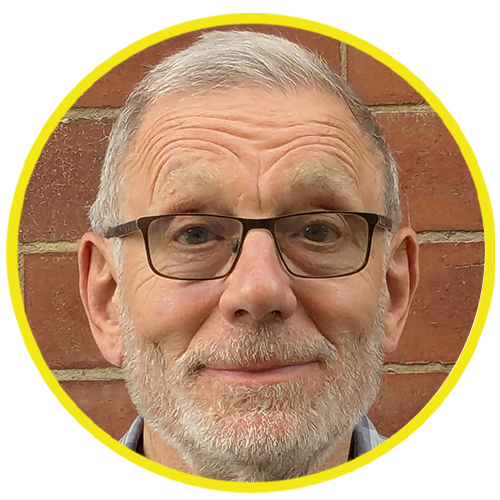

Yana Yakushina
Yana Yakushina is a lawyer, researcher, and dark sky protection educator. Yakushina is actively involved in initiatives related to light pollution mitigation and space law. Yakushina has successfully participated in international legal research projects, collaborating with organizations such as the EU Commission, Dark-Sky International, and the International Astronomical Union, among others.
Currently pursuing a PhD at the University of Ghent (Belgium) as part of the Horizon EU project – PLAN-B, Yakushina is shaping the legal framework for recognizing light pollution as a critical environmental concern. Yakushina also serves as one of the scientific coordinators of the project, with the main task of strengthening efforts to establish a robust legal framework for addressing the negative effects of Artificial Light at Night (ALAN) on the environment and biodiversity.
On the space law front, Yakushina serves as the Deputy Executive Director at the Space Court Foundation Inc. Additionally, in 2023, Yakushina became a co-founder of the Belgian dark sky protection organization – Living Night.
Paul Marchant
Paul Marchant is a UK-based retired academic with a PhD in astrophysics and an MSc in statistics, who became a Chartered Statistician of the Royal Statistical Society in 1994. His career included supporting research at Leeds Beckett University, teaching astronomy and astrophysics, and tutoring an Open University relativity course, with post-retirement honorary fellowships at both Leeds Beckett and the University of Leeds. Beyond academia, he contributed to expert witness work, served on an NHS research ethics committee, and held leadership roles within the Royal Statistical Society. In the 1980s, he grew concerned about rising light pollution, and around the turn of the millennium began questioning the scientific evidence behind the assumption that more outdoor lighting improves public safety, ultimately finding it to be weak and poorly substantiated. Since then, he has critiqued numerous lighting studies and conducted primary research on large-scale relighting projects, none of which demonstrated a measurable safety benefit. His work is accessible through the Artificial Light At Night Research Literature Database, and he advocates for greater involvement of qualified statisticians in rigorously evaluating claims made within the lighting research field.
Barrington Russell
Barrington Russell is an astrophotographer and software builder based in Denmark.
Frustrated by the lack of high-quality statistical data for comparing astronomy locations, and by the absence of any reliable skyline simulator for previewing urban skyglow, he created DarkSkySites as a free platform for the astronomy and Earth-observation communities.
Previously, Barrington co-founded several technology companies, was human No.20 at Trustpilot, developed the award-winning mobile game ConductTHIS!, and most recently built AI image analysis systems for retail brands. He has a background in physics and software engineering, and enjoys paragliding, flying, diving, and astronomy.
Full Article List:
- FIRST LOOK: The Donald J. Trump Presidential Library is officially here, Eric Trump, X.
- Moonlight: a neglected driver of primate sleep ecology, Behavioral Ecology and Sociobiology.
- A04615, New York State Assembly.
- Nationwide plans announced to design safer streets as 9 in 10 women report feeling unsafe walking at night, Active Travel England, Gov.UK.
- Buellton greenlights weekly farmers market, advances dark-sky lighting ordinance, Lisa Andre, Santa Ynez Valley News.
- Another Dark Sky Ordinance? New Arcata Local Coastal Program Includes Light Pollution Regulations, Dezmond Remington, Local Coast Outpost.
- Town of Huntsville receives dozens of complaints under outdoor lighting bylaw, Doppler Online.
- Musk Offers Sneak Peek at Orbiting Data Centers. They’re Bigger Than the ISS, Michael Kan, PCMag.
- Nvidia announces Vera Rubin Space-1 chip system for orbital AI data centers, Lola Murti, CNBC.
- With SpaceX’s 10,000th Satellite, We Have Great Wilderness Internet — and Inescapable Light Pollution, Jerry Kobalenko, Explorers Web.
- SpaceX President: Starlink Could Plateau at 15,000 or 20,000 Satellites, Michael Kan, PC Magazine.
- Satellite Pollution, XKCD.
- Blue Origin Joins the Race for Orbital Data Centers With 51K Satellite Plan, Michael Kan, PC Magazine.
- Simply looking up inspires scientific exploration, Ethan Siegel, Big Think.
- Medieval poets wrote about auroras. Their work is providing clues to the solar cycle, Jacek Krywko, Scientific American.
Light Pollution News: May Highlights
Trump Presidential Library Design Raises Light Pollution Concerns for Miami Skyline
The Trump team has disclosed plans for a presidential library featuring bright facade lighting spanning two full sides of the building, reminiscent of Philadelphia’s famously illuminated Comcast tower, topped by a programmable color-changing spire. The design signals a significant addition to Miami’s nighttime light footprint should construction proceed.
Moonlight Influences Sleeping Height of Black Capuchin Monkeys, Study Finds
A team publishing in Behavioral Ecology and Sociobiology analyzed 384 sleeping location records across four black capuchin monkeys, finding that the animals slept higher in the tree canopy on less moonlit nights. The data suggests that perceived predation risk increases in darkness, driving the monkeys to seek greater elevation for safety, an important behavioral context for understanding how artificial light at night may alter primate risk perception.
New York State Introduces Landmark Dark Skies Protection Act
New York Assemblywoman Debora Glick introduced A4615 and State Senator Brad Hoylman-Sigal introduced companion bill S5007, requiring all exterior lighting fixtures statewide to be shielded or motion-sensing by January 1, 2028, with unshielded fixtures required to be off between 11pm and sunrise. The bill also prohibits illumination of amphitheaters, arenas, and recreational facilities between 11pm and 5am, and explicitly defers to stricter local ordinances where they exist. Notable exemptions include advertisement signage, Times Square, cultural and historic sites, incandescent fixtures under 150 watts, holiday lighting, and a broad range of worker safety and infrastructure categories.
Media Coverage of NY Dark Sky Bill Ranges from Sensational to Balanced
The New York Post ran headlines framing the bill as a public safety threat, including “No bright idea! Lawmaker wants to force NYC to go dark after 11pm – and critics say it’s a criminal’s dream bill!,” while CBS News offered a more measured pro-and-con breakdown. Public opposition centered on concerns about government overreach, perceived safety risks from reduced lighting, and criticism of the bill’s broad exemptions undermining its stated goals.
Outdoor Lighting and Crime Reduction: A Contested and Complicated Relationship
A US study cited in policy discussions claimed a 15% reduction in nighttime crime and 21% reduction in gun violence following streetlight upgrades, but critics note the 23-month study window from June 2022 to May 2024 coincided with a nationwide decline in crime and the completion of LED streetlight conversions, raising questions about data selection. The Philadelphia Energy Authority separately reported a 21% reduction in gun violence attributed to its citywide streetlight replacement project. A contrasting analysis referencing the Leeds lighting and crime study highlights methodological advantages including avoidance of regression to the mean, accounting for overdispersion, and reduced confounding effects, while a Vox-cited UN dataset shows property crime declining linearly from 1979 to 2024 with burglary down 80% since 1990, a trend attributed to multiple overlapping factors beyond lighting alone.
Buellton and Arcata, California Update Lighting Ordinances for the First Time in Decades
Buellton submitted a plan to require new and replacement fixtures to be downward-shielded with color temperature limits of 2700–3000 Kelvin depending on proximity to natural areas, while prohibiting high-intensity floodlights. Arcata separately adopted Dark Sky International compliant standards for a designated coastal zone, with the motion also encouraging residents to seek out Dark Sky certified lighting products.
Huntsville, Ontario Opts for Education Over Fines as Decade-Long Lighting Ordinance Takes Effect
Huntsville’s 2016 outdoor lighting bylaw came into full effect in January 2026 after a ten-year ramp-up period, and while the town has already received a significant number of complaints, officials are prioritizing community education over enforcement penalties for properties found to be out of compliance.
SpaceX Files Application for 1 Million Satellite Megaconstellation Featuring ISS-Scale Solar Arrays
On January 30th, SpaceX filed an application to launch a megaconstellation of 1 million satellites, subsequently revealing that its AI-focused orbital data center satellites would feature solar panels extending nearly 70% longer than the International Space Station at approximately 600 feet, generating 100 kilowatts of power each. PC Magazine reports that Professor Hugh Lewis of the University of Birmingham calculated that 1 million such satellites would require 272 million collision avoidance maneuvers annually. SpaceX President Gwynne Shotwell has suggested the operational Starlink constellation may cap at 20,000 satellites, while the network already reached 10,000 orbiting internet routers in March.
Nvidia, Amazon, and Starcloud Race to Build Orbital Data Centers
Nvidia is developing its Vera Rubin chips, distinct from the Vera Rubin Observatory, as the foundation for its orbital data center ambitions. Amazon’s Blue Origin is pursuing Project Sunrise with a planned constellation of 51,600 satellites, while independent venture Starcloud has announced plans for 88,000 data center satellites, collectively representing an unprecedented expansion of commercial presence in low Earth orbit with significant implications for night sky brightness.
Medieval Aurora Poetry Reveals Historic Solar Storm Cycles via Tree Ring Isotopes
Research highlighted by Scientific American reveals that solar storm activity can be identified through carbon-14 isotopes preserved in tree rings, produced by cascading reactions between the atmosphere and solar cosmic rays. Findings indicate that as recently as the 13th century, aurora events followed a 7–8 year cycle, compared to the 11-year solar cycle observed in modern times.
Astronomer and Writer Ethan Siegel Makes the Case That Simply Looking Up Drives Scientific Discovery
In a piece for Big Think titled “Simply looking up inspires scientific exploration,” Ethan Siegel presents a series of examples demonstrating how astronomical observation cultivates wonder, inspiration, and awe, a theme the episode frames as especially meaningful given the mounting pressures facing dark skies globally.
Light Pollution News: May Read Along
The Trump team has disclosed its new plans for the presidential library, contingent, of course, on him actually stepping down from office after his two terms are up. The building will be filled with every gaudy and grand show of opulence that you’d expect from the Trump brand, including space to include whole jets and planes! For our purposes, though, the impact on the Miami skyline will be quite noticeable. From the bottom to the top, two sides appear to have bright lighting akin to our Comcast glowstick that we have here in Philly. As if that’s not enough, the building will have a tall spire jutting out from the top with what I presume to be programmable colors.
Here is an interesting study out of Behavioral Ecology and Sociology. A team looked at how primates, the black capuchin monkey’s sleeping behavior changed with the degree of light from the moon. The data to date indicates that fear of predation drove monkeys’ sleeping site selection. The team studied 384 records of sleeping locations for four monkeys. The monkeys tended to sleep higher in the trees on less moonlit nights, indicating greater height for increased safety. According to the article, darkness may elevate perceived predation risk.
This study makes for a good segue into our biggest story this month, that being the New York state law designed to bring responsible lighting policies to the Empire State. The facts on the ground are this. New York Assemblywoman Debora Glick, of Manhattan, introduced A4615 and State Senator Brad Holyman-Sigal, also representing Manhattan, introduced a corresponding Senate bill S5007. By and large, the New York bill is not as sturdy and durable as the Palo Alto ordinance we spoke about a couple of months back.
Details of the New York bill are as follows:
- All exterior lighting fixtures in the state are required to be shielded after January 1, 2028 (with a host of exceptions that we’ll talk about in a bit). If they’re not shielded or motion sensing, then they will need to be turned off between 11pm and sunrise.
- No amphitheater, arena, or recreational facility will be allowed to be illuminated between 11pm to 5am. This includes both public and privately owned facilities.
- This law won’t override local light pollution ordinances provided that they match or supersede the contents of this bill.
- As I can tell, this bill has no enforcement mechanisms. I may be wrong about this; there are numerous versions online, and I actually found it hard to pin this down.
The response has been interesting. Of course, there are the scare tactics. This includes headlines such as ‘No bright idea! Lawmaker wants to force NYC to go dark after 11pm – and critics say it’s a criminal’s dream bill!’ or ‘NYC’s iconic landmarks could go completely dark after 11pm thanks to completely insane bill’ from the NY Post. But there was also less sensational news that provided some balanced coverage, including a pro and con breakdown from CBS News.
At the root of it appears to be three major points of contention:
- Government overreach and impediments to personal freedoms.
- Perception that everyone is going to be raped, robbed, and murdered immediately if a light goes out (which, of course, the light wouldn’t go out if you have shielding, but far be it from anyone actually possessing an ounce of comprehension).
- Blatant hypocrisy over the actual goal of the bill, given the exemptions…of which, as you’d expect, we have a few – let’s jump into that, shall we!
The list of exemptions:
- Sports and recreational facilities that are being used for events prior to 11pm can continue with their lighting until the event concludes.
- Advertisement signs of all types are excluded.
- FAA required lighting and airport navigational lighting.
- Lighting needed for worker safety, be it industrial, manufacturing, agriculture, mining, you name it).
- Emergency lighting for first responders.
- Lighting as required by federal law.
- Tunnel and roadway underpass lighting.
- Lighting for municipal street services, such as road maintenance.
- Building construction lighting.
- Any streetlight that can’t obtain shielding from the manufacturer.
- Any incandescent fixture of 150 watts or less and all holiday lighting.
- Lighting of any cultural or historically important place.
- And…most hypocritically, a straight up exemption for Times Square – a place whose ads you can watch from planes high above…as I have personally done.
I will also note that the Department of Environmental Conservation may exempt lights when there’s no marketable shielding available.
Criticism of the bill came in far and wide, with a statement that I think most probably would understand these quotes.
Per Staten Island resident, Al Lebrio, in the CBS News piece, “We’re never going to see the stars that I see when I go upstate camping. We’re never gonna have that. So why even bother?” And this from another resident in Brooklyn, “Anything could happen. Even with the light on. We’re scared. Imagine with no light? We cannot live like this here.”
Last month, I came across an article from Vox. I held onto this because I knew it would be pertinent to today’s conversation. The article cites property crime rate estimates from the UN, showing a linear decline from 1979 to 2024 (with a small bump during COVID). It estimates that burglary rates plummeted by 80% since 1990 while crediting these four heroes: stronger locks, household security systems, doorbell cameras, and…outdoor lighting.
Of course, the article doesn’t make connections between any of them, just cites the rise in their usage as a loosely correlative activity. It didn’t make any causal inference for why, say, property crime dropped 9% in 2023 – 2024. It didn’t explain why vehicular theft jumped during COVID when we were all home, had neighborhood surveillance, and plenty of outdoor lighting.
It’s an interesting piece, of course, linked in the show’s read through. Full disclosure, this was a late add, so I may have missed some things here, but I think I captured the overall gist. This leads me into your piece, Paul, titled ‘Strengths of the Leeds lighting and crime study and its advantages over those done by others.’ Now I read your study, we went over it right here on the show. Your argument states that the study you and Paul Norman wrote avoided a regression to the mean, took into account overdispersion, and reduced confounding effects.
Here in the States, we had a big study that essentially argued for more, brighter lighting. Claiming it reduced crime by 15% at night and 21% in nighttime gun violence. Now, that may all be true. However, I question the actual data selection of the study. Rather than looking at a 10-20 year period (since, you know, streetlights weren’t invented yesterday), they looked at 23 months of data from June 2022 to May 2024, a period of time that saw sizable reductions in crime across the nation. A period of time, I might add, that was when folks started returning to school, the office, etc. And most importantly, a period of time when the streetlights were fully converted to LEDs.
…Then, there’s this press release that came out in April of 2025 by the Philadelphia Energy Authority, oddly enough! ‘Study finds Citywide Streetlight Replacement Project Achieves 21% Reduction in Gun Violence.’ The Philadelphia Energy Authority is, per its website, an independent municipal authority focused on energy affordability and sustainability, founded under a 2010 city ordinance. The Authority boasts about its investment in energy efficiency and jobs created under the guidance of public officials.
Elsewhere in policy news, we have two communities updating their lighting standards, last touched over 30 years ago.
- Buellton, California, submitted a plan to update its lighting ordinance to require new and replacement fixtures to be shielded downward. The ordinance prohibits high-intensity floodlights and establishes color temperature limits of 3000 Kelvin to 2700 Kelvin depending on their approximate location to natural areas.
- Out in Humboldt County, California, the town of Arcata adopted Dark Sky International guidelines in new compliant standards for a designated coastal zone. The motion also included a mention of having residents explicitly look for Dark Sky certified lighting.
Sitting just south of Algonquin Provincial Park in Ontario, Huntsville’s 2016 outdoor lighting ordinance went into effect 10 years after its ramp up time. Upon going into effect in January of this year, the town has received a sizable number of complaints. However, instead of levying fines, the community is opting to use this as a teaching moment for areas out of compliance.
Let’s jump over to satellites and see what hellscape is awaiting us this month! XKCD had this very timely comic. It involves two stick figures standing on the left side, one wearing a hat and one with a ponytail. And on the other side, there’s one stick figure alone, looking at an image of the stars over Earth with a large rectangular box in space.
The figures on the left ask, ‘Aren’t you worried these will be disruptive for ground-based astronomy?’ The one on the right responds, ‘No, why?’ Underneath the comic, it reads, ‘My new company is being criticized for our satellites that deploy 100-mile-wide banners painted with inaccurate pictures of the night sky.’
Yana, if you thought we Americans couldn’t get more insufferable, hold my beer! On January 30th, Lord Musk and his merry friends at SpaceX filed an application for launching a 1 million satellite megaconstellation. What we didn’t know at that time was that Lord Vader…whoops, I mean Musk, would be launching up AI satellites that extended solar panels nearly 70% longer than that of the ISS at 600 feet!
This is needed because the panels would need to generate 100 kilowatts of power. It’s also an assumption that this would only be the start of a new, much larger series of satellite data centers. Not just in quantity, but in size. PC Magazine reached out Professor Hugh Lewis at the University of Birmingham who calculated that if Musk’s plan was to indeed have 1 million of these things orbiting, they’d need to perform a staggering 272 million collision avoidance maneuvers a year!
NVIDIA, who are working to build their own orbiting data centers, is looking to their new Vera Rubin chips to be the backbone of their venture. Note that the name Vera Rubin AI should not be confused with the Vera Rubin observatory, two very different things, though one may end up killing the other, however ironic and dispiriting that may be.
Orbiting data centers are all the rage right now. Amazon’s Blue Origin plans to launch the terrifyingly named ‘Project Sunrise’ up to space, involving 51,600 satellites! But hey, what the hell, go big or go home, right? Starcloud, an independent private venture, says, I see your 51,000 satellites and raise you 30,000. Starcloud plans to send up 88,000 data center satellites in its own attempt to jump in on the action.
Well, since we’re here, talking about Starlink. We have two things I personally never asked for in life – off the grid internet and inescapable light pollution! SpaceX has accomplished the unwishable…increasing its number of orbiting internet routers to 10,000 in March.
Well, there is a silver lining…sorry, too soon. Gwynne Shotwell, SpaceX President, believes that the max number of Starlink satellites may not exceed 20,000. So there’s that.
Let’s close out today’s show. I have two items that I found to be either inspiring or interesting, at the very least!
First, from Scientific American, did you know that you could identify solar storms based on isotopes left in tree rings? I had no idea! The aurora footprint derives from cascading reactions between our atmosphere and solar spun cosmic rays, which leaves a large amount of carbon-14 in the rings. Researchers have found that as recently as the 13th century, auroras occurred on a 7-8 year cycle, opposed to the 11 year cycle we experience in modern times.
We also have this piece by Ethan Siegel, ‘Simply looking up inspires scientific exploration.’ I like to think so, and so does Siegel, so he put together a series of what essentially amounts to, slides that point out many spectacular ways that astronomical observations instill “wonder, inspiration, and awe” in folks. Given the challenges, I think this theme of inspiration and meaning is more pertinent in today’s episode than any one I’ve previously done.
