


April 2026: Mandate Controls, Light Pollution News
Join our mailing list. Follow us at LinkedIn, Instagram, Facebook, & Tiktok.
This Episode:
I welcome back our great guests this month, including Darkness Manifesto’s Johan Eklöf. Lightbahn’s Chetna Misra, and Leo Smith, a man who’s single handedly trying to have the Connecticut Court System be held to the law of the land.
In the news this episode, were the lights in Waveland golf course really going to be that bad? A rainbow laser that stayed on until 3 AM and blasted 60 miles out to sea! And we cover some ecology news. You’ll want to stay to the very end, as I have a very brief but great little piece of listener feedback.
Let’s jump into this episode of Light Pollution News!
Like What You See and Hear? Consider Supporting the Show.
A hearty thank you to all of our paid supporters out there. You make this show possible.
For only the cost of one coffee each month, you can help us continue to grow. That’s $3 a month. If you like what we’re doing, if you think this adds value in any way, why not say thank you by becoming a supporter!
Why Support Light Pollution News?
- Receive quarterly invites to join as a live audience member for recordings with special Q&A sessions post recording with guests.
- Receive all of the news for that month via a special Supporter monthly mailer.
- The satisfaction that your support helps further critical discourse on this topic.
Support Light Pollution News!
Host:

Guests:

Johan Eklöf
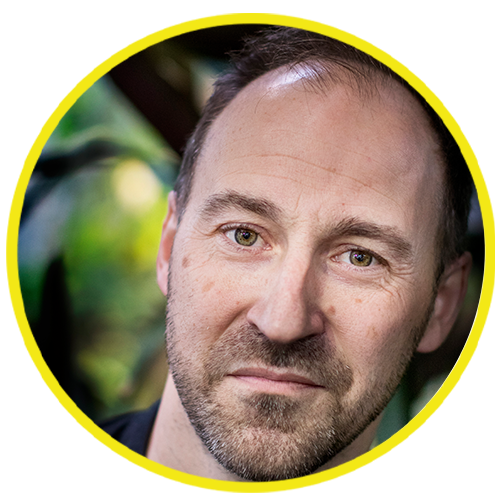
Johan Eklöf is a Swedish bat scientist and writer renowned in the scientific community for his research on microbat vision and, more recently, light pollution. Born in 1973 near Gothenburg on Sweden’s west coast, Eklöf has built nearly two decades of expertise in bat ecology and night science.
Originally drawn to biology through interests in paleontology and nature’s mysteries, Eklöf earned a Master’s degree in biology and earth science before completing his PhD in zoology focused on bats in 2003. After several years of teaching and research at Göteborg University, he transitioned to independent work as a freelance writer and ecologist.
Today, Eklöf works as a consultant advising authorities, wind companies, municipalities, city planners, and environmental organizations on bat ecology, night ecology, and wildlife-friendly lighting. His work follows a seasonal pattern: conducting bat field surveys during the warmer months and writing prolifically during winter. His publications span children’s books, popular science, folklore, and poetry. His 2020 book The Darkness Manifesto garnered significant media attention across major newspapers, television, podcasts, and radio. Eklöf is currently completing a new book with the working title Moonlight.
Chetna Misra
Chetna Misra is the founder of Lightbahn, an interdisciplinary lighting design practice based in Ottawa, Canada, that focuses on protecting and restoring the natural night. Trained as an architect, she spent over a decade working as an architectural lighting designer in Dubai and Amsterdam, contributing to major projects across architecture, landscape, and urban design. Her practice addresses a central tension in contemporary lighting: the same technologies that shape nighttime environments are also responsible for rapidly erasing natural darkness.
After moving to Canada in 2022, Chetna began exploring this challenge through design thinking and systems approaches to environmental problems. Lightbahn grew from that inquiry, bringing together lighting expertise, human-centred design, and environmental stewardship to address light pollution as what it ultimately is: a design problem with design solutions.
Alongside her research and design work, Chetna hosts dark-sky experiences in the Canadian Capital Region, where she explores how encountering a truly unpolluted sky can fundamentally change a person’s relationship with artificial light. For many participants, a dark sky is something they have never seen, and that, she believes, is part of the problem.
Leo Smith
Smith has twenty years of experience working to mitigate light pollution, including as a Dark Sky International board member between 2004 and 2016. Smith partook in the Model Lighting Ordinance Task Force, a joint document between Dark Sky International and the Illuminating Engineering Society. Smith also participated in the Roadway Lighting Committee for the Illuminating Engineering Society between 2006 and 2019. Currently, Smith is hard at work growing the Coalition to Reduce Light Pollution in his home state of Connecticut. You can find him at ReduceLP.org.
Full Article List:
- Residents, feeling shut out, boo city over lighting plans at Waveland, Virginia Barreda, Des Moines Register.
- Spokane homeowners can get a free motion sensor light through new city program, Shannon Moudy, KREM
- Glynn County’s new zoning draft fails to update light protections for sea turtles, Jabari Gibbs, The Current GA.
- Shenzhen dims city lights, builds bridges to assist migrating animals in south China, NewGD.
- Glare more than uplight attracts flying insects to artificial lights, Biological Conservation.
- The late supper: a report on nocturnal scavenging behavior by Brahminy Kites (Haliastur indus) using artificial light, Journal of Ornithology.
- Left in the dark: nocturnal pollinators and the flowers they service in a brightly lit world, Journal of Experimental Biology.
- Multiple stressors across ecosystem boundaries: Do light pollution and invasive species change the quality of aquatic prey for terrestrial predators?, Environmental Sciences Europe.
- Light pollution in the wild affects adult reef fish and has intergenerational and direct impacts on offspring, Proceedings of the Royal Society B: Biological Sciences.
- Artificial Light at Night Alters Larval Activity in a Marine Insect: Intensity‐ and Spectrum‐Dependent Effects, Entomologia Experimentalis et Applicata.
- Artificial light at night (ALAN) disrupts timing of floral resource availability, Biological Conservation.
- Istanbul’s Ramadan Lights: The Vanishing Art of Mahya, DW News.
- Rainbow lasers light up skyline for Winter Pride St. Pete, Blake DeVine, Fox 13.
Light Pollution News: April Highlights
Des Moines Waveland Golf Course Lighting Project Cancelled After Community Opposition
The city of Des Moines announced plans to light Waveland Golf Course, the oldest golf course west of the Mississippi, prompting widespread resident opposition and concerns about impacts to the nearby Drake Observatory. The course is managed by C Corp under contract until 2040 and generates 11% of net revenues for the city. The project was designed by Musco Lighting, a company specializing in dark sky-compliant sports lighting that lit the previous year’s US Open. However, the city rescinded the lighting plans citing resident concerns about light pollution. The Drake Municipal Observatory, open for over 100 years and operated jointly by the city and Drake University, continues to offer astronomical observation opportunities to the public.
Spokane Uses Federal Funds to Distribute Motion-Sensor Solar Lighting to Residents
Spokane, a Bortle 8-9 light-polluted city, is using America Rescue Plan Act funding to distribute free motion-sensor solar-powered lights to residents who request them. The program emphasizes resident choice in lighting placement with focus on sidewalks, roads, and alleyways. The initiative has proven extremely popular, generating a significant backlog of orders as residents take advantage of the federal funding opportunity to improve perceived gaps in public lighting infrastructure.
Glynn County Removes Sea Turtle Protection from Zoning Ordinance
Glynn County, Georgia removed protective sea turtle lighting provisions from its zoning ordinance after seven years of development, reversing a requirement restricting shoreside lighting to wavelengths greater than 560 nanometers (deep amber or red colors). The provision was developed collaboratively with the St. Simons Island Sea Turtle Project and Georgia Department of Natural Resources but was eliminated as burdensome to property owners and developers. Sea Island experiences the highest sea turtle misorientation rates in Georgia at 22-23% of nests, more than double the state average. Island Planning Commission President Courtlyn Cook stated the color change provision has no chance of approval in the current ordinance.
Shenzhen Prioritizes Bird Migration Over Aesthetic Lighting Requests
Shenzhen rejected a resident request to install additional streetlights for safety and aesthetic purposes in Shenzhen Bay Park, which already had surveillance cameras and adequate safety measures. The city collaborated with neighbors and environmentalist volunteers to modify existing streetlights to reduce glare affecting bird migration. The city spent two months balancing driver safety with avian protection, demonstrating a broader commitment to ecological conservation including construction of three bridges to facilitate migration of land animals including leopard cats and wild boars.
Nocturnal Pollinators Face Disorientation and Vision Damage from Artificial Light
A review in the Journal of Experimental Biology examined how artificial light at night impacts nocturnal pollinators including moths, bats, nocturnal bees, beetles, and flies. Pollinators possess specialized adaptations including large eyes, enhanced night vision, color perception in dim light, and the ability to navigate by moonlight and stellar light. Artificial light causes disorientation through eye damage, floral color distortion, flight disruption, and behavioral changes including attraction or avoidance. Research gaps identified include the need for increased field studies, sensory analysis of specific light types, and long-term ecosystem observations.
Swiss Wildflowers Show Phenological Mismatch Due to Artificial Street Light Exposure
A Biological Conservation study exposed 14 Swiss wildflower sites to LED streetlights and compared them to 14 dark control sites over two growing seasons. Results showed 75% of 16 wildflower species exhibited significant flowering timing shifts, with nine advancing by up to 10 days and two delaying. Day-flowering plants opened petals approximately 147 minutes earlier under light, while night-flowering species showed minimal impact. Even low-intensity 10 lux light produced effects comparable to 30 lux conditions. Lunar cycles modulate these effects, with artificial light impact strongest during new moons, suggesting plants respond to natural moonlight cues.
Invasive Crayfish and Light Pollution Create Combined Ecosystem Stress
An Environmental Sciences Europe study examined how invasive signal crayfish and artificial light interact in stream ecosystems using six-week experiments on 16 German artificial streams lit at urban-level brightness of 20 lux. Crayfish reduced insect emergence by 30% and decreased aquatic insect nutrient delivery to riparian predators by 25-40%. Artificial light alone did not significantly reduce insect numbers but suppressed crayfish activity. Web-building spiders showed elevated fatty acid content under light exposure, likely from increased insect capture rates or higher nutrient loads in available prey.
Coral Reef Fish Exhibit Reduced Offspring Escape Responses Under Artificial Night Light
A Proceedings of the Royal Society B study examined artificial light impacts across coral reef fish generations in French Polynesia, manipulating light exposure for 52 orange-fin anemone fish breeding pairs at 26 sites using LED lights at streetlight-level brightness of 2.8 to 18.4 lux. Adult fish exposed to light grew significantly faster, and female reproductive hormones decreased. However, offspring exhibited drastically diminished escape responses with 18% overall decline, 12.8% reduced acceleration, and 30.4% decreased swimming speed. Embryos developed smaller yolk sacs with slower heart rates, indicating generational impacts of light pollution on fish survival potential.
Recessed Outdoor Lighting Attracts Fewer Insects Than Shielded or Unshielded Bulbs
A Biological Sciences study comparing four outdoor lighting designs—unshielded light, partially shielded bulbs, recessed bulbs, and no light control—found recessed lighting attracted the fewest insects. Surprisingly, shielded lights attracted nearly as many insects as unshielded lights, indicating that shielding alone provides minimal insect protection. The findings suggest that bulb positioning and housing design significantly impact insect attraction independent of shielding measures.
Sandy Beach Beetle Larvae Exhibit Reduced Activity Under Artificial Light, Especially Cool Spectrum
Research on sandy beach beetle larvae found that larval activity peaked in darkness and declined when artificial light was introduced. The light spectrum significantly influenced behavior, with larvae reacting least to warmer spectrum lighting compared to cooler temperature lighting. The findings demonstrate that no single light spectrum solution benefits all species and that different organisms have distinct light sensitivity patterns.
Brahminy Kites Exploit Artificial Light for Extended Nocturnal Feeding Opportunities
A Journal of Ornithology study documented that Brahminy Kites, a diurnal raptor species, utilize artificial light to feed throughout the night by scavenging fish captured or discarded by nighttime fishermen. The raptors exhibit remarkable behavioral flexibility in exploiting artificial illumination for feeding opportunities, demonstrating how some species adapt to anthropogenic light environments.
Istanbul’s 400-Year-Old Mahya Ramadan Light Tradition Faces Apprenticeship Crisis
Istanbul’s Mahya tradition involves spelling out inspiring religious messages in lights outside mosques during Ramadan, a practice dating back 400 years when practitioners strung cables between minarets and used oil lamps. Modern installations use Edison bulbs. The tradition faces potential extinction as driving force Kahraman Yildiz struggles to train an apprentice. The role requires laser-precision measurement skills, geometric and trigonometric knowledge, and absence of fear of heights—a specialized craft with few contemporary practitioners.
St. Petersburg Rainbow Lasers Celebrate Winter Pride Despite Light Pollution Concerns
St. Petersburg, Florida illuminated its skyline with rainbow-colored lasers visible from 60 miles away to celebrate Winter Pride, operating until 3 AM aimed toward beaches in response to Governor Ron DeSantis’ removal of rainbow painted crosswalks. The laser display represents a form of light-based expression and cultural celebration by the LGBTQ+ community, reflecting an ongoing tension between Governor DeSantis and Florida’s LGBTQ+ advocacy community regarding pride expression and visibility.
Light Pollution News: April Read Along
First, in Des Moines, IA, I think it’s fair to say that the residents, and the Drake Observatory, were in for a surprise when they were notified of the city’s intent to light the Waveland Golf Course. Residents packed out the club house to voice concern and dismay at the plan, of whom none were invited to the discussion prior to the agreement.
Per the Des Moines Register, the golf course, for those non-Midwest golfers out there, is the oldest golf course west of the Mississippi. The plan to light the course may be in part driven by new state property tax changes which allowed retirees to claim some sizable tax exemptions thereby reducing the city’s income. The course is surrounded on multiple sides by residential neighborhoods and one highway. The course itself is managed by a separate vendor who operates it as a for profit business. The vendor, C Corp, is contracted to manage the facility until 2040. It apparently purchased lighting out of its own till. In order to manage the course, C Corp had to enter into an agreement with the city, which earns 11% of the net revenues at the facility.
Now, at first glance, the plan appeared to be doom and gloom. I say this piece as pure conjecture, but I think if this project were executed, it would have had a chance to be pulled off without significantly impacting residents, the observatory, and maybe even the wildlife. I say that because the company slated to do the lighting design and installation was Iowa’s own, Musco Lighting. Yes, that’s the same team that lit up the US Open last year. They specialize in dark sky sports lighting.
Alas, though, the plans to light the course have been rescinded, citing resident concerns about light pollution.
I want to quote this piece from a television news story…it’s seemingly always the TV news that does things as dumb as this..”On the other side of the course sits the Drake Municipal Observatory. Open for over 100 years, the observatory is run by both the city and Drake University, offering a space where folks can make astrological observations of the sky”…let’s hope that they’ll continue to read the stars…
Spokane has an interesting approach to filling in some of what they perceive to be gaps in their public lighting infrastructure. Bear in mind, Spokane is a Bortle 8-9 city, but surprisingly, there appear to be gaps nonetheless. The city is using some of the money it obtained from President Biden’s America Rescue Plan Act to purchase motion solar powered sensor lighting for any resident who wishes to have one. The goal here is to have people decide where that light should go, with special emphasis on sidewalks, roads, and alleyways. The plan has proven to be very popular, as there’s now a backlog of orders in Spokane.
Now, I’ve never been to Georgia’s beaches, but I’ve always heard they were some of the best in the US. This next story comes from a place you at home have heard of before, our pals down in Glynn County.
You’ll recall that we last met our heroes in Glynn County when they decided to table the extinguishing of highway tower lights against the Georgia Department of Transportation’s request. At the same time, Glynn County claimed that they couldn’t find the evidence on how blue light affects sea turtles despite receiving it from the Georgia Department of Natural Resources. That being said, it’s probably not a shock that Glynn is back in the news. This one, though, is a bit more complex, but it seems to include much more of the same willful negligence towards the environment.
There’s a zoning ordinance that has been worked on for seven years now in Glynn County. The new ordinance at the end of the year included a sea turtle provision that restricted shoreside lighting to a wavelength of greater than 560 nanometers, otherwise a deep amber or red color. The verbiage here is derived from a collaboration of the St. Simons Island Sea Turtle Project and the Georgia Department of Natural Resources.
Well, sometime between the end of 2025 and now, that provision has been removed as it was deemed burdensome to property owners and real estate developers. Instead, Glynn County is now sitting with an ordinance, which still has some basic controls, including a provision that blocks light from being directly illuminated onto the beach and requires shielding from lighting so that it cannot be seen from the beach.
Sea Island, the beach in question, has the highest rates of sea turtle misorientation in Georgia. According to the Current Georgia, it’s doubled that of the state average, sitting somewhere around 22-23% sea turtle nests being impacted by misorientations. As of the recording of this show, Courtlyn Cook, the President of the Island Planning Commission, has decried that there will be no chance of this color change getting through.
Shenzhen did something Portland, Oregon, failed to do, and that, apparently, is to side with protecting bird migration over the vanity of some of its denizens. A resident of Shenzhen posted a request to the city’s forum page to “install more streetlights for both safety and aesthetic purposes.” The city, however, said no.
The area in question is Shenzhen Bay Park. By all accounts, it appears to be an exceedingly safe area. The park already has surveillance cameras in place to spy on any prospective criminals. However, the city worked with neighbors and environmentalist volunteers who recognized that nearby streetlights cast an intense glare onto, I presume, the park.
The city of Shenzhen spent two months modifying the lights to strike a balance between drivers and the birds. As an aside, over the past few years, Shenzhen has shown a commitment to protecting ecology. The city built three bridges to help migrating land animals, including leopard cats and wild boars.
By the time you at home are listening to this, spring has sprung in the Northern Hemisphere. And just in time, I came across this article from the Journal of Experimental Biology. It’s a review that looked at nocturnal pollinators.
So who are these pollinators? You’ll be interested in knowing, if you didn’t already, that among the general consensus, moths and bats provide a sizable chunk of nocturnal pollinating activities. Other insects, including nocturnal bees, beetles, and flies, take up the remaining share.
As a non sequitur, as many of you long time listeners are aware, we planted pollinator gardens here. During the daytime, there are tiny insects that look a bit like bees, but are actually flies. I suspect much is the same when they talk about flies, here.
Getting back to the consensus, pollinators tend to have the following adaptations, including large eyes and enhanced night vision, the ability to see colors in dim light, sensitivity to floral scents…and an ability to navigate by moonlight, or other stellar light. Some animals, including nocturnal bees, benefit from fuller moons, while others, including bats or moths, show no unified effect one way or the other.
Pollinators tend to get disoriented under artificial light, given the sheer overwhelming volume of it, according to the article, which damages their eyes and makes finding flowers simply harder. Floral color distortion is caused by artificial light being projected onto the flower itself. And of course, you at home are familiar with these last two, flight disruption/exhaustion and behavior changes – be it avoidance or attraction to artificial light.
And on the research gap side, the team identified a number of areas to improve upon. I’ll only list a few, those being the need for increased field studies (most are currently lab driven); sensory analysis (to identify what effect specific types of lights have); long-term observations of how ecosystems are affected.
A study out of Biological Conservation, examined how artificial light at night alters when wildflowers bloom and when their petals open across Swiss agricultural landscapes. Researchers exposed 14 wildflower sites to LED streetlights and compared them to 14 dark control sites over the course of two growing seasons. They found that 75% of the 16 wildflower species studied showed significant shifts in flowering timing due to the artificial light. Nine showed advanced shifts, which could be as early as 10 days, and two were delayed.
With regard to daily petal movements, results tended to be more mixed. Day-flowering plants opened their petals roughly 147 minutes earlier under light, but the night-flowering species showed mostly no impact in full petal closure or evening opening. Distant light intensities of as low as 10 lux produced flowering effects comparable to brighter nearby conditions of 30 lux.
The real takeaway here is the phenological mismatch, that is, the timing of when flowers bloom as it corresponds to their pollinator partners. The lunar cycle modulates these effects, with artificial light’s impact strongest during new moons and weakest during full moons, suggesting plants read natural moonlight cues. Whether these shifts translate to real, tangible impacts remains to be studied.
Staying on the insect theme, from Environmental Sciences Europe, how do the joint stressors of invasive species and light pollution affect an ecosystem. In this case, the invasive species was the signal crayfish. The scientists utilized a six week experiment from May through July on 16 artificial stream systems in Germany. They lit units with what they termed ‘urban-level brightness’ at 20 lux.
The presence of the crayfish reduced insect emergence by roughly 30% and reduced the quantity of high quality nutrients aquatic insects deliver to riparian predators by anywhere from 25% to 40%. Artificial light alone didn’t significantly curtail insect numbers, though it did suppress crayfish activity. Web-building spiders showed elevated fatty acid content under light exposure, likely because light either increased insect capture in their webs or the available insects carried higher nutrient loads.
The researchers found that invasive crayfish threatened the nutrition flows underpinning riparian food webs, while artificial light at night may have had a more subdued impact, as in the case of the spiders.
A study out of Proceedings of the Royal Society B examined how artificial light at night affects coral reef fish in the wild. It took a look at the impact across fish generations. I’ll note that the researchers claim to be the first to document how generational fish are impacted. I’m not sure what the nuance is here, but we did have a study that found along the same lines as this about a year and a half ago that came through, discussed on the show.
Researchers in this study spent six months in French Polynesia manipulating light exposure for 52 breeding pairs of orange-fin anemone fish at 26 sites. They used LED lights at what they termed ‘streetlight-level’ brightness of 2.8 to 18.4 lux.
Among the findings, adult fish exposed to light grew significantly faster. Female fish experienced a reduction in reproductive hormones. However, their offspring, despite being larger overall, exhibited drastically diminished escape responses, 18% decline; including an 12.8% reduction in acceleration and a 30.4% decrease in swimming speed. These embryos developed smaller yolk sacs with slower heart rates.
From Biological Sciences, a team asked, how should we design outdoor lighting to attract fewer bugs? The team set up four different sets of lights, including your standard unshielded light, partially shielded bulbs, and recessed bulbs. They used no light as the control. They found that recessed lighting worked best, but surprisingly, shielded lights attracted almost as many insects as the unshielded lights.
And to round out the insect news, a study looked at how larvae of the sandy beach beetle behaved under artificial light versus environments without artificial light. Larval activity sat at its highest under darkness, then declined when artificial light was introduced. Part of this appears to be driven by the spectrum of light, where these beetles reacted lowest under warmer spectrum lighting versus cooler temperature lighting. Just goes to show you that there’s no one size fits all solution.
From the Journal of Ornithology, the Brahminy Kites raptor, a diurnal raptor, was found to utilize artificial light to its advantage, much like the amount of self control I exhibit when confronted with a bag of dark chocolate peanut M&M’s. The raptors couldn’t help themselves and continued to engage in feeding throughout the night, with the help of light. They were found scavenging on fish captured or discarded by nighttime fishermen. We’ll close out with a couple of light as celebration stories. We haven’t had too many of these in a while. I’ll await my guests’ feedback on these.
So first up, there’s a 400 year old tradition during Ramadan in Istanbul called mahya. It utilizes lights to spell out inspiring religious messages outside of mosques. Back then, believe it or not, they strung cables between minarets and spelled out words with oil lamps!! Nowadays, it appears that they use Edison bulbs.
However, the tradition may be in jeopardy of going away, as Kahraman Yildiz, who evidently is the driving force behind many of these installations, is struggling to train an apprentice. Should you be so interested, you need not bring a fear of heights, you need to have laser like precision, and be able to do geometry (and I suppose, trigonometry).
Then, we have this, which is uniquely Floridian in origin and implementation, and maybe they stole some inspiration from Illuminate San Francisco. You’ll recall that there’s a back and forth between Florida Governor Ron DeSantis and the gay community. We had an article previously that showed how some activists rainbow-ified a bridge in Jacksonville after the bridge lighting was restricted from celebrating Pride Week.
Well…in St. Petersburg, Florida, there’s apparently something called ‘Winter Pride,’ and to celebrate, they decided to light up the skies of St. Pete with rainbow colored lasers that could be seen for as far away as 60 miles. To add insult to injury, these lasers, when operational, stayed on until 3 AM aimed toward the beaches! These lasers were a response to Governor DeSantis’ removal of rainbow painted crosswalks.
