
July 2026: I Miss My Land Line!, Light Pollution News
This Episode:
It’s another episode of Light Pollution News, and you won’t want to miss this line up today!
From the forests of Oregon, I welcome back Michael Calhoun to the show! And with us today, we also have two people heavily involved in outreach: the Dark Sky Discovery Center’s Ted Blank and astronomer Amy Oliver!
This episode, we talk about community relations, specifically in regards to the Powell Observatory out in Kansas City. Did you know that there’s a satellite out there that will allow you to spell your name in satellite images? Oh, and how would you feel about renting out an Airbnb with its own observatory?
All this and much more, including a tale of how you may be able to find your future spouse! Coming up next on today’s episode of Light Pollution News!
Like What You See and Hear? Consider Supporting the Show.
A hearty thank you to all of our paid supporters out there. You make this show possible.
For only the cost of one coffee each month, you can help us continue to grow. That’s $3 a month. If you like what we’re doing, if you think this adds value in any way, why not say thank you by becoming a supporter!
Why Support Light Pollution News?
- Receive quarterly invites to join as a live audience member for recordings with special Q&A sessions post recording with guests.
- Receive all of the news for that month via a special Supporter monthly mailer.
- The satisfaction that your support helps further critical discourse on this topic.
Support Light Pollution News!
Host:
Guests:

Amy Oliver
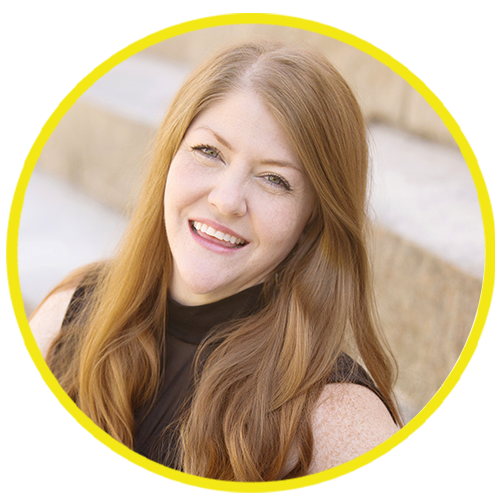
Amy C. Oliver, FRAS, is Public Affairs Officer and head of the Science Center at Smithsonian Astrophysical Observatory’s Fred Lawrence Whipple Observatory— a part of the Center for Astrophysics | Harvard & Smithsonian, and SkyNights Presenter at University of Arizona’s Mount Lemmon SkyCenter. As an informal science educator and communicator, Amy works to bridge gaps in access to science learning opportunities for emerging and future scientists. She is Principal scientific investigator on Dark SkyNet— a cross-border light pollution monitoring network— and Project GLOWworm, which found unexpected glowworms above 8,000 ft. in Southern Arizona. She holds a Bachelor of Arts from University of Louisiana-Lafayette, Master of Science from University of Oklahoma, and DEI certification from University of Wisconsin-Green Bay. Amy was elected a Fellow of the Royal Astronomical Society in 2021, currently serves as the chair of the Tucson/Pima County Outdoor Lighting Code Committee, was a 2024 TEDx speaker, and was recently named one of the 25 most influential people in the global lighting industry for her work in bridging gaps between conservation and infrastructure.
Michael Calhoun
Michael Calhoun is an environmental activist from Vernonia, Oregon. He has worked on a number of conservation projects ranging from tree preservation to trail advocacy. Michael is currently Board Chair of the Columbia Soil & Water Conservation District. Michael is a past recipient of the Oregon Urban & Community Forestry Award from the Oregon Department of Forestry.
Ted Blank
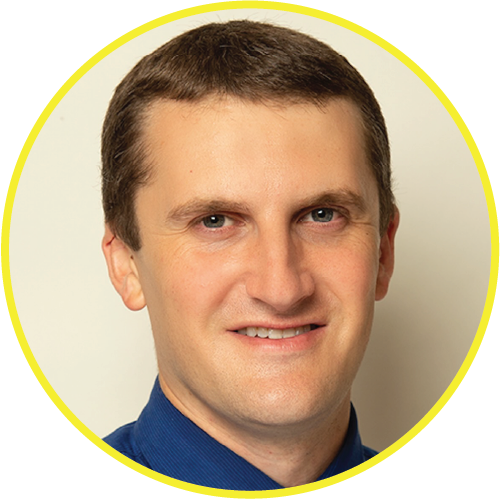
Ted Blank has been a NASA Solar System Ambassador since 2010, communicating the science and excitement of NASA’s space exploration missions and discoveries to people in his community, on cruise ships and at the Grand Canyon Star Party. He is a past President of the New Hampshire Astronomical Society and a sought-after speaker, enjoying sharing his knowledge on any topic related to astronomy and the solar system. Ted bought his first telescope in 2007 and still frequently sets it up on the sidewalk to share the views with the public. He was co-leader of the 2017 Great American Eclipse expedition to Nebraska and helped lead a similar expedition to Mazatlan, Mexico for the total solar eclipse in April, 2024. Ted is a retired IT professional, having spent more than 35 years as a performance analyst with IBM and Oracle. He currently lives in Fountain Hills, Arizona with his wife Peggy.
Full Article List:
- Your Name in Landsat, NASA.
- T-Mobile CEO: ‘Pretty Much No One Buys Satellite Standalone’, Michael Kan, PC Magazine
- Investigating light pollution trends at astronomical observatories worldwide, Monthly Notices of the Royal Astronomical Society.
- Powell Observatory seeks new home amid growing light pollution in Louisburg, Ryan Gamboa, KSHB.
- Dark Sky Trail.
- Big Bend Region – Potential Impact of a Border Wall.
- Experts urge south Louisiana residents to turn off outdoor lights with more termite swarms on the way, David Hamilton, WBRZ 2.
- Light pollution at night impacts monarch butterfly growth and performance, Ecology.
- Shedding light on the dark: Does artificial illumination affect mammal activity at waterholes in sub‐Saharan Africa?, Conservation Science and Practice.
- Artificial light at night (ALAN) is a stronger inhibitor of overwintering dormancy than urban warming in mosquitoes, Journal of Applied Ecology.
- Decade-Long Photometric Observations of Light Pollution and Cloud Effects on Night Sky Brightness in Hong Kong, Remote Sensing.
- Private stargazing observatory, game room, hot tub, AirBnb.
Light Pollution News: July Highlights
NASA’s “Your Name in Landsat” Satellite Imagery Tool
NASA operates an interactive website called “Your Name in Landsat” that allows users to spell out their name using satellite images of Earth’s surface, with each letter corresponding to a landscape feature captured from orbit.
T-Mobile SpaceX Satellite Connectivity Sees Near-Zero Consumer Adoption
T-Mobile CEO Srini Gopalan reported that consumer uptake of the company’s a la carte SpaceX satellite connectivity service is negligible, around 0.0002%, with virtually no standalone satellite purchases. The limited usage that does exist is concentrated primarily in national parks.
Study Finds Light Pollution Impacts 52% of Observatories Worldwide, With Majority Experiencing Ongoing Brightening
Research published in the Monthly Notices of the Royal Astronomical Society found that terrestrial artificial light at night negatively affects 52% of observatories globally, and that 60% of significantly impacted sites are experiencing sustained year-over-year brightening. The team analyzed 12 years of VIIRS satellite data from 2012–2024, measuring 100km radii around each observatory and processing results through 15 regression and machine learning models.
Powell Observatory, Home to a Homemade 30-Inch Newtonian Telescope, Forced to Relocate Due to Growing Light Pollution
The Astronomical Society of Kansas City’s Powell Observatory in Louisburg, Kansas which houses a member-built 30-inch Newtonian reflector. The club is seeking relocation after population growth from 1,700 to nearly 6,000 residents, combined with nearby stadium lighting, has degraded the site’s sky quality to a Bortle 5-6.
Miami County Commission Approves Powell Observatory Relocation Permit 4-1 After Commissioner Reversal
After a neighboring resident, Jeff Axmann, organized a petition to raise the voting threshold for the observatory’s permit from three to four commissioners, the Miami County Board initially voted the proposal down. One week later, Commissioner Paul Scruggs reversed his position, stating he had not properly reviewed the details, prompting a reconsideration that resulted in a 4-1 vote in favor of granting the Astronomical Society of Kansas City its permit.
Trump Administration Awards $1.7 Billion Border Wall Contract Near Big Bend, Waiving 28 Federal Laws
The Trump administration awarded the largest single border wall contract in Texas to Southwest Valley Constructors of Albuquerque, New Mexico. The $1.7 billion award will go to construction near Big Bend. 28 federal laws were waived to expedite the project in a region that accounts for only 1.3% of total US border crossings and is considered one of the most pristine dark sky areas in North America. Construction equipment has begun moving into Big Bend Ranch State Park, raising serious concerns about the destruction of dark skies and the end of astrotourism in the region.
Dark Sky Tourism Industry Booming With New Colorado Dark Sky Trail
Astrotourism continues to grow as a travel category, with new features in outlets including Travel and Tour World and The Hustle highlighting the expanding market. Colorado has launched a “Dark Sky Trail” connecting 13 dark sky parks and 8 dark sky communities from the Front Range to the Western Slope, modeled on the popular regional beer trail concept.
Flying Termite Swarms in Louisiana Disoriented by Artificial Light
Experts in south Louisiana are urging residents to turn off outdoor lights during spring termite swarming season, as flying termites are attracted to and disoriented by artificial light, gathering around outdoor fixtures at dusk.
White LED Streetlights Cause Monarch Butterfly Caterpillars to Grow 16% Faster and Butterflies to Weigh 8% More
A two-year study published in the journal Ecology examined the effects of white LED streetlights on monarch butterfly caterpillars feeding on two types of milkweed. Caterpillars exposed to artificial light grew 16% faster, and the adult butterflies that developed under lit conditions were 8% heavier than those raised in darkness.
Lit Waterholes in Africa Double Gemsbok Visitation While Reducing Lion Activity by 25%
Research published in Conservation Science and Practice set up solar-powered 24-watt white LED floodlights at six African waterhole sites alongside six unlit control sites, capturing 12,000 animal detections. Gemsbok antelope doubled their visits to lit waterholes and extended average stays from 4.8 minutes to 11 minutes, while lions decreased activity at lit sites by 25% and shifted to dark waterholes.
Artificial Light as Low as 0.87 Lux Keeps West Nile Virus-Carrying Mosquitoes Reproductively Active Into October
A study published in the Journal of Applied Ecology assessed the northern house mosquito at 25 sites around Columbus, Ohio. This mosquito is a carrier for West Nile virus. Artificial light overrode temperature as the dominant factor suppressing dormancy: 59% of lit mosquitoes remained reproductively active in October versus 0% of dark-housed mosquitoes, and lit mosquitoes remained active at a rate of 70% in September compared to 37% for those in dark environments. Light levels as low as 0.87 lux were sufficient to sustain activity.
Hong Kong’s Urban Night Skies Average 43x Brighter Than International Dark Sky Standard, Though Post-Midnight Darkening Trend Emerging
A decade-long remote sensing study published in Remote Sensing combined data from 2010–2013 with 2019–2023 readings from 20 automated ground-based sensors across Hong Kong. Urban skies averaged 43x brighter than the International Astronomical Union’s dark sky benchmark, with urban areas reaching nearly 120x that standard. The study found a measurable post-midnight darkening trend in urban areas compared to a decade prior, attributing the improvement to growing compliance with Hong Kong’s voluntary external lighting charter, while also confirming that cloud cover amplifies urban sky brightness by nearly three times the suburban rate.
Joshua Tree Airbnb Features Fully Automated Domed Observatory Starting at $767 Per Night
An Airbnb property near Joshua Tree National Park offers a “patent pending observatory experience” with a touchscreen-operated rotating dome, automated telescope, and wall-lined seating. This Airbnb claimed to be the only fully automated observing experience in the United States. Additional amenities include a hot tub, game room, and fire pit, with nightly rates starting at $767.
Light Pollution News: July Read Along
We have a lot of uses for satellites these days. One of them is this ‘Your Name in Landsat’ website, which NASA operates and allows you to be able to spell your name out from images of the Earth!
You type your name into an interface, and the program returns images that correspond to the characters of the letters of your name.
Speaking of satellites, are US consumers excited about T-Mobile’s new SpaceX offering?
That would be a hard ‘no.’ T-Mobile CEO Srini Gopalan said ‘We’ve [also] seen very, very little take up of a a la carte connectivity [right].’ Continuing to say, ‘Pretty much no one buys satellite stand alone.’
Answer: 0.0002%. They are apparently seeing it largely in national parks.
A team in the Monthly Notices of the Royal Astronomical Society found that terrestrial light pollution impacted 52% of observatories. And at that, any sites that showed a statistically significant impact from light pollution, 60% of them are experiencing sustained brightening year over year. Researchers used VIIRS data, measuring 100km radii around each observatory for 12 years between 2012 and 2024. They then averaged the light levels in that area and ran this data through 15 different regression and machine learning models.
One of those observatories looked at in the study includes the Astronomical Society of Kansas City’s Powell Observatory. This club owned and constructed observatory showcases a homemade 30” Newtonian scope!! Talk about a fun toy to have in your club!
When the Observatory was constructed back in the mid-1980s, the town it resided in had a headcount of 1700. Now, Louisburg has a population of close to 6,000. Additional growth in the region, including stadium lighting from neighboring athletic and sporting facilities, has seriously dented the once pristine night skies. I went ahead and plugged Louisburg into past guest Barrington Russell’s Dark Sky Sites website and noticed the damage in the area really has taken off over the past few years. The area is now sitting somewhere between a Bortle 5 and 6. And as that being the case, the Astronomical Society of Kansas City is looking to relocate the observatory.
As you can imagine, for any of you amateur astronomers listening, over, really, the last 5-6 years, finding a spot to visually observe has become demoralizing at best. But after years of searching, they found a new spot in Miami County (the current county where the Observatory is located). They went along with their proposal to the county, and then resident Jeff Axmann threw up his hand and said…uh moving where?
Axmann, whose property would be adjacent to the new observatory, rallied his neighbors within 1,000 feet of the proposed pad. Axmann’s concerns were, understandably, traffic safety and urban pressure from a neighboring county’s sprawl.
To Axmann’s credit, the club’s plan includes some sort of expanded space with a classroom and outdoor amphitheater. Probably pretty jarring for any rural neighbor, although I assume any business or other entity that decided to move into that area would suffer the same resistance as the observatory.
Now here’s where it gets interesting. Axmann organized a petition that changed the voting majority needed for the permitting of the observatory from three to four commissioners (out of five). The Board of County Commissioners voted down the observatory’s permit….until one week later, when Commissioner Paul Scruggs said, and I paraphrase, ‘Hey I made a mistake! I actually didn’t look at the details here! Let’s reconsider this plan,’ to which the Commission did. And hey, wouldn’t you know it, the Miami County Commission ruled 4-1 in favor of the Astronomical Society of Kansas City by granting them the permit.
The headline here probably isn’t the observatory, rather the seeming reversal against local preference for where the observatory should go, namely, not in my backyard, quite literally. In a similar case of local backlash, the saga of the Big Bend border wall continues on, and not in a good way. To recap you on what has been going on, Customs and Border Protection initially wanted to build the wall, then locals fought back, and it looked, for a time, that the Trump administration possibly decided to move on.
Well, that’s sadly not the case. Instead, the Trump administration, shocker here, awarded the largest border wall contract to Southwest Valley Constructors, an Albuquerque, NM based construction firm, for $1.7 billion. This is the single largest border wall contract awarded in Texas. The Trump administration then waived 28 federal laws to expedite the progress of border wall construction on what, I believe, is one of the most unforgiving terrains in the country. In fact, building infrastructure along the border could actually make this area more accessible! Adding to this, due to its remoteness and unforgiving desert climate, Big Bend consistently makes up for the lowest amount of border crossings (1.3% of the total border crossings by one estimate). There’s already monitoring and checkpoints in place, but that’s not enough apparently. According to the local advocacy group No Big Bend Wall, construction equipment for the wall has begun to move into the Big Bend Ranch State Park area.
There is this interesting interactive map of the damage that will be inflicted on the National Park after the wall is built. I agree with Ken Walczak when I say that the light impact on that sky is a very conservative estimate, almost to the point of being unrealistic. The map shows a 3 mile maximum light glow around the wall.
Well, the other angle here is from astrotourism, which no doubt will cease to be a thing once the lights turn on. I’m seeing more stories like this, from Travel and Tour World ‘Celestial Journeys Rise in a Modern Era as Dark Sky Tourism, Astrotourism Growth, and Stargazing Escapes Redefine Global Travel Amid Expanding Light Pollution,’ and from the Hustle, ‘Dark Sky Tourism is a Booming Business.’ There is now a ‘Dark Sky Trail’ out in Colorado. It is made up of 13 dark sky parks and 8 dark sky communities, stretching from the Front Range to the Western Slope. It’s a clever marketing angle, taking a page from the popular Beer Trails you saw last decade in many places.
Last month, I mentioned that termites don’t need light, well, that apparently isn’t the complete story. Did you know that flying termite swarms in Louisiana routinely take to the sky in the spring? Shockingly, as I know you, the listener is going to be very startled when you hear this, but these termites really like light. In fact, these swarms resemble mayfly swarms that you’d see in other areas. And true to form, their orientation system gets confused by the light. They tend to swarm outdoor lights at dusk.
In other ecology news, artificial light at night changes the physical development of monarch butterflies. The study in Ecology looked at how white LED streetlights affected monarch caterpillars and their interaction with two different types of milkweed. The test ran for two years and found that over that span, caterpillars exposed to the streetlights grew 16% faster, and subsequently butterflies developed under lighting conditions were 8% heavier.
In Africa, a very interesting look at how lit waterholes change the dynamics of mammal activity. Via Conservation Science and Practice, a team set up solar powered 24 watt white LED floodlights at 6 sites and kept a control of 6 unlit sites. They captured 12,000 animal detections between the lit and unlit sites. Their results found that lighting overall had no effect on the frequency of waterhole visits by mammals. However, a couple of species stood out.
The gemsboks (antelope) spent more time at lit waterholes and doubled their visitation of lit waterholes over unlit ones. Take this stat, in the dark, gemsboks stayed at a waterhole for 4.8 minutes per visit, but with the lights on, they enjoyed a leisurely 11 minutes. Conversely, lions said no to the light and shifted their activity to dark waterholes, an increase of 16%, and decreased their activity at lit waterholes by 25%!
I want to note that we saw similar activity between mule deer and pumas and bobcats in California, whereby the deer tended to move towards the light, not only because the light deterred cat attack, but also because they had a better view of potential predators. The idea in that study was something called a ‘human shield hypothesis.’
And here’s an ecology article to close out the ecology news this month. Just in time for your summer festivities here in the Northern Hemisphere, researchers who published in the Journal of Applied Ecology studied the northern house mosquito. This mosquito is the primary carrier of West Nile virus in the northern US. The study ran for two autumn seasons (2022 and 2023), assessing 25 sites around Columbus, Ohio. Each site held two observational enclosures. The first one was placed near existing outdoor lighting fixtures, and the second one was placed at a dark spot on the property. The light color tended to be somewhere around 2700-3000K. They assessed the mosquitoes in the lab.
The team found that artificial light was a stronger inhibitor of mosquito dormancy than urban temperatures, especially in September. In fact, they found that artificial light overrode the effect of temperatures entirely, as lit mosquitoes showed no relationship between temperature and dormancy. Meanwhile, without light, the mosquitoes entered into dormancy with dropping temperatures. This effect continued through October, indicating that 59% of the lit mosquitoes remained reproductively active! Meanwhile, again, the dark mosquitoes were 100% in dormancy during October.
But wait, it gets worse! Those overactive, lit mosquitoes leveled up in September, taking chunks of flesh at a rate of 70% versus 37% for those living in dark environments. And by the time October rolled through, that number had dropped to 29% for the lit mosquitoes, remained higher than that of the dark ones, who were busy snoozing.
And what about brightness? Well, it didn’t take much. Light as low as .87 lux (say a dim twilight) kept the active streak alive in the lit population. And, of course, warm lighting was used, hence, warm colors didn’t help the cause here.
A study out of Remote Sensing tracked night sky brightness across Hong Kong over a full decade. The study combined data from 2010–2013 with a new dataset spanning 2019–2023. The newer span of data utilized a network of automated ground-based sensors made up of 20 urban and suburban locations.
The observations found that Hong Kong’s moonless night skies averaged 43x brighter than the international dark sky standard set by the International Astronomical Union, with urban areas reaching nearly 120x that benchmark. The upside, and there is an upside here, was that urban areas showed measurable post-midnight darkening compared to a decade prior. The team attributed this trend to growing compliance with Hong Kong’s voluntary external lighting charter. The study also introduced infrared sky temperature as a cloud-cover indicator, and confirmed the direct and nearly perfect relationship between cloud cover and brighter skies, with urban areas showing nearly 3x the cloud-amplified brightness response of suburban ones.
Keep in mind that the team used sky quality meters with less sensitivity to blue wavelengths, which may be significant given that LED lighting results in higher amounts of blue light and that the transition occurred over the course of this analysis.
Let’s close out today with this question. Would you guys stay in an Airbnb that had its very own observatory?
The Airbnb, located near Joshua Tree National Park, includes a hot tub, a game room, a fire pit, some incredible daytime views, and…it’s own domed observatory. Added to that, per Airbnb’s website, this is a “patent pending observatory experience.” The whole facility is run out of a touch screen, including an automatic and rotating dome and telescope operation. Chairs line the wall of the dome. The listing claims that it’s the only fully automated observing experience in the US. I didn’t see any specs on the scope, but if I had to guess, I’d say it’s somewhere in the 120 – 180mm refractor range (I know that’s a pretty wide range).
Oh, and what about the price? The price you ask? One night starts at $767.
